
MotoGP’s technological battles are shifting from engines and rider skill to full-blown aerodynamic innovation, and Aprilia has made a bold move in that arms race.
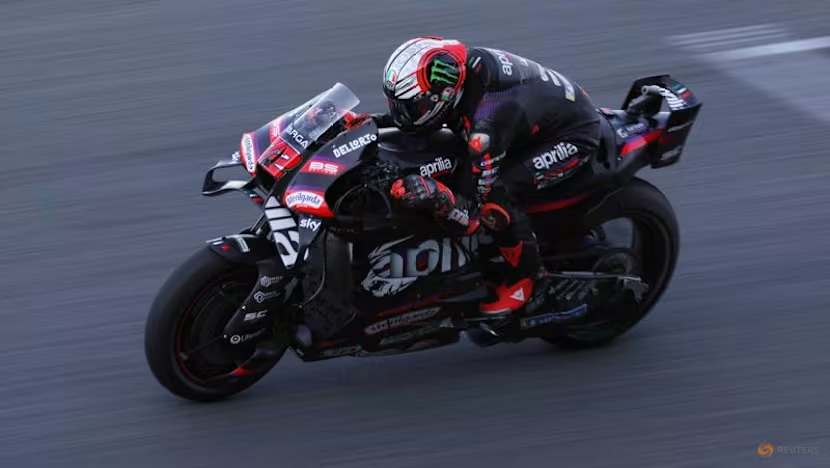
At the recent Thailand Grand Prix, Aprilia debuted an F-duct system on their RS-GP, a concept adapted from Formula 1’s McLaren innovation in 2010. In F1, the F-duct allowed drivers to stall airflow to the rear wing, unlocking higher speeds on straights. Aprilia has cleverly tailored this idea for motorcycles, aiming to boost top-end velocity without compromising the RS-GP’s signature cornering performance.
The system works through carefully placed ventilation slots in the fairing, including openings at forearm height. When riders like Jorge Martín tuck in fully on high-speed straights, their forearms naturally cover these inlets. This triggers airflow separation along the side fairing, reducing drag and generating a straight-line speed increase.

Source: Wide Magazine
Initial tests at the Thailand GP were promising. Aprilia matched Ducati with top speeds of 345km/h, demonstrating a tangible performance improvement. Martín noted the system added “a bit more air on the straights,” appreciating the extra ventilation in hot conditions, even if the speed gain felt subtle from a rider perspective.
Paolo Bonora, Aprilia’s factory team manager, confirmed that the F-duct is the result of extensive aerodynamic testing and is expected to play a major role in the development of their 2026 bike. This signals the system is more than an experimental add-on, it’s a strategic advancement in the team’s long-term performance plan.
Aprilia’s F-duct underlines the growing importance of aerodynamics in MotoGP. As teams continue to seek marginal gains, expect similar innovations from other manufacturers in the near future. By pushing these boundaries, Aprilia not only improves performance but keeps fans engaged with the cutting-edge evolution of two-wheeled racing.