
Initial Pace: A Reality Check, Not a Setback
The Australian Grand Prix painted a clear picture of Cadillac's starting position. The team found themselves 1.4 seconds slower than the nearest midfield competitor in qualifying. Race day saw Sergio Perez finish a staggering 56 seconds behind the 15th-placed car and a daunting 2 minutes 28 seconds off the final points-scoring position.
Both Sergio Perez and Valtteri Bottas admitted this wasn't a shock. The car, dubbed a "very basic" initial design, was finalized months ago, long before it hit the track. This early sign-off meant a conservative approach, setting the stage for expected challenges in the opening rounds.
Power Unit Prowess, Chassis Challenge
The bright spot in Cadillac's early F1 journey is undoubtedly its Ferrari power unit. As **Valtteri Bottas** highlighted, Ferrari's front-running performance in Melbourne proves the engine's capability. This eliminates the power unit as a current limitation for **Cadillac**, allowing them to mirror Ferrari's deployment strategies.
However, the Achilles' heel currently lies with the car's aerodynamics. **Bottas** specifically pointed to a significant lack of rear-end load, which forces compromises in mechanical setup. Despite this, he insisted there are no "big fundamental issues," suggesting the gap is more about refining "finer details" compared to the top teams' intricate designs.
The Upgrade Barrage Begins
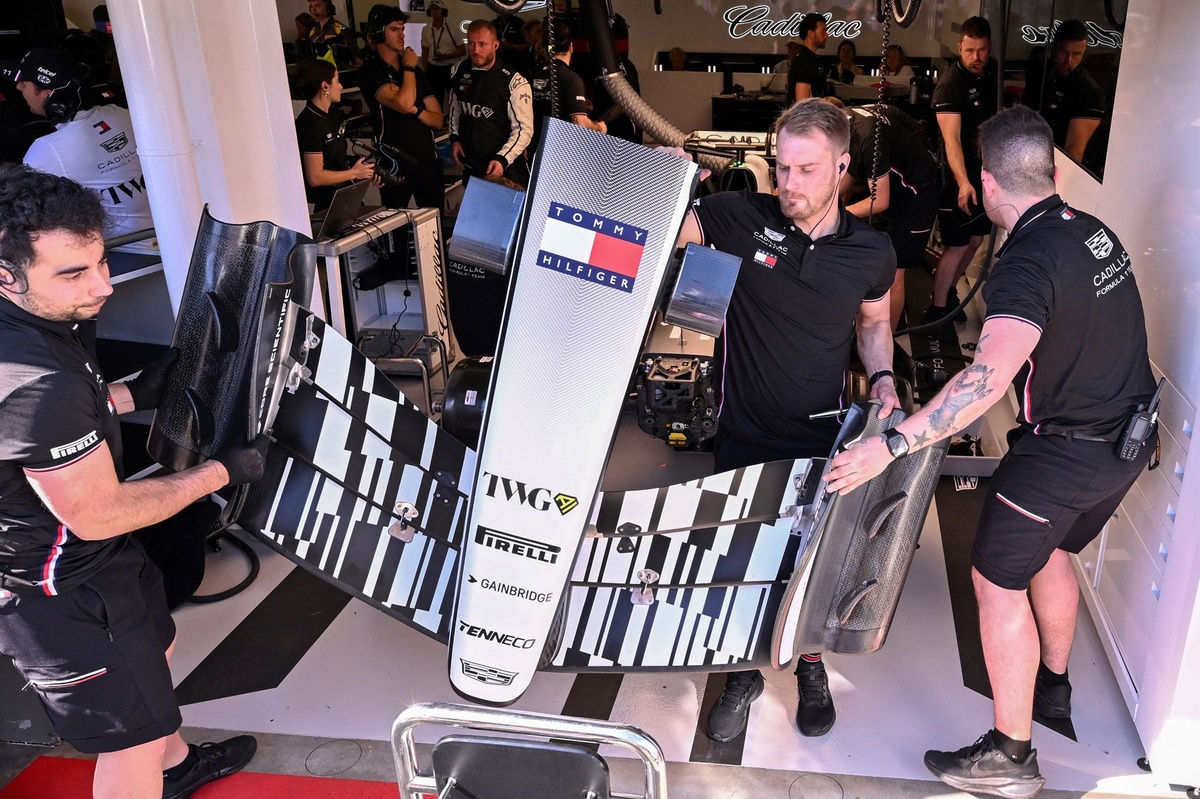
The strategy is clear: relentless evolution. **Cadillac** is embarking on an aggressive development push, with new components set to arrive at almost every race weekend. According to **Valtteri Bottas**, fans can expect to see new aerodynamic packages offering "more downforce each race" over the next four to five events.
This continuous stream of **Cadillac F1 updates** is crucial for closing the performance gap. The team is now leveraging newfound knowledge about rival car philosophies, with their wind tunnel operating at full capacity to design and integrate these performance-enhancing parts.
Beyond Aero: Operational Precision
It's not just about bolting on new wings; **Cadillac** is scrutinizing every facet of its race weekend performance. **Sergio Perez** highlighted areas like race strategy, operational efficiency, and even pit stops as crucial for immediate gains. He believes that by tidying up their execution, the team can find significant time.
Indeed, **Cadillac's** pit stop times in Australia were not yet at the benchmark level, with a final stop clocking in at 18.951 seconds, noticeably slower than **McLaren's** and **Ferrari's** sub-**17.7-second** efforts. Improving these micro-elements will be vital for maximizing any car performance gains.
Perez's Bold Bet: Points by Summer
Despite the current chasm, **Sergio Perez** is setting an ambitious personal goal for **Cadillac**: to score points by the **summer break**. He acknowledges the substantial task ahead but remains confident due to the team's unique profile. **Perez** argues that **Cadillac** isn't a typical F1 newcomer.
He emphasizes the wealth of resources and seasoned staff within the organization. Unlike many new entries to the sport, **Cadillac** boasts veterans with over **20 years** of experience. This deep expertise, **Perez** believes, will enable rapid development and surprise many on the grid. He expects nothing less than reducing the gap "race by race" because, in Formula 1, there's no time to waste.