
Clutch-time heroics are thrilling, but the hard truth for NBA contenders is that consistent dominance, not nail-biting finishes, is the real blueprint for a championship. As the Boston Celtics and Los Angeles Lakers navigate their paths to the playoffs, their contrasting approaches to "clutch" situations offer a fascinating look into what truly drives playoff success.
Key Takeaways for Playoff Contenders:
- The Boston Celtics exhibit overwhelming overall dominance, outscoring opponents by a significant margin, despite a sub-par record in close games.
- The Los Angeles Lakers, while maintaining a solid record, heavily rely on their league-best performance in clutch situations, often winning games that are tightly contested.
- Historical NBA data strongly suggests that teams who consistently win games decisively (avoiding clutch moments) are far more likely to achieve championship glory.
- "Clutch" performance in the regular season does not reliably predict similar success in the high-stakes, small-sample-size environment of the NBA Playoffs.
The Tale of Two Contenders: Boston's Power vs. LA's Grit
The Boston Celtics have been a force this season, boasting a formidable 46-23 record and an elite +8.1 net rating—the second-best in the league. Their ability to consistently overwhelm opponents speaks volumes, often securing victories long before the final buzzer. However, a peculiar weakness emerges in games decided by five points or less in the final five minutes, where they hold a concerning 13-16 record, ranking 20th in the NBA.
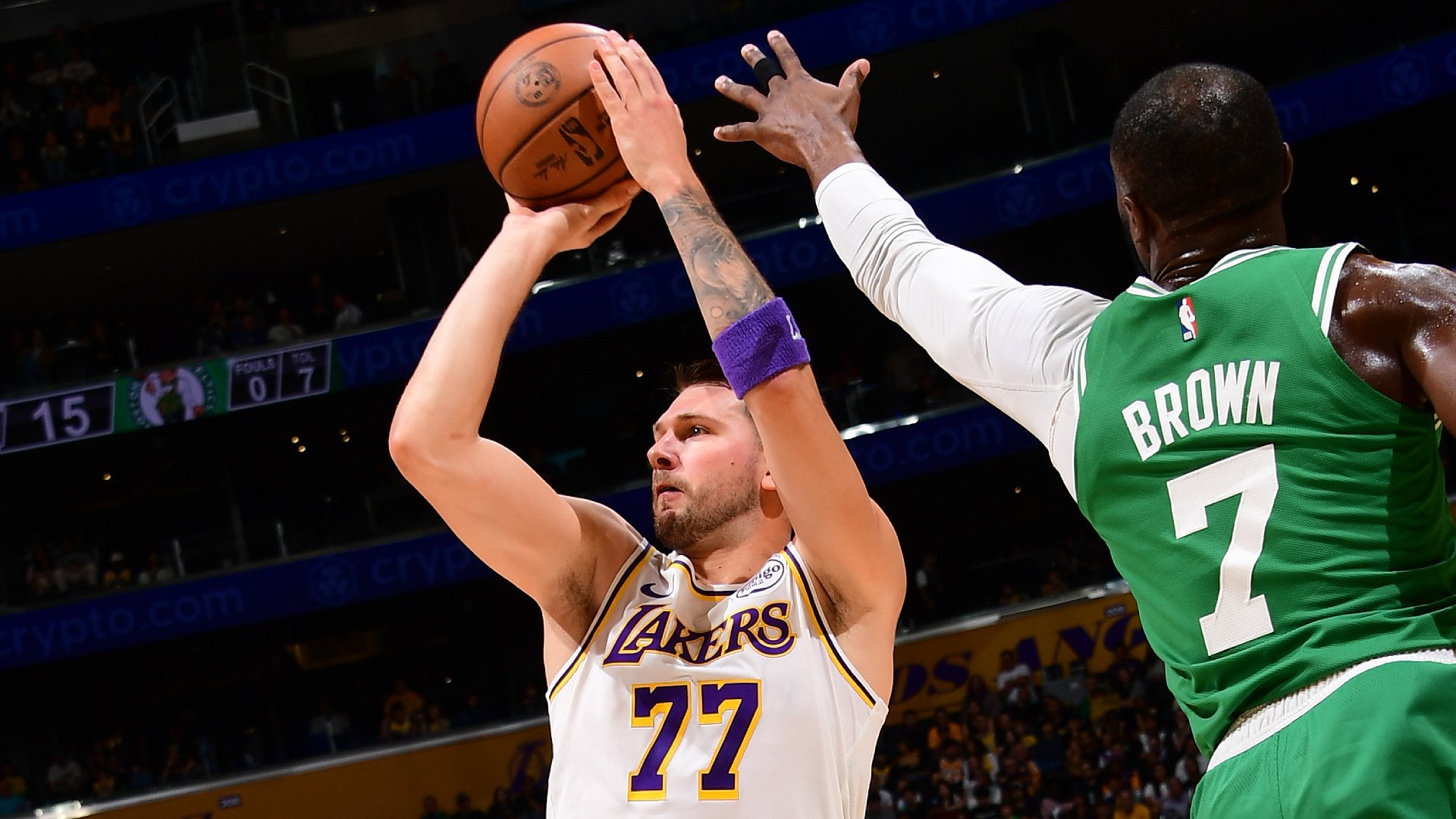
Meanwhile, the Los Angeles Lakers present a stark contrast. With a respectable 44-25 record, their overall net rating of +1.2 places them around league average. Yet, when games tighten in the closing moments, the Lakers transform into an entirely different beast. Their 20-6 record in clutch situations is the absolute best in the NBA, showcasing their remarkable ability to execute under pressure. Recent crucial wins in Houston underscore this clutch prowess.
Boston's Unshakable Foundation
The Celtics' impressive point differential is no fluke; it's a powerful indicator of their underlying strength. This metric reflects a team that consistently performs at a high level, regardless of the game's specific context. While their struggles in razor-thin contests might cause some concern, their widespread dominance across a larger sample size often means they simply don't find themselves in those make-or-break moments as frequently as other teams.
Lakers: Fourth-Quarter Magicians
The Lakers' mastery of the fourth quarter has undoubtedly been a key factor in their success this season. Their top-ranked clutch offense has delivered time and again, pulling out victories that might otherwise slip away. This clutch ability creates thrilling finishes and builds confidence, crucial for any team eyeing a deep playoff run. However, the inherent randomness and small sample size of these moments beg the question: can this trend hold up when the stakes are at their highest?
The Playoff Puzzle: Decoding Clutch Performance for a Title Run
The ultimate question for fans and analysts alike is which of these contrasting paths leads to playoff success. Will the Celtics' overall superiority overcome their clutch-time struggles, or will the Lakers' late-game heroics translate into a deep championship push? Historical NBA data offers compelling insights that might surprise those who value clutch play above all else.
History's Verdict: Consistency Over Crunch-Time Heroics
Looking back over 29 seasons of NBA play-by-play data, a clear pattern emerges. Teams that demonstrated overwhelming non-clutch performance, like the current Celtics, are significantly more likely to overachieve in the playoffs. Last season, the Minnesota Timberwolves exemplified this, boasting a poor clutch record (20-26) but an excellent non-clutch record (29-7), ultimately making a surprising run to the Western Conference Finals.
Conversely, teams whose success heavily relied on clutch wins, much like the current Lakers, have historically struggled to surpass expectations. Furthermore, an astonishing statistic stands out: every single NBA Champion over the past 29 seasons was a team that performed better in non-clutch games during the regular season. Intriguingly, the last three NBA Finals runners-up—the 2022-23 Heat, 2023-24 Mavs, and 2024-25 Pacers—all had better clutch records than non-clutch records in their respective regular seasons.
The Volatility of "Clutch" in the Postseason
The allure of clutch performance often overshadows its statistical volatility. Regular-season clutch numbers, while exciting, are inherently small sample sizes. In the playoffs, these samples shrink even further, making sustained clutch excellence exceptionally rare. Iconic examples reinforce this: the 2015-16 Warriors, an historically dominant regular-season clutch team (30-4), faltered in the NBA Finals Game 7. Similarly, the 2006-07 Mavs (32-6 in clutch) suffered a shocking first-round upset. Conversely, the 2011-12 Sixers, with a dismal 7-20 regular-season clutch record, surprisingly went 6-2 in playoff clutch games en route to the Eastern Conference Semifinals.
The Undeniable Championship Formula
While executing in high-leverage situations is undeniably important, the most reliable sign of a truly great team is its ability to simply avoid those situations. NBA Champions are built on a foundation of consistent, dominant play that renders most late-game nail-biters irrelevant. For the Boston Celtics, their underlying statistical might suggests a stronger championship pedigree. For the Los Angeles Lakers, their clutch brilliance offers hope, but history warns that relying on consistent heroics might be a riskier gamble for ultimate playoff glory. The road to the NBA Finals often favors the team that rarely needs a last-second miracle.