
A flagship venue in a historic setting
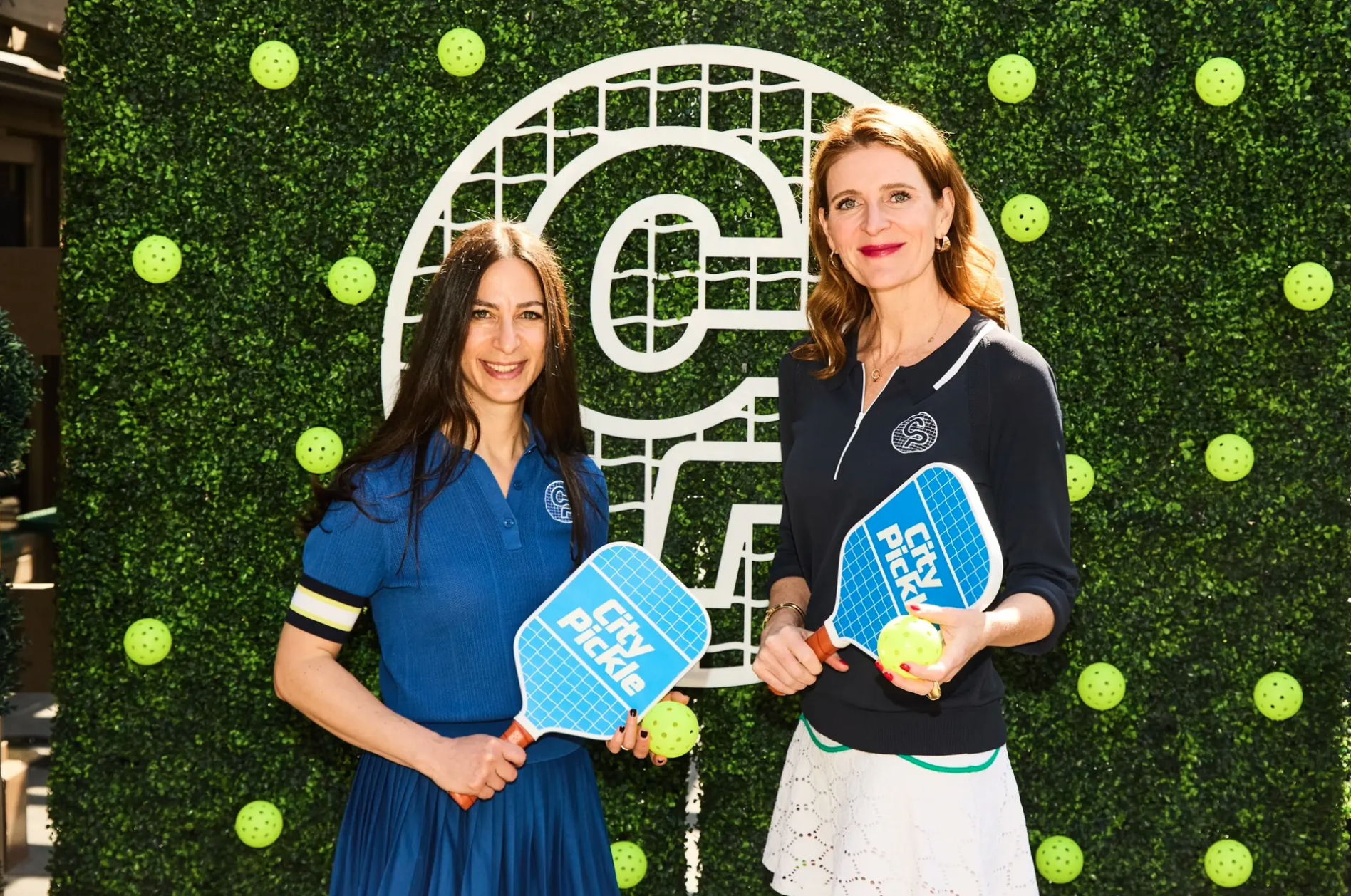
Longtime friends Mary Cannon and Erica Desai transformed a shared passion for racket sports into CityPickle, a fast-growing brand founded in 2021.
CityPickle’s new flagship spans 37,000 square feet and sits on the eighth floor of the historic Paramount Building at 1501 Broadway. The space represents the company’s first permanent, year-round location in Manhattan. It also carries historical significance, as the site once housed the Paramount Theatre, which closed in 1966 after hosting iconic performers such as Frank Sinatra.
Beyond serving as a sports venue, the Times Square location doubles as the company’s headquarters and includes a full-service bar and restaurant, reinforcing its positioning as both a recreational and social destination.
Rapid growth across New York and beyond
The Times Square opening builds on CityPickle’s earlier milestones. In 2023, the company launched New York’s first indoor pickleball club in Long Island City. Expansion continues with a planned 60,000-square-foot facility near the Brooklyn Bridge in Dumbo, alongside seasonal venues such as its Hudson Yards pop-up, first introduced in 2022.
The company has also secured a long-term agreement to operate at Wollman Rink in Central Park during the non-ice-skating season, transitioning the space into a near year-round pickleball destination. Outside New York, CityPickle runs a seasonal venue at Dilworth Park in Philadelphia and is preparing to expand into Florida with Boca Paddle by CityPickle, a large indoor-outdoor complex.
Looking ahead, the founders have identified cities like Boston and San Francisco in the U.S., as well as Toronto and London internationally, as potential expansion targets.
From tennis roots to a pickleball vision
Both founders had long histories with tennis before pivoting to pickleball during the COVID-19 period. After independently discovering the sport while traveling, they returned to New York and realized there were no dedicated pickleball courts in the city at the time.
This gap, combined with a growing need for social connection after the pandemic, inspired them to create a space where people could gather, play, and socialize. They also saw an opportunity to elevate the experience by integrating food and beverage offerings, making the sport more community-driven and lifestyle-oriented.
Compared to tennis, pickleball stood out as more accessible, affordable, and less physically demanding, allowing people to play more frequently and across skill levels.
Why Times Square—and why an office building
After evaluating more than 80 potential locations, the founders identified the Times Square site as an ideal fit. Its central accessibility, high ceilings, and column-free layout made it uniquely suited for a pickleball facility.
Placing the venue on the eighth floor of an office building also proved to be a strategic advantage. It allowed the company to operate with office-level rent rather than significantly higher ground-floor retail costs, making a large-scale space financially viable.
The venue is designed as a destination, with revenue generated not only from court bookings and lessons but also from private events, which play a key role in the business model. The Long Island City location has already demonstrated profitability, validating this approach.
At the same time, the unexpected setting adds to the experience—visitors step out of an elevator in a busy commercial building and into a vibrant sports and social environment, creating a sense of surprise.

Credit: Andria Cheng/CoStar
Complementary backgrounds driving success
Cannon and Desai credit their professional backgrounds as a major factor behind CityPickle’s growth. Cannon’s experience in finance, investing, and real estate—including roles at Goldman Sachs and a private equity firm—paired well with Desai’s background in public health, wellness, and operations.
Their combined expertise, along with entrepreneurial creativity and strong work ethic, helped them build a business that aligns with both their professional strengths and personal interests in racket sports.
Building a lifestyle, not just a sports venue
Despite running a fast-scaling company, both founders still make time to play pickleball, often with their families. The sport’s accessibility allows it to be enjoyed across generations, reinforcing its role as a social activity rather than just a competitive one.
This philosophy extends into CityPickle’s concept of creating a “third place”—a space beyond home and work where people can relax and connect. The venues are designed with amenities such as work-friendly areas, showers, and dining options, encouraging guests to stay longer and integrate pickleball into their daily routines.
Notably, the club allows non-members to book courts, lowering barriers to entry and making the experience more inclusive.
Standing out in a growing market
While pickleball continues to surge in popularity, the founders view competition as a sign of strong demand rather than a threat. They believe the market still faces a significant supply shortage, particularly during peak hours, and that multiple operators can succeed simultaneously.
CityPickle differentiates itself by emphasizing community, accessibility, and a full-service experience, rather than focusing solely on court availability.
What’s next: expansion with strategic limits
CityPickle sees office buildings as a promising model for future locations, especially as companies look for amenities that encourage employees to return to workplaces. However, the specific spatial requirements—such as high ceilings and column-free layouts—make suitable locations relatively scarce in dense urban areas.
This constraint naturally limits rapid expansion but also creates a barrier to entry, protecting the brand from oversaturation.
The company is targeting steady growth, aiming to open a small number of new locations each year. Within New York, neighborhoods like Tribeca and the Upper East Side are under consideration, while expansion into other major cities will focus on areas with both strong corporate presence and limited access to pickleball facilities.