
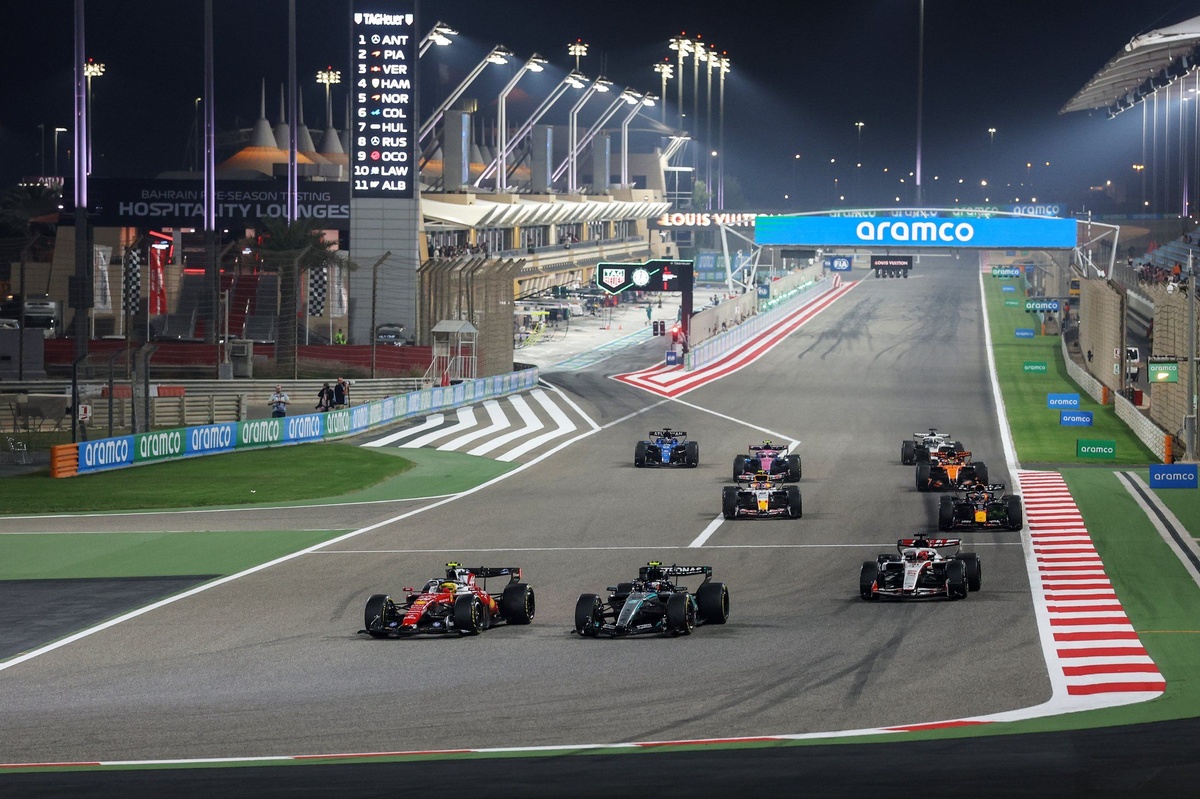

The roar of engines has faded at the Bahrain International Circuit, signaling the end of 2026 F1 pre-season testing. What unfolded was a fascinating spectacle of raw speed, calculated strategy, and alarming struggles, setting a dramatic stage for the season opener in Melbourne. While Ferrari delivered a show-stopping headline lap, the true contenders for early season glory might be lurking in the shadows, and one team is already facing a monumental challenge.
Key Takeaways from Bahrain:
- Ferrari's Charles Leclerc set the fastest overall time (1m31.992s), showcasing impressive one-lap pace and innovative aero.
- Mercedes focused on race simulations, demonstrating formidable long-run consistency that hints at strong contention for the Australian Grand Prix.
- The battle for the remaining top spots is fierce, with McLaren and Red Bull appearing incredibly closely matched in race pace.
- Aston Martin endured a deeply concerning test, plagued by reliability, weight issues, and a significant lack of overall speed.
The Prancing Horse Unleashed: Ferrari's Blazing Start
It was a moment that sent a jolt through the paddock: Charles Leclerc, with just 30 minutes left, unleashed a blistering 1m31.992s lap on C4 tires. This wasn't just fast; it was over eight-tenths quicker than the previous best, a clear statement from Ferrari. While the team didn't push to beat this benchmark, it underscored the significant progress and raw speed locked within the SF-26.
Ferrari approached testing with quiet confidence, meticulously working through its program. Their innovative aerodynamic solutions, including a unique gearbox-mounted winglet and a rotating active aero device on the rear wing, hint at aggressive development. The car’s improved drivability, particularly its rear-end stability, should be a welcome change for new signing Lewis Hamilton, who historically prefers a more planted machine.
Silver Arrows' Stealth: Mercedes' Endurance Prowess
Don't let Ferrari's headline lap fool you; Mercedes might just be the team to watch over a race distance. The Silver Arrows were entirely focused on perfecting their long-run performance, shunning soft-tire glory runs. This strategy paid dividends, with Kimi Antonelli and Lewis Hamilton consistently logging competitive times in their race simulations.
While some early reliability issues, including a power unit change and suspension problems, briefly curtailed running, Mercedes still racked up the most laps in week two. Their refusal to even request C4 tires speaks volumes: they knew their program and executed it, confident in their car's underlying pace. The W17 looked tidy on track, and its true, low-fuel qualifying potential remains a mystery—a tantalizing thought for Melbourne.
The Emerging Thriller: McLaren vs. Red Bull Showdown
Behind the potential frontrunners, a compelling battle is brewing between McLaren and Red Bull. The test suggested these two are practically inseparable over a race distance, promising thrilling wheel-to-wheel action from the outset. While McLaren showed a slight edge in one-lap pace, Max Verstappen's ability to set strong times earlier in sessions highlights Red Bull's latent speed.
The real insight came from their Thursday evening race simulations. Oscar Piastri and Verstappen ran nearly identical long stints on equivalent fuel loads, showcasing incredibly close average lap times. The slight variations in tyre strategy (Verstappen on C3-C2-C2, Piastri on C3-C2-C1) reveal the fine margins at play. This head-to-head performance indicates a captivating fight for the podium in the opening rounds.
Midfield Mayhem: The Battle for Best of the Rest
The midfield pack is as tight as ever, with five teams vying for supremacy. Alpine and Haas appear to have the early advantage. Franco Colapinto showed strong long-run pace for Alpine, consistently in the 1m39s-1m40s bracket, while Haas's Esteban Ocon praised the car's improved handling and its impressive launch characteristics thanks to the Ferrari powertrain.
Racing Bulls, Williams, and Audi (formerly Sauber) are the wildcards. Racing Bulls initially struggled with a wayward rear end but improved significantly. Williams played catch-up after missing early shakedown time, with Alex Albon's long runs showing room for improvement, likely due to a heavier car. Audi, despite its transition, demonstrated competitive long-run pace with Nico Hulkenberg, suggesting they will be in the mix. All three have potential, but need more fine-tuning to consistently challenge the front of the midfield.
Aston Martin's Alarming Start: A Mountain to Climb
This is where the story takes a grim turn. Aston Martin's F1 2026 pre-season testing was nothing short of a disaster. The team arrived late to initial shakedowns, suffered myriad reliability issues in Bahrain – including a battery problem that cut short Fernando Alonso's crucial long run – and ultimately packed up early on the final day after just six laps. The sight of an empty Aston Martin pit wall spoke volumes.
Rumors swirled: the Honda power unit is reportedly 15kg overweight and down on power, the AMR26 lacks grip, and is incredibly difficult to extract performance from. Lance Stroll bluntly admitted, "We need more power, it's simple as that. And then we also need to improve the car." The most damning evidence? Alonso's long-run pace was a staggering four seconds per lap slower than McLaren and Red Bull. With a car that was three to four months behind schedule in development, Aston Martin faces a bruising start to the 2026 season, despite the promise of future "ADUO" development opportunities. It will take a monumental effort from Adrian Newey and the team to recover.
The curtain may have fallen on testing, but the anticipation for F1 2026 has just begun. Melbourne awaits, promising answers to the questions raised and delivering the first real taste of this new era of racing. Get ready for a season where every lap, every strategy call, and every upgrade will matter!


