
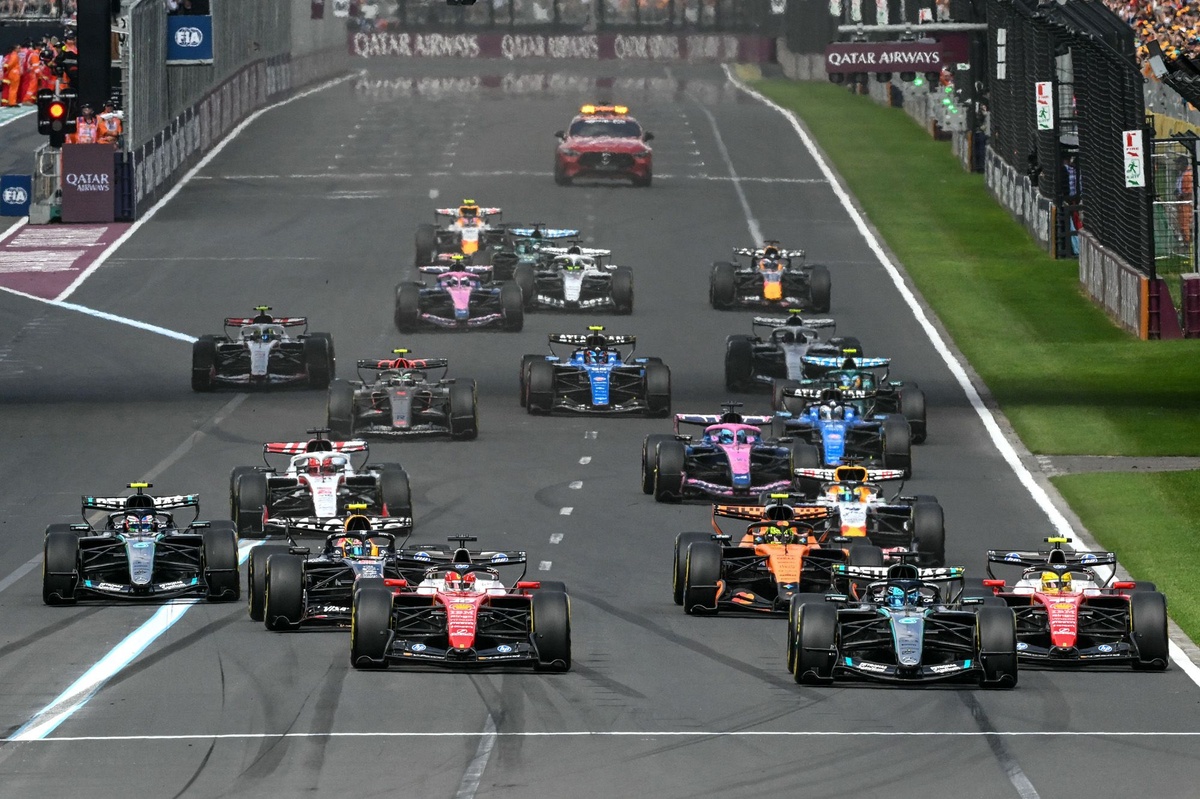

The roar of Formula 1 cars launching from the grid is electrifying, but the recent Australian Grand Prix has exposed a chilling truth: the F1 2026 regulations are introducing dangerous, unpredictable elements to the spectacle. McLaren Team Principal Andrea Stella isn't mincing words – F1 needs to act now to avert a major incident.
Key Concerns from Melbourne
- McLaren's Andrea Stella demands immediate F1 safety review.
- Chaotic Australian Grand Prix start highlighted extreme speed differentials on the grid.
- "Super clipping" on straights creates hazardous and unpredictable closing speeds.
- Urgent action needed to prevent future accidents under the new 2026 power unit regulations.
Grid Chaos: A "Near-Miss" Too Close for Comfort
The chaotic start in Melbourne served as a stark warning. Alpine driver Franco Colapinto narrowly avoided a massive multi-car pile-up by expertly swerving around a sluggish Liam Lawson. This near-catastrophe directly links to the revamped 2026 power unit regulations, which require drivers to intricately spool up turbochargers for a strong getaway.
To mitigate this, the FIA already extended the pre-start procedure by five seconds. Yet, as Stella highlights, the problem persists. "Today the start was a bit of a near-miss," he stated. "There was a huge speed differential on the grid. We can hope for the best, or we can just do something further to make sure that we reduce this speed differential."
The Menace of "Super Clipping"
Beyond the start, another critical F1 safety concern looms: "super clipping." This phenomenon occurs when cars run out of battery power mid-straight and begin harvesting energy while still at full throttle, leading to significant and sudden speed differentials.
This was particularly evident on Albert Park's fast Turns 8 and 9 section, creating hair-raising moments. McLaren ace Lando Norris voiced his concerns, which Stella strongly supported. The unpredictability of these closing speeds, especially in close-quarter racing, is a recipe for disaster. "We should always be on the front foot when it has to do with safety," Stella emphasized, rejecting complacency after a close call.
Are Exciting Overtakes Just a Temporary "Artefact"?
The Australian Grand Prix did deliver thrilling battery-related overtakes, including an early lead battle between Mercedes' George Russell and Ferrari's Charles Leclerc. However, Stella views these as a potential "artefact" – a temporary byproduct of teams and drivers still learning optimal deployment strategies.
He suggests that once teams converge on the most efficient approach, these dramatic overtakes might diminish, making genuine on-track action harder to come by. The current situation requires constant review to ensure both safety and competitive racing are sustained under the new 2026 regulations.


