
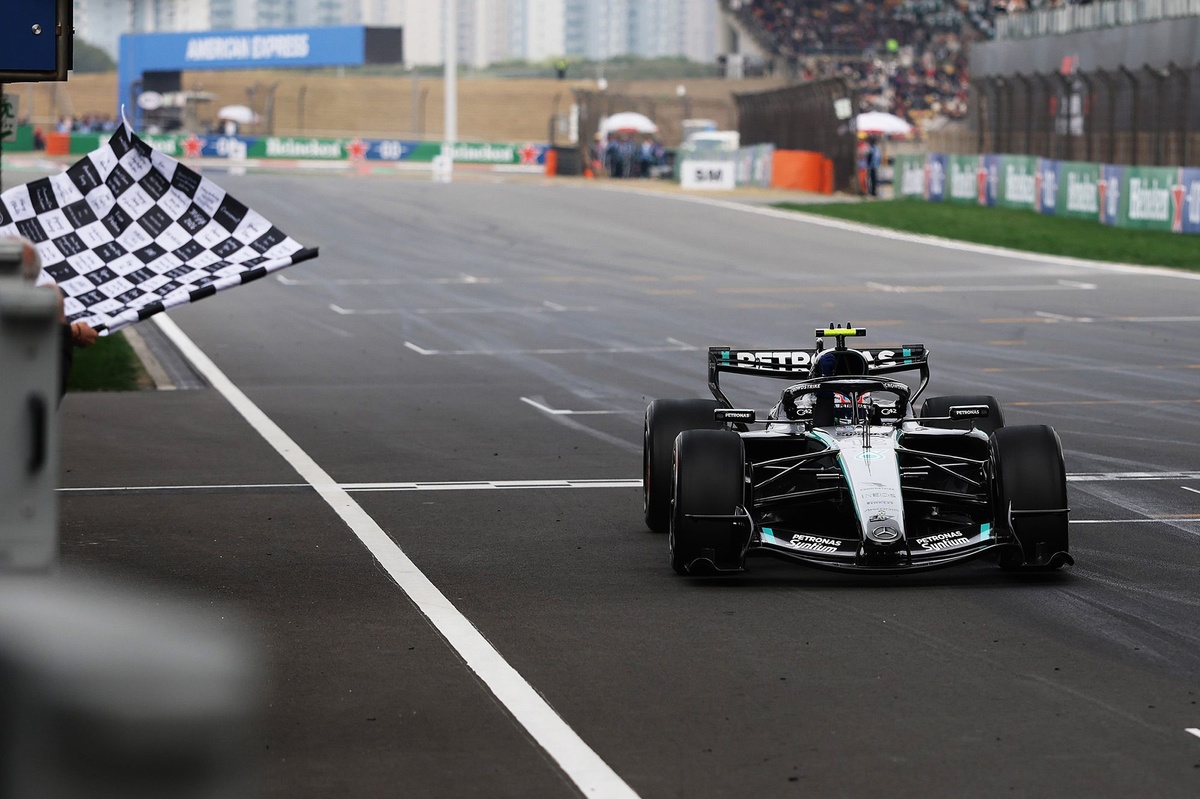

The Formula 1 power unit debate is heating up, and Mercedes team principal Toto Wolff has fired a warning shot across the FIA's bow: the integrity of the championship hangs in the balance over a crucial regulatory mechanism.
Key Points on the F1 ADUO Debate:
- The FIA's "Additional Design and Upgrade Opportunities" (ADUO) aims to prevent long-term power unit dominance in Formula 1.
- Manufacturers lagging by 2% to 4% in engine output could get one extra upgrade; those over 4% could receive two.
- Toto Wolff emphasizes that ADUO must be a "catch-up" mechanism for genuinely struggling suppliers, identifying Honda as the primary candidate.
- Ferrari team principal Frederic Vasseur views ADUO as a vital chance to enhance their power unit, raising questions about competitive advantage.
The F1 Engine Equalizer: A Double-Edged Sword?
Remember the early hybrid era of Formula 1, where one manufacturer ran away with the championship thanks to a superior power unit? The FIA certainly does, and they've installed a safety net for current F1 engine regulations: the Additional Design and Upgrade Opportunities (ADUO). This system is designed to prevent a repeat of historical dominance by allowing struggling engine suppliers a path to improvement.
The core idea is straightforward: every six races, the FIA measures the pure output of each Internal Combustion Engine (ICE). Manufacturers falling short by 2% to 4% compared to the grid's best ICE are granted one additional upgrade opportunity. If the deficit is more significant, exceeding 4%, they could receive two. It’s a mechanism intended to foster competitive balance, but its application is now sparking intense debate.
Wolff's Ultimatum: Transparency is Non-Negotiable
This "April break" in the F1 calendar isn't a holiday for the rule-makers. Discussions are rife between the FIA, teams, and engine manufacturers regarding the ADUO system – specifically, which parties will qualify for these crucial advantages. Mercedes boss Toto Wolff has been vocal, demanding absolute transparency and precision from the governing body.
"The principle of the ADUO was to allow teams that were on the back foot, in terms of the power unit, to catch up, but not to leapfrog," Wolff asserted. He stressed that any decision awarding an ADUO could dramatically impact the championship outcome if not handled with "absolute precision, clarity, and transparency." For Wolff, there is "no place for gamesmanship" when such high stakes are involved.
Identifying the True Underdog
According to Wolff, the intent behind ADUO is clear: to aid manufacturers truly facing difficulties. In his candid assessment, only one engine manufacturer currently fits that description. "As it seems for me, there's one engine manufacturer that has a problem and we need to help," he stated, implicitly pointing towards Honda.
He believes the other major power unit suppliers are "pretty much in the same ballpark," suggesting that additional development opportunities shouldn't be handed out to those already competitive. This firmly establishes Wolff's view that ADUO is strictly a catch-up tool, not a means for rivals to suddenly vault ahead.
Ferrari's Quest for More Power Ignites Debate
Unsurprisingly, attention immediately turns to Ferrari. The Scuderia, alongside McLaren, has emerged as Mercedes' closest challenger this season. Team principal Frederic Vasseur has openly acknowledged that ADUO represents a significant chance for Ferrari to make strides on the engine front, stating, "The addition of the ADUO will be an opportunity for us to close the gap."
However, this isn't a simple equation. Rivals argue that Ferrari has made specific strategic design choices, such as utilizing a smaller turbo. While this might offer initial advantages, it could also inherently impact peak power output. The contentious question becomes: should a team be granted an ADUO if its deficit stems from its own strategic engineering decisions?
Wolff reiterated his stance, not expressing "worry," but rather vigilance. "I think the FIA is looking at the same data, and I would very much hope that they continue to see themselves as protecting the integrity of the sport," he explained. The message from Mercedes is clear: the ADUO system must remain true to its original purpose as a corrective measure, ensuring fair competition and preventing an unwarranted shift in the F1 pecking order.
.jpg)


