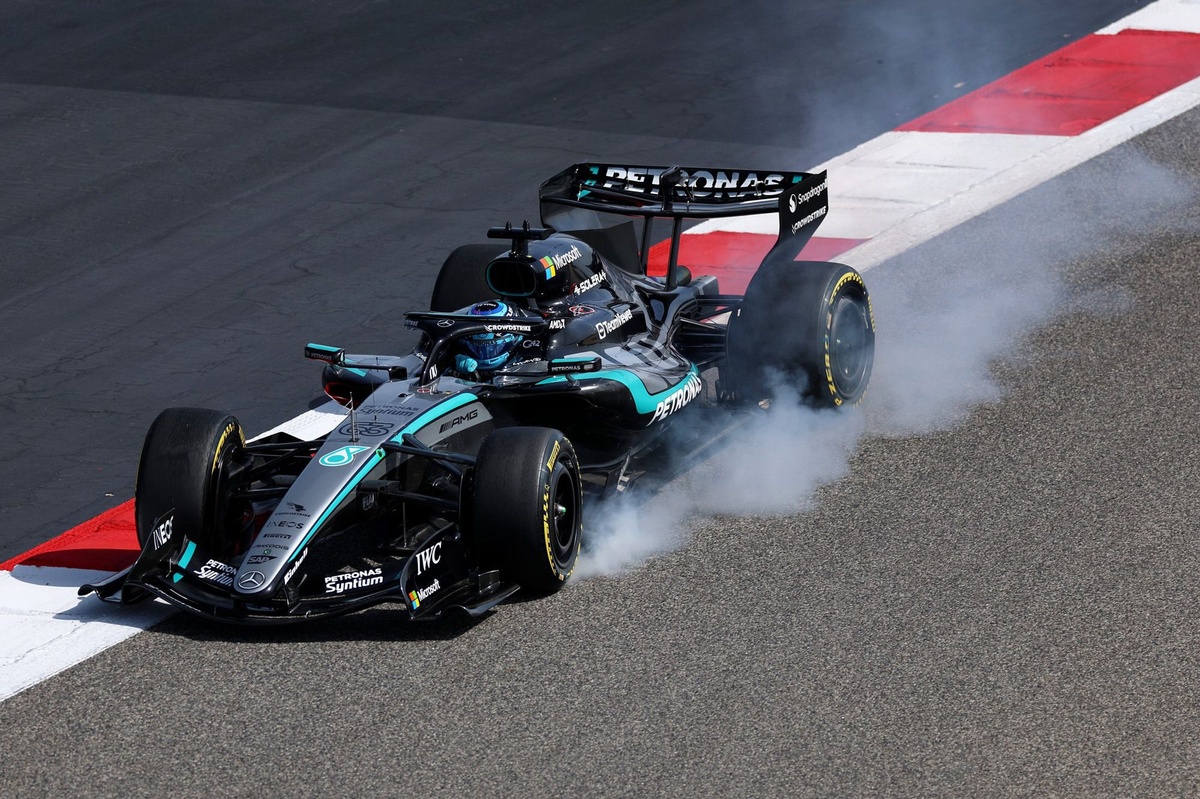

A storm is brewing in Formula 1, and at its epicenter is the formidable Mercedes engine, facing an unprecedented challenge that could redefine the season even before it truly begins. Team Principal Toto Wolff finds himself navigating a treacherous political landscape, as rivals intensify their lobbying efforts with the FIA regarding the engine's compression ratio.
Key Points:
- Mercedes' engine compression ratio is under intense scrutiny from rival teams, leading to potential FIA intervention.
- Toto Wolff has notably shifted his stance, acknowledging Mercedes could be "screwed" if opponents unite against their engine's legality.
- Rivals are pushing the FIA to adjust measurement procedures, questioning if Mercedes' 16:1 ratio is maintained on track.
- A looming March 1st homologation deadline raises serious questions about the readiness of Mercedes-powered teams for the Australian Grand Prix if rules change.
Mercedes' Compression Ratio Scrutiny
The technical specifications of the Mercedes engine have become a flashpoint in the Formula 1 paddock. While Toto Wolff maintains that all Mercedes power units adhere strictly to the 16:1 compression ratio rule during static tests, a different picture might emerge under race conditions. This discrepancy is what rival manufacturers are exploiting.
Opposing teams are urging the FIA to mandate adjusted inspection procedures. They argue that while Mercedes engines pass static checks at ambient temperatures, they could potentially achieve a higher, non-compliant ratio when running hot on the track. This technicality lies at the heart of the current controversy.
Wolff's Evolving Narrative: From Confidence to Caution
Just weeks ago, Toto Wolff famously told rivals to "get your shit together." Now, his tone has demonstrably shifted. He admits a growing "confusion" over how the issue suddenly escalated, especially after reading reports of imminent FIA intervention.
Wolff's previous defiance has been replaced by a candid admission: Mercedes would be "screwed" if the other engine manufacturers, the FIA, and the commercial rights holder all align against them. He points to an intense lobbying campaign from competitors, complete with "secret meetings" and "secret letters" to the governing body. This political maneuvering has clearly put Mercedes on the back foot.
The Clock is Ticking: FIA's Decision and the Race to Melbourne
The FIA now holds the key, with the ball firmly in its court. Any intervention would require a supermajority from the Power Unit Advisory Committee, four out of five engine manufacturers, plus the FIA and FOM. This complex decision-making process adds another layer of uncertainty.
A critical March 1st deadline for the homologation of 2026 engines looms large. If the FIA decides to adjust measurement procedures, perhaps by measuring hot engines or using live sensors, Mercedes and its customer teams – Williams, McLaren, and Aston Martin – would face a monumental challenge. Fundamental changes to engine design require extensive lead times, making a rapid adjustment before the Australian Grand Prix seem almost impossible.
"If you can't adhere to the regulation, then the FIA needs to come out with some kind of invention," Wolff stated, highlighting the precarious position.
Performance Claims Debunked: More About Precedent Than Power
Despite the high-stakes drama, Wolff downplays the actual performance gain from the disputed compression ratio. He dismisses rumors of 10 to 13 horsepower advantages, clarifying it's "just a few horsepower," more akin to two or three. Such a minor difference would be "almost negligible" over a grand prix.
For Wolff, the core issue isn't a massive power boost, but the dangerous precedent and "unquantifiable" consequences a rule change could set. He raises concerns about monitoring new rules, their impact on engine balancing systems (ADUO), and how it could allow competitors to fundamentally redesign engines mid-season. The uncertainty could ripple through future development cycles, disrupting the stability of the sport's technical regulations.
The Formula 1 world watches keenly as the FIA deliberates. The outcome will not only impact Mercedes' immediate season but could also set a significant precedent for future engine development and technical scrutiny in the pinnacle of motorsport.