
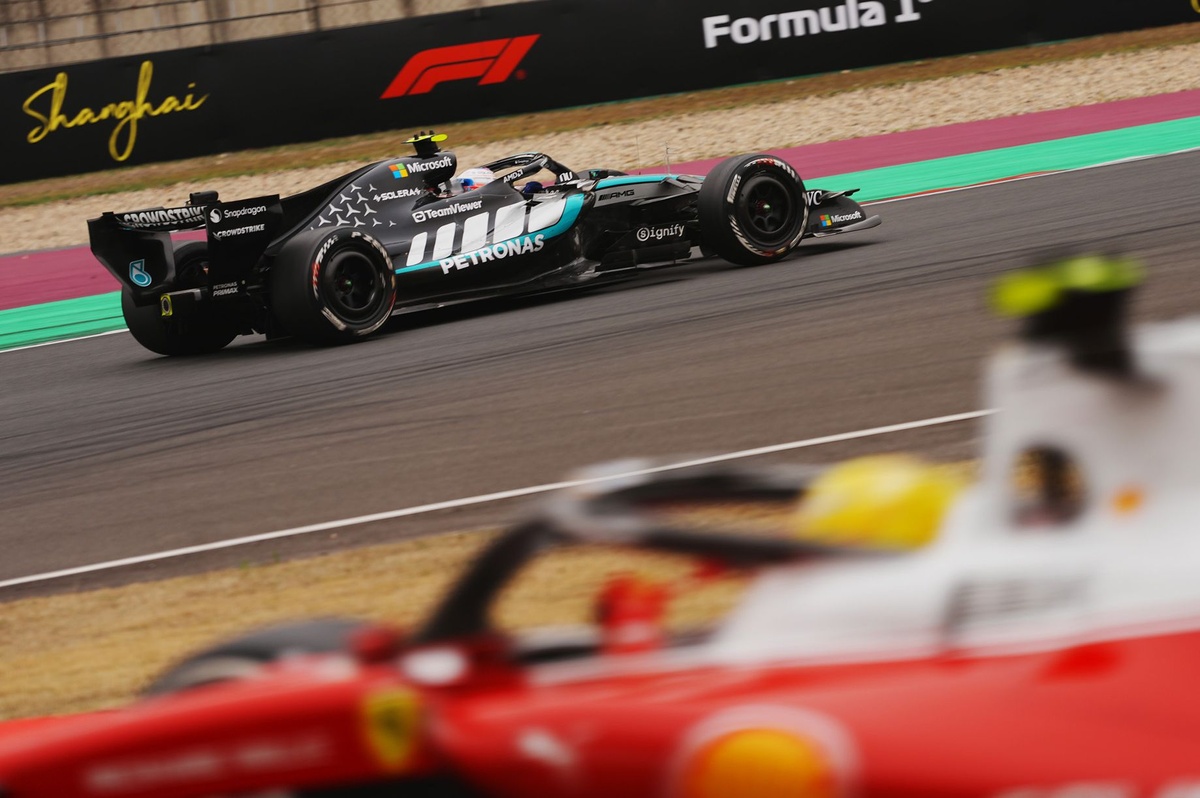

The Formula 1 paddock is buzzing, caught in a dramatic crossfire between two of its brightest stars. Lewis Hamilton, now in Ferrari red, has thrown a bombshell, hinting that his former team, Mercedes, might still be unleashing a clandestine 'party mode' during crucial qualifying sessions.
Key Points:
- Lewis Hamilton alleges Mercedes utilizes a hidden 'party mode' for superior qualifying pace.
- Mercedes has shown dominant form in qualifying this season, particularly in Q3, with a significant pace advantage.
- Lando Norris of McLaren vehemently dismisses Hamilton's theory as mere speculation.
- FIA regulations strictly prohibit variable engine modes during competitive F1 sessions.
Hamilton Ignites the "Party Mode" Speculation
Lewis Hamilton, a legend forged during his dominant years at Mercedes, is stirring the pot with a familiar accusation. After witnessing the Silver Arrows consistently outpace rivals in qualifying this season – often by a staggering six-tenths of a second or more in Q3 – the seven-time world champion believes there's more than meets the eye.
He drew parallels to the infamous 'party mode' he himself dubbed in 2018, an aggressive engine map that gave Mercedes a crucial edge during the grid-defining sessions. According to Hamilton, Mercedes still has a 'mode they're able to go to' once Q2 hits, creating a sudden, significant performance jump that his current Ferrari team lacks.
"In Q1 we're not that far away," Hamilton noted, "and then all of a sudden it's like a huge step... it's a big step." This observation fuels his suspicion that an extra layer of performance is being unlocked when it truly matters.
The FIA's Stance: A Single Engine Mode Rule
However, the landscape of Formula 1 has changed significantly since the original 'party mode' era. In mid-2020, the FIA implemented strict regulations, specifically Article C5.23 of the technical rulebook, to ban teams from switching engine settings between qualifying and race sessions. This rule mandates a 'single ICE mode' for all competitive laps, a direct response to concerns about variable engine power.
This official stance makes any suggestion of a selectable power surge seem improbable on paper. Yet, Hamilton, with his intimate knowledge of the Mercedes operation, clearly suspects a clever workaround or an inherent design advantage allowing for peak power delivery under specific conditions.
Norris Fires Back: "Create Things In Your Head"
The dramatic claims didn't take long to reach other Mercedes-powered teams. When asked about Hamilton's theory, McLaren driver Lando Norris wasted no time shutting it down with a blunt retort: "We don't have that." As a user of the Mercedes power unit himself, Norris's denial carries significant weight.
He went further, questioning the root of Hamilton's speculation, suggesting that "Sometimes when you're a bit off you create things in your head." This sharp response underscores the competitive tension and differing perspectives within the paddock, especially when a former teammate makes such pointed remarks.
Unanswered Questions: Raw Pace or Clever Engineering?
So, what explains Mercedes' undeniable qualifying superiority this season? Is it a fundamental design strength of their W15 chassis that allows for optimal tire warm-up and single-lap performance? Or is there, as Hamilton implies, an innovative interpretation of the FIA's 'single engine mode' rule that grants them a peak power advantage?
The debate highlights the relentless pursuit of every millisecond in Formula 1. While Lando Norris dismisses the notion, Lewis Hamilton's long history with Mercedes suggests his comments aren't made lightly. The FIA will undoubtedly be keeping a close eye on the Silver Arrows' impressive qualifying displays, as the 'party mode' ghost continues to haunt the grid.


