
Formula 1 is a brutal sport where sheer talent and relentless performance don't always guarantee the ultimate prize. For every champion celebrated, there's often a driver who delivered an equally, if not more, breathtaking season, only to be denied by circumstance, unreliability, or sheer bad luck. We're diving into the history books to honor those F1 drivers who should have been champions, showcasing campaigns that transcend the final points tally.
Key Performances Unrewarded: A Snapshot
- Drivers often outperformed champions despite inferior machinery or extreme misfortune.
- Mechanical unreliability and controversial decisions frequently cost deserving contenders.
- These seasons highlight exceptional skill, resilience, and raw speed that captivated fans.
- Some campaigns are widely considered superior to those of the actual title winners.
When Brilliance Met Bad Luck: F1's Heartbreaking Near Misses
The motorsport faithful understand that a championship trophy doesn't always reflect the true standout performer of a season. The annals of Formula 1 are littered with campaigns where drivers pushed limits, mastered machines, and delivered unforgettable moments, yet finished without the ultimate glory. Here, we revisit those iconic seasons.
The Original Uncrowned King: Stirling Moss, 1958
The 1958 F1 season remains a stark reminder that stats don't tell the whole story. Stirling Moss was the undisputed benchmark, claiming four wins and leading 234 laps – significantly more than champion Mike Hawthorn's single victory and 125 laps led. Moss achieved this in two different cars, including an underpowered privateer Cooper and the challenging Vanwall. His mere single-point deficit to Hawthorn, despite outperforming him throughout, solidifies 1958 as one of F1's most glaring injustices. Moss's decision to defend Hawthorn from disqualification that year only adds to the legend of his sportsmanship over championship ambition.
Tony Brooks' Front-Engined Fight, 1959
In an era of rapid technological shift, Tony Brooks delivered a near-perfect season in the front-engined Ferrari Dino 246. While Cooper ushered in the rear-engined revolution, Brooks demonstrated immense skill to dominate races like the French GP and Avus. Losing out by just four points to Jack Brabham, Brooks's campaign was severely hampered by Ferrari's decision to skip the British GP, a Belgian GP cancellation, and a crucial clutch failure at Monza. Despite these hurdles, he consistently outperformed his teammates, proving his mettle against the tide of innovation.
Jim Clark's Fragile Genius, 1967
The Lotus 49 with its mighty Cosworth DFV engine was a rocket, but its early-season fragility was Jim Clark's nemesis in 1967. Clark secured six poles and led every race he entered from the third round onwards. Yet, despite four wins, five other races saw him fall victim to transmission, suspension, electrical, or fuel issues. His heroic charge from a lap down at Monza, only to be denied by fuel starvation on the final lap, perfectly encapsulates the season's heartbreak. Clark's sublime talent repeatedly coaxed pace from a temperamental machine, making his unrewarded season a testament to his sheer driving prowess.
Jackie Stewart's Valiant Charge, 1968
The 1968 season tragically began with the loss of Jim Clark, but it saw the rise of another legend: Jackie Stewart. Despite missing two races due to injury, Stewart returned to deliver a season of unparalleled skill in his Matra MS9. His wet-weather masterclasses at Zandvoort and the Nürburgring were legendary, showcasing his superior car control. A late-race fuel issue at the Belgian GP and an engine failure at Monza cost him crucial points. Ultimately, a fuel pump problem in the Mexico finale sealed his fate, denying him the title by an unrepresentative 12 points to Graham Hill, despite Stewart's obvious and consistent brilliance.
Niki Lauda's Heroic Reversal, 1976
The 1976 F1 season is etched in legend, not just for James Hunt's dramatic championship win, but for Niki Lauda's incredible, and ultimately unrewarded, performance. Lauda was cruising towards a second title, having won four of the first six races and holding a significant 26-point lead. His horrific crash at the Nürburgring and subsequent heroic return just six weeks later are iconic. Despite his unimaginable ordeal, Lauda managed to carry a three-point lead into the final race. His withdrawal from the treacherous Fuji finale handed Hunt the title, creating one of motorsport's most poignant "what-ifs" – a championship truly lost to fate.
Dominance Denied: When the Fastest Didn't Finish First
Sometimes, a driver's undeniable speed and mastery are simply not enough to overcome the unpredictable nature of Formula 1. These are the stories of drivers who dominated, only to see the championship slip away.
Nigel Mansell's Unbeaten Pace, 1987
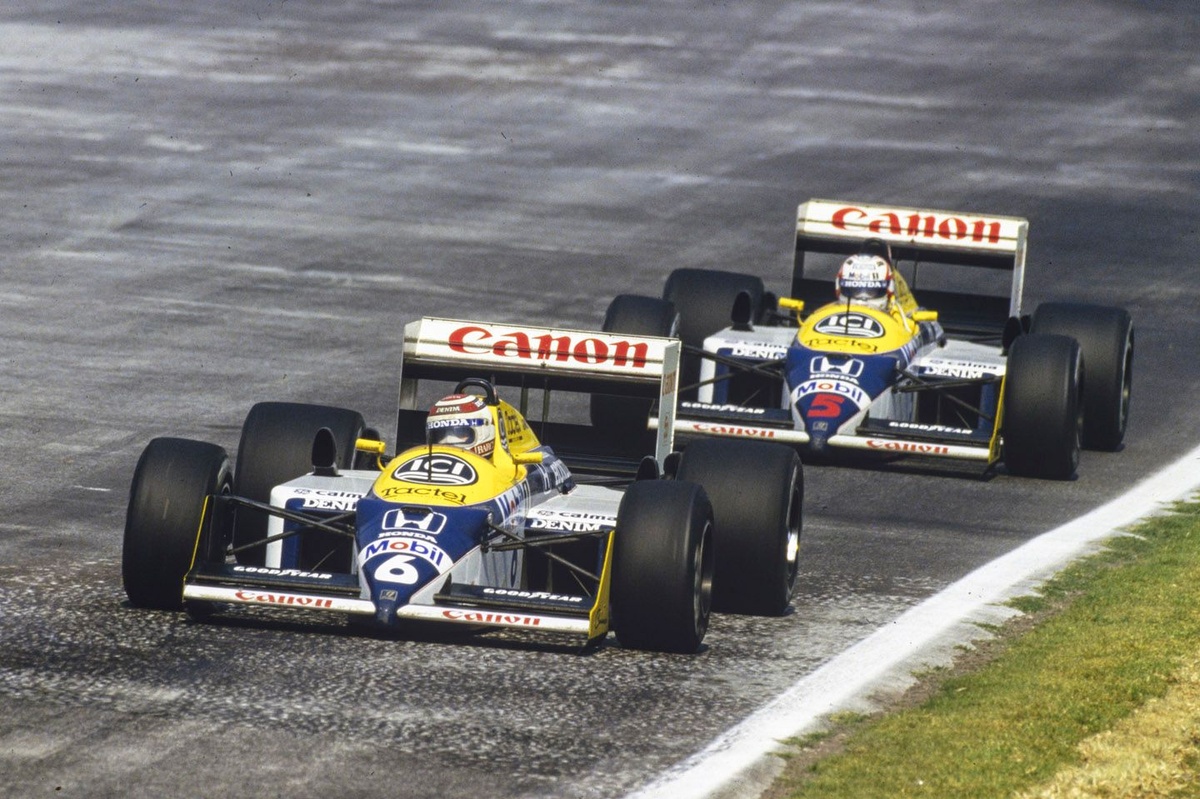
The 1987 season was a masterclass in raw speed from Nigel Mansell. Piloting the mighty Williams-Honda FW11B, he secured six wins and eight poles, leading an astounding 416 laps compared to champion Nelson Piquet's three wins, four poles, and 154 laps led. Mansell's iconic charge at Silverstone is legendary. However, mechanical failures (turbo, wheelnut, electrical issues) at Monaco, Hungaroring, and Portugal cruelly robbed him of probable victories. While his Suzuka qualifying crash was a self-inflicted blow that cost him the final two rounds, his season had already been one of overwhelming, unrewarded performance.
Alain Prost's Ferrari Revival, 1990
In 1990, Alain Prost single-handedly revitalized Ferrari, transforming it into a title contender against the formidable McLaren-Honda. While the championship ended controversially with Ayrton Senna's collision at Suzuka, Prost's season was a testament to his precision and tactical genius. His four retirements were due to mechanical issues, not driver error. His drive from 13th to victory in Mexico stands as one of F1's greatest comeback performances. Prost consistently outperformed teammate Nigel Mansell, showcasing a near-flawless campaign that many argue deserved the title.
Ayrton Senna's McLaren Magic, 1993
Ayrton Senna's 1993 campaign is often hailed as one of his absolute best, even without a championship. Driving an underdog McLaren MP4/8 powered by a customer Ford engine, he battled the dominant, gadget-laden Williams FW15C of champion Alain Prost and Damon Hill. Senna conjured five victories, including legendary wet-weather masterclasses at Interlagos and Donington. He even led the championship early on. His only significant error leading to a non-score was a collision at Monza. Senna's ability to extract such performance from a comparatively weaker package solidified his status as the sport's greatest talent at the time.
Michael Schumacher's Ferrari Force, 1997
Michael Schumacher's 1997 season saw him almost drag an inferior Ferrari F310B to an unlikely title against the dominant Williams FW19. Schumacher delivered breathtaking wet-weather victories at Monaco and Spa, and strong wins in Canada and France. He even led the championship into the final round against Jacques Villeneuve. While the infamous collision at Jerez tarnished the ending, his relentless pursuit and ability to maximize every opportunity in a car that was demonstrably slower for much of the season underscored his phenomenal skill. It was the genesis of the legendary Schumacher-Ferrari era.
Kimi Räikkönen's Blistering Speed, 2005
The 2005 season saw Kimi Räikkönen deliver arguably his finest performances, showcasing blistering speed in the revolutionary McLaren MP4-20. However, a combination of crippling unreliability and engine penalties due to the two-race engine rule proved insurmountable. Despite six dominant wins and several heroic recovery drives (like his charge from 17th to victory at Suzuka), mechanical failures at Imola and Hockenheim, plus engine-related grid penalties, allowed Fernando Alonso to secure the title. Räikkönen's sheer pace and aggressive driving marked him as the fastest man on track, but a fragile machine denied him.
Jenson Button's Strategic Mastery, 2011
Jenson Button's 2011 season was a masterclass in strategic thinking and tyre management, arguably surpassing his championship-winning year. Outscoring teammate Lewis Hamilton by 43 points, and finishing ahead of Mark Webber and Fernando Alonso, Button demonstrated incredible consistency and opportunistic brilliance. His legendary victory at the Canadian GP, snatching it from Sebastian Vettel on the final lap after multiple incidents, remains a highlight. Sublime tyre conservation at the Hungaroring and a dominant win at Suzuka further underscored a season where Button maximized every single point available.
Fernando Alonso's F2012 Miracle, 2012
If any season epitomizes a driver defying the odds, it's Fernando Alonso's 2012 campaign. The Ferrari F2012 was, on average, the fourth-fastest car on the grid. Yet, through sheer determination, opportunistic drives, and minimal errors, Alonso dragged it to within three points of the title. His wins in Malaysia (from P8 in the rain), Valencia (from P11), and Germany were pure driving masterpieces. Apart from a single collision at Japan, Alonso's season was virtually flawless. His ability to consistently challenge the superior Red Bulls and McLarens makes 2012 arguably the greatest unrewarded individual performance in Formula 1 history.
Lewis Hamilton's Abu Dhabi Heartbreak, 2021
The 2021 F1 season was a titanic battle between Lewis Hamilton and Max Verstappen, a clash of titans that went down to the wire in controversial fashion. While both drivers delivered stunning performances, Hamilton's late-season surge, culminating in his dominant display at Interlagos (from 10th to win after grid penalties), was nothing short of phenomenal. Leading the final race in Abu Dhabi, Hamilton was poised for a record-breaking eighth title until an unprecedented Safety Car procedure gifted Verstappen the opportunity to snatch victory on the very last lap. A championship unjustly taken, rather than fairly lost.
Max Verstappen's Relentless Pursuit, 2025
Even future seasons hold tales of unrewarded brilliance. In 2025, Max Verstappen came within two points of his fifth world title, driving an RB21 that was often inferior to the rival McLaren MCL39. His season was a masterclass in extracting every ounce of performance, often making overnight improvements with Red Bull's engineering prowess. Opportunistic wins at Suzuka and Imola, followed by a late-season surge with upgrades, showcased his relentless pursuit. Despite McLaren's own blunders playing a part, Verstappen's raw, uncompromising driving, save for one "red-mist moment" in Spain, made his 2025 campaign one of pure, unadulterated excellence.