
Key Takeaways from Villeneuve's Analysis:
- Jacques Villeneuve believes Mercedes' early 2026 F1 success isn't comparable to their 2014 juggernaut.
- He highlights the Mercedes car's impressive balance and ease of driving, as demonstrated by George Russell.
- Villeneuve predicts rival teams will quickly adapt, particularly in energy management.
- Ferrari drivers have already showcased superior "racecraft" in battling the Silver Arrows.
Not Your Father's Dominance: Villeneuve's Verdict
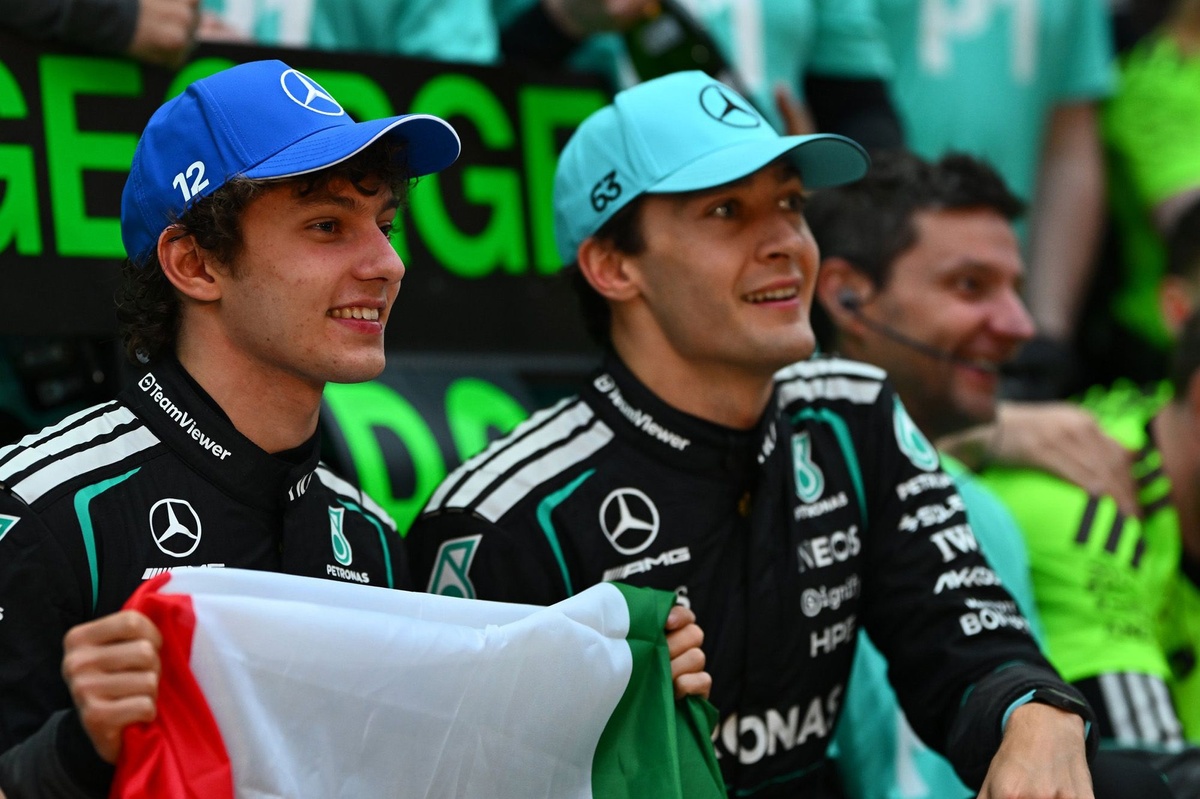
While Mercedes has stormed out of the gates, claiming victories at the Australian Grand Prix, the Chinese sprint race, and the Chinese Grand Prix, the 1997 F1 champion warns against immediate comparisons to their eight-year reign from 2014 to 2021. That period saw Lewis Hamilton and Nico Rosberg secure seven drivers' championships and the team eight constructors' titles, an almost unassailable advantage.
Villeneuve told Sky Sports Germany, "It's a dominance, but it's not huge. It's not like 2014 where there was more than a second and they still had boost to pump up." This isn't just a matter of pace; it's about the fundamental gap and the inherent potential for other teams to adapt. Crucially, other cars are also running Mercedes engines, suggesting the advantage isn't solely power unit related.
Decoding Mercedes' Early Edge
What, then, is the secret to Mercedes' early success in 2026 F1? Villeneuve points to a beautifully engineered chassis. "It's just that they seem to have designed a car that is easy to drive, that is well-balanced," he observed. He cited George Russell's seemingly effortless performance, noting, "If you look at Russell, he's not even breaking a sweat. It's just like a drive in the park." This ease allows drivers to manage tires more effectively and push without undue risk.
The Balance of Power: Why 2026 is Different
The key difference, according to Villeneuve, lies in the potential for rivals to quickly close the gap. He firmly believes that "other teams will figure a way to manage their energy better." Unlike the vast technological chasm of 2014, the current landscape presents a more navigable challenge for competitors. The focus shifts to optimization rather than reinventing the wheel.
Rivals on the Horizon: Ferrari's Energy Masterclass
Indeed, glimpses of this adaptability are already emerging. Villeneuve highlighted the impressive efforts from the Ferrari camp. "If you look at the races, the two Ferrari drivers have had better racecraft," he stated. Their ability to strategically deploy energy in the heat of battle, particularly in the opening laps, has kept Russell on his toes.
He elaborated: "Look at the first few laps. They figured out in the moment how to use their energy and they bring the fight to Russell. That's been fun and impressive." This real-time tactical prowess suggests that while Mercedes has a strong package, their dominance isn't unchallenged on track.
Schumacher Backs Ferrari's Strategic Play
Fellow F1 pundit Ralf Schumacher echoed similar sentiments, acknowledging Ferrari's surprising performance, especially regarding energy management. "Going here, Ferrari surprised me a bit," Schumacher noted, referring to the recent races. He even suggested that in the Chinese sprint, Ferrari appeared to have better battery management in certain critical areas compared to Mercedes. While acknowledging the unique nature of the Australian Grand Prix track, Schumacher's observations reinforce the idea that other teams are already finding their stride in adapting to the new regulations.
The Road Ahead: Can Anyone Challenge the Silver Arrows?
The early stages of the 2026 F1 season clearly belong to Mercedes, but the narrative of uncontested supremacy is being vigorously debated. The insights from Villeneuve and Schumacher paint a picture of a strong, well-engineered Mercedes challenger, but one facing capable and adaptable rivals. The battle for energy optimization and strategic racecraft will be pivotal. As teams continue to unravel the complexities of the new regulations, the initial gap could shrink faster than many anticipate, setting the stage for a compelling championship fight rather than a procession.


