
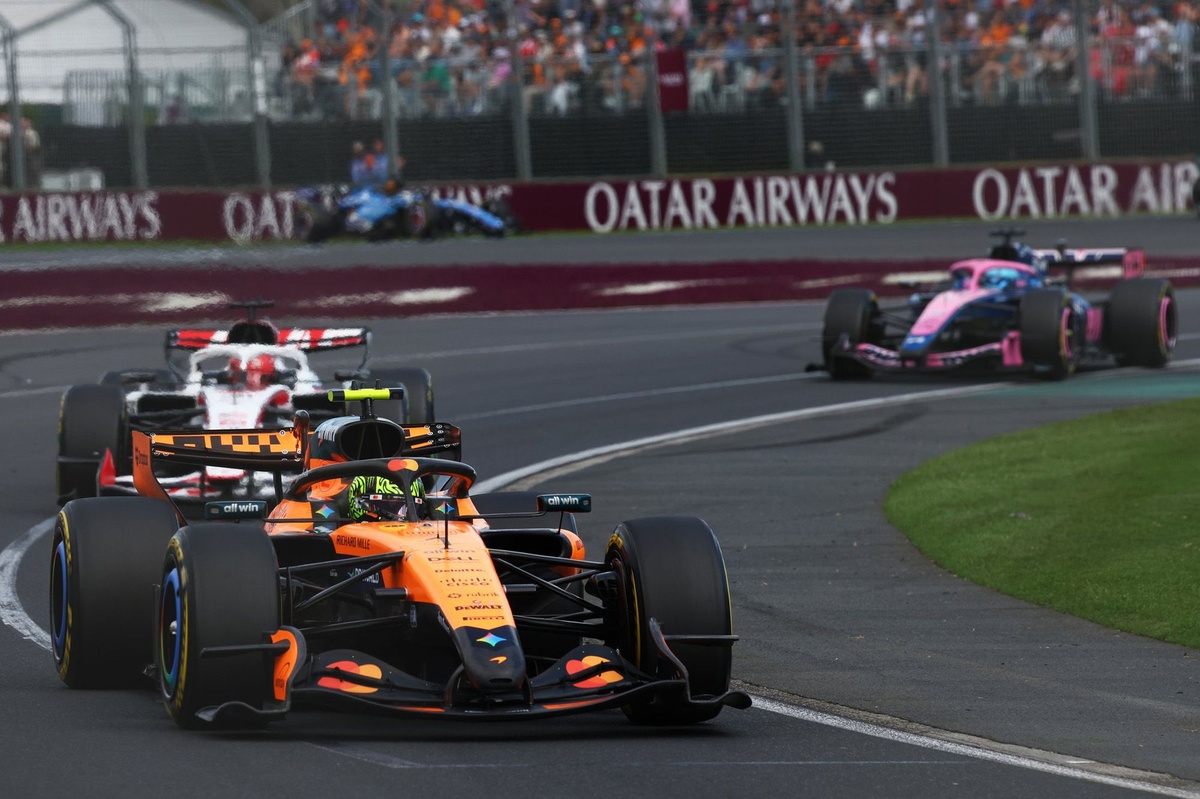

The future of Formula 1 is under fire from one of its brightest stars. Lando Norris, never one to shy away from hard truths, has unleashed a scathing critique on the impending 2026 F1 regulations, branding them "very artificial" and a dangerous step backward for the sport.
The McLaren ace, fresh off a hard-fought fifth-place finish at the Australian Grand Prix, didn't mince words, predicting a future of "chaos" and a chilling increase in accident risk. His comments ignite a critical debate surrounding F1's bold regulatory overhaul.
Key Points from Norris:
- Lando Norris vehemently criticizes the upcoming 2026 F1 regulations, deeming them "artificial" and a significant safety risk.
- He highlights concerns over increased battery management and drastic speed differentials between cars on track.
- The McLaren star warns of "chaotic" races and a heightened potential for severe accidents.
- Norris suggests these new cars could mark a decline from Formula 1's "best ever" to "probably the worst."
Norris Sounds the Alarm on F1's Future Direction
The core of Norris's frustration lies with the radical shift in power unit regulations for 2026. The new rules will see electric power playing a far more prominent role, fundamentally altering battery management strategies during races. This, according to drivers like Norris, creates an "artificial" dynamic that detracts from pure racing skill.
"We've come from the best cars ever to probably the worst," Norris stated previously, a sentiment that only intensified after the frenetic Australian Grand Prix. He argues that the constant "yo-yoing" for position, while seemingly exciting, isn't genuine competition when dictated by power unit decisions.
The Perilous Pace of Power Management
Beyond the competitive aspect, Norris raises severe safety concerns. The varying energy management strategies could lead to drastic closing speeds between cars, creating a hazardous environment on track. Imagine a car harvesting battery while another is pushing flat out – the speed difference could be immense.
When "Chaotic" Becomes "Dangerous"
"You can have 30, 40, 50 kph speeds [differences]," Norris explained. "When someone hits someone at that speed, you're going to fly and you're going to go over the fence and you're going to do a lot of damage to yourself and maybe to others." This stark warning highlights the potential for serious incidents, leaving drivers feeling like they are "just waiting for something to happen."
The Albert Park race, with its constant positional changes, offered a glimpse into Norris's predictions. While some fans might enjoy the unpredictability, the McLaren driver views it as uncontrolled chaos, not the peak of Formula 1 racing. His impassioned plea demands a closer look at the safety implications before these 2026 regulations are set in stone.