
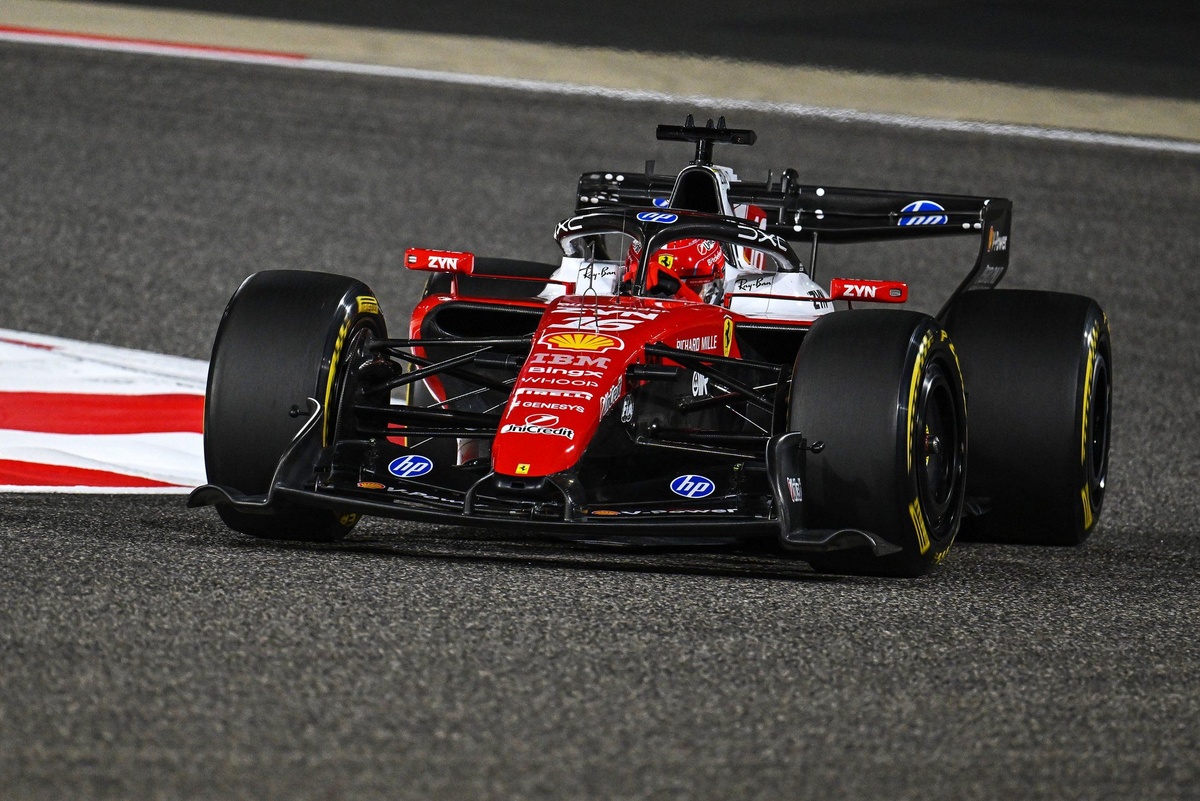

The 2026 Formula 1 season looms large, a distant yet crucial horizon for every team. And if Charles Leclerc's candid assessment is anything to go by, a familiar two-horse race might already be forming at the front.
Key Takeaways:
- Charles Leclerc believes Red Bull and Mercedes hold an early edge for F1 2026.
- New regulations make deciphering true car performance incredibly complex.
- Ferrari is focused on internal program validation and robust reliability.
- The "sandbagging" mind games are already in full swing among top teams.
Leclerc's Stark 2026 F1 Forecast: Ferrari Chasing Early
Charles Leclerc, Ferrari's star driver, hasn't minced words about the preliminary outlook for Formula 1's 2026 season. Despite the monumental regulation changes, he pegs Red Bull and Mercedes as the teams currently leading the charge, leaving Ferrari and McLaren to play catch-up. This early verdict from Maranello offers a fascinating glimpse into the internal perceptions of the sport's top contenders.
The Unpredictable Realm of New Regulations
The 2026 Formula 1 season will introduce a radical overhaul of both chassis and engine regulations. This seismic shift creates an incredibly fluid competitive landscape, making any definitive predictions exceptionally challenging. Teams are grappling with entirely new power unit dynamics, demanding intricate energy management strategies like 'lift-and-coast' and earlier downshifting.
These technical complexities are so profound that even minor adjustments can drastically alter lap times, as Aston Martin veteran Fernando Alonso highlighted. He revealed that changing a single setting could result in an eight-tenths swing, underscoring the monumental task of understanding true car potential. Leclerc echoed this sentiment, admitting the difficulty in accurately assessing where each team truly stands.
Ferrari's Foundational Focus for F1 2026
Despite the uncertainty surrounding the pecking order, Leclerc expressed satisfaction with Ferrari's internal progress. The Scuderia is meticulously working through its development program, a crucial phase for any new regulation cycle. Crucially, Ferrari has encountered "no reliability issues so far," a positive sign for foundational development.
This reliability and adherence to expected parameters provide a solid base for Ferrari to build upon. In an era of such significant change, ensuring the core package is robust and predictable is paramount before pushing for ultimate performance gains.
The Art of F1 Sandbagging: Early Mind Games
The paddock is already awash with classic Formula 1 mind games, a customary ritual at this stage of development. Teams are "throwing the ball to the other guys," as Leclerc described it, attempting to downplay their own performance while subtly hyping rivals. This strategic misdirection makes genuine analysis even more difficult for outsiders.
Leclerc noted that Red Bull has demonstrated "very impressive things power-unit-wise," particularly during early test runs. He also pointed out Mercedes' capacity to "hide a lot more" of their potential, even while occasionally showcasing impressive pace. This veil of secrecy is a classic pre-season tactic, designed to keep competitors guessing and pressure at bay.
Who's Really Ahead? Early Test Benchmarks
While the true pecking order remains shrouded in mystery, some early test benchmarks offer tantalizing clues. During recent sessions in Bahrain (likely early simulations or specific component testing for the 2026 regulations), Mercedes' Andrea Kimi Antonelli posted a blistering 1m33.669s. This put him ahead of Ferrari's incoming Lewis Hamilton, who recorded a 1m34.209s, and McLaren's Oscar Piastri with a 1m34.549s.
Intriguingly, Red Bull's Max Verstappen registered a 1m34.798s on an earlier test day. These times are mere snapshots, of course, but they provide early data points in the complex F1 2026 puzzle.


