

The heartbreak of a dead pickleball paddle hitting its last shot is real. You’ve invested in your game, and you deserve every ounce of performance from your gear. While every paddle eventually fades, smart habits can dramatically extend its peak lifespan, keeping your game sharp and your wallet happy.
- Temperature Control: Protect your paddle from extreme heat and cold.
- Surface Shield: Use a paddle cover to guard against dings and preserve spin.
- Regular Cleaning: Maintain surface friction for optimal spin and control.
- Smart Storage: Keep your paddle indoors, away from harsh elements.
The Inevitable Decay vs. Preventable Damage
Every time a pickleball smacks your paddle, its internal core — whether honeycomb polymer or engineered foam — takes a hit. Thousands of these impacts gradually compress the structure, leading to dead spots, reduced rebound, and a shrinking sweet spot. This is the natural lifecycle, and it’s unavoidable.
What is avoidable is prematurely shortening that life. Carelessness with heat, moisture, hard knocks, and sloppy storage can strip months, even years, off your paddle's prime. The difference between a paddle performing brilliantly at 18 months and one fading at 8 often comes down to these crucial habits, not manufacturing flaws.
Temperature Terror: Your Paddle's Silent Killer
Few threats are as damaging or overlooked as extreme temperatures. Leaving your pickleball paddle in a hot car is a death sentence. Interior car temperatures can rocket past 140°F, softening the adhesives that bond the face to the core and even warping the core material itself. Thermoformed paddles are especially vulnerable, having been formed under heat and pressure originally.
The solution is simple and free: keep your paddle indoors, in a stable temperature environment. Never in the car boot, the garage, or a sunny window. After playing outdoors in the heat, bring it inside immediately. Freezing temperatures are equally dangerous, making composite materials brittle and prone to micro-cracking upon impact.
Shielding Your Investment: The Power of a Paddle Cover
A quality paddle cover won't prevent the internal wear from gameplay – that’s just physics. However, it’s absolutely essential for protecting the exterior from scratches, dings, and abrasion during transport and storage. For paddles with a raw carbon fiber face, this gritty texture is what generates crucial spin. Protecting that surface when not in play directly protects your spin game.
Think of it like a phone case – it keeps the screen from cracking, even if the software ages.
Maintain Your Edge: The Art of Paddle Hygiene
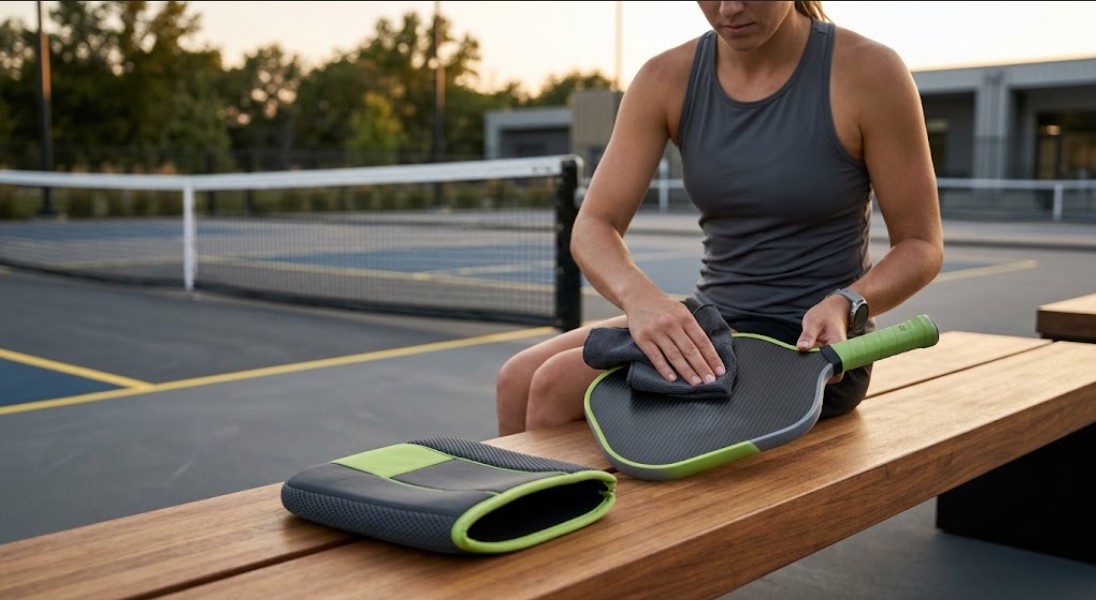
Every match leaves behind a film of dirt, ball residue, and court grime on your paddle face. This buildup quietly erodes the surface friction vital for grip and spin. A quick wipe with a microfibre cloth after each session is a fast way to maintain consistent performance.
For a deeper clean, specialized paddle cleaning sprays are ideal. Simply spray, wipe, and you're done. Raw carbon fiber paddles truly benefit from a dedicated cleaning block, designed to lift embedded debris without damaging that precious textured surface. Crucially, never use household cleaners, solvents, or abrasive materials; they can strip surface treatments or leave residue that fundamentally alters ball reaction.
Your high-performance pickleball paddle is a marvel of composite engineering, built for rapid-fire action. A little discipline in how you store, cover, and clean it won't stop time entirely, but it will ensure you get significantly more months of peak performance, session after intense session.