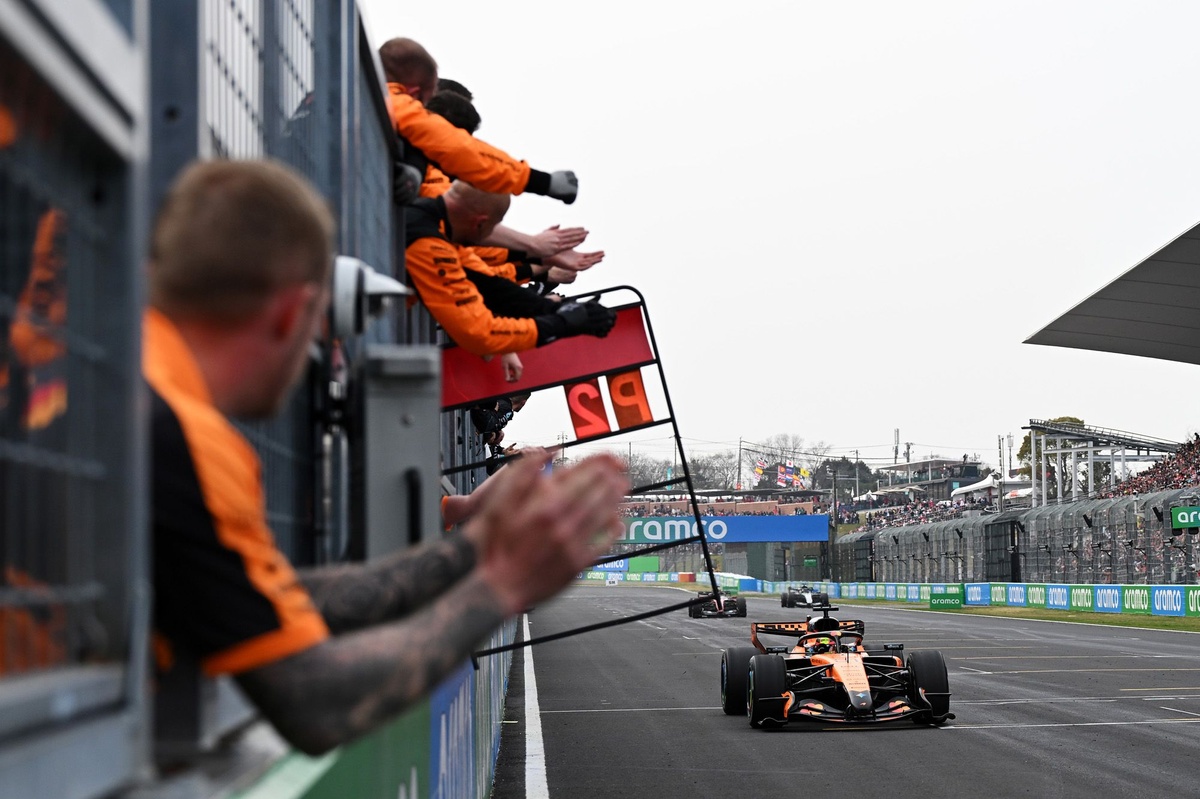

McLaren shocked the Formula 1 world with Oscar Piastri's stellar podium at the Japanese Grand Prix, but team principal Andrea Stella urges caution – was this a genuine comeback or a moment flattered by circumstances? After a disastrous start to the 2026 F1 season, the papaya squad delivered a performance that has fans buzzing and rivals taking note.
Key Takeaways from Suzuka:
- Oscar Piastri secured McLaren's first 2026 F1 podium, starting and finishing P3.
- Piastri briefly led the race, showcasing significant raw pace.
- Team Principal Andrea Stella attributes some performance to power unit understanding and track characteristics, not just chassis strength.
- Despite the success, McLaren acknowledges a significant aerodynamic gap to Mercedes and Ferrari remains.
The Orange Sparkle at Suzuka
From the ashes of a frustrating start to the 2026 season, McLaren roared to life at the Japanese Grand Prix. Oscar Piastri, finally making a race start after prior setbacks in Australia and China, defied expectations. He qualified P3, a mere three-tenths off Mercedes' Kimi Antonelli, setting the stage for a dramatic Sunday. This McLaren F1 turnaround in Japan has ignited the hopes of the Woking faithful.
Piastri's Race of What-Ifs
The start was pure adrenaline. With both Mercedes cars fumbling off the line, Piastri seized the moment, sweeping around the outside into Turn 1 to snatch the lead. He masterfully held off George Russell, even re-passing him after a brief P.U. exchange. The McLaren young gun controlled the race’s early stages, demonstrating impressive pace and defensive driving.
However, fate intervened on Lap 21. A safety car, triggered by Oliver Bearman’s crash, became a game-changer. Antonelli capitalized with a 'cheap' pit stop, emerging to lead the restart. In clear air, the Mercedes W17 unleashed its true potential, pulling a decisive 13.7-second gap on Piastri by the flag. Lando Norris, hindered by reliability woes, finished P6, a further 10 seconds adrift, highlighting the contrasting fortunes within the team.
Peeling Back the Performance Layers
Was Piastri truly robbed of a win, or did the safety car merely expose the underlying truth? Team principal Andrea Stella admitted the pace was a surprise, especially how McLaren not only kept Russell at bay but even extended the gap initially. He mused on the 'what-if' of a direct fight against Russell without the safety car, believing a win against the Brit was possible. However, Antonelli's Mercedes pace was undeniable.
Powering Up: The Mercedes Engine Factor
Stella is clear: Mercedes and Ferrari still hold an aerodynamic edge. Their cars show higher cornering speeds, a testament to superior grip generation. Yet, McLaren's progress in understanding and optimizing the Mercedes power unit is closing the gap. This deeper comprehension allowed them to be on par with Ferrari in Japan, leveraging engine strength where others excelled aerodynamically.
Chassis Challenges & Suzuka's Helping Hand
Another crucial factor highlighted by Stella was Suzuka's freshly repaved track. The exceptionally high surface grip might have masked some of McLaren's inherent chassis weaknesses. Historically, the team has been more susceptible to front tire graining than its rivals. This high-grip surface potentially flattered the MCL38’s performance, allowing it to punch above its weight.
The Road Ahead: Miami Upgrades & Reality Check
While McLaren's Japanese Grand Prix performance provided a much-needed morale boost and a valuable podium, Andrea Stella remains grounded. The objective hasn't changed: significant chassis improvement is paramount. The team is now eyeing Miami, where a substantial upgrade package is anticipated. However, unlike 2023, when their mid-season jump caught rivals off guard, this time, everyone will be bringing their A-game. The true test of McLaren's 2026 potential still lies ahead.