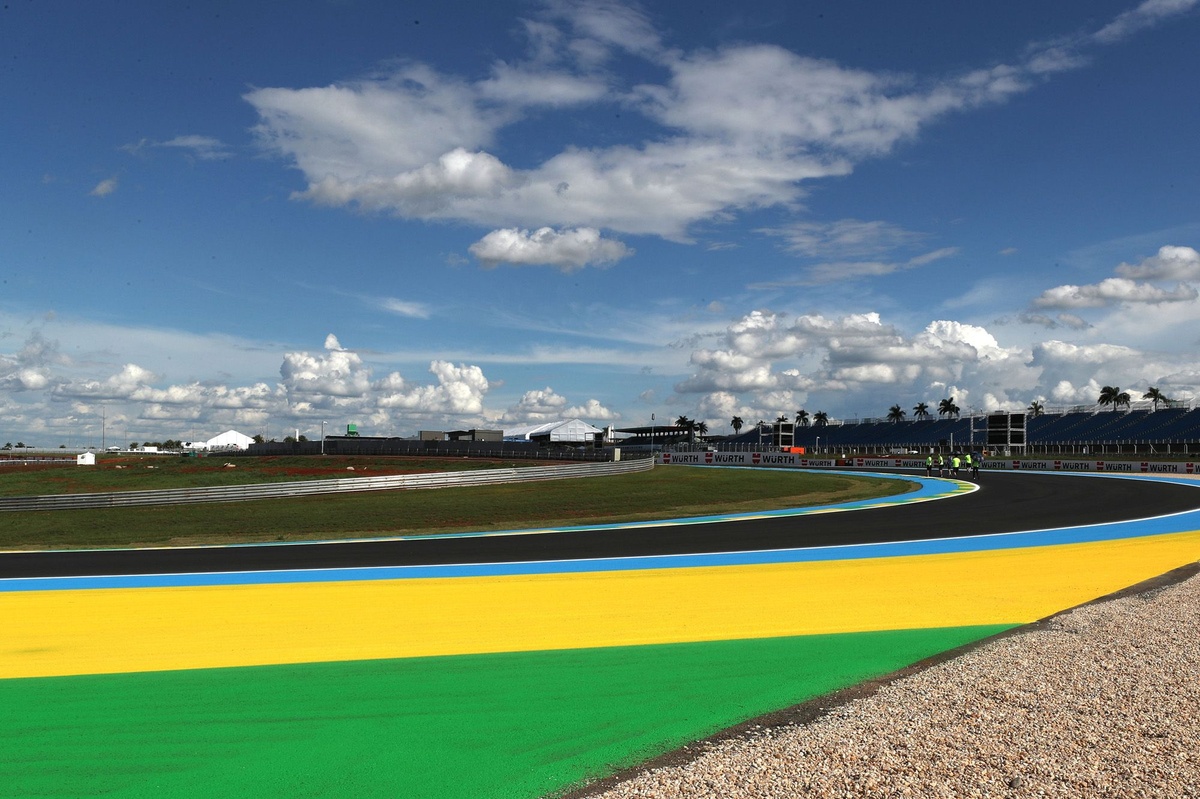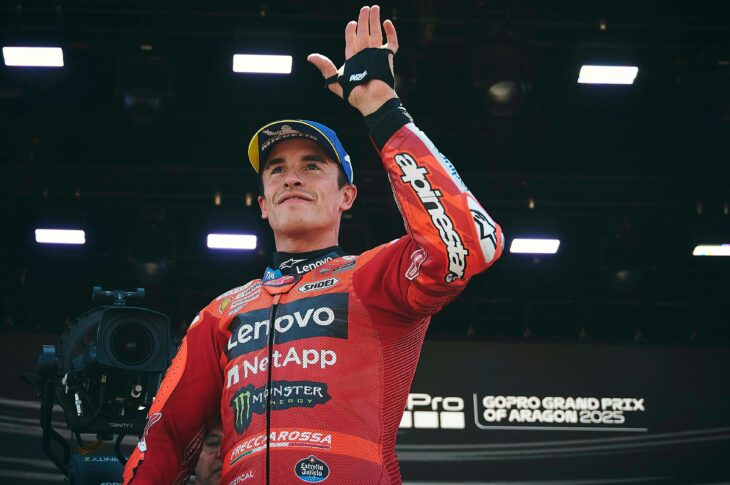

The undisputed king of adapting to new circuits, Marc Marquez, has just dropped a bombshell: he no longer considers himself a "specialist" for fresh MotoGP venues. This candid admission from the eight-time world champion signals a significant shift in his approach and highlights the evolving landscape of the sport as MotoGP gears up for its debut at Goiania.
- "Specialist" Era Concluded: Marquez admits his past dominance at new tracks (Austin, Termas, Buriram) has faded.
- Goiania's Short Circuit: Its compact nature means rapid adaptation for all riders, negating individual advantages.
- Experience vs. Instinct: Older riders, like Marquez, rely more on analysis, while younger talents adapt faster by instinct.
- Rival Talent on the Rise: Bezzecchi and Acosta are identified as the new benchmarks, pushing all riders to find more speed.
The Evolution of an Eight-Time Champion
For years, introducing a new circuit to the MotoGP calendar was practically a red carpet invitation for Marc Marquez to dominate. His incredible ability to quickly find the limit, combined with his unparalleled skill in low-grip conditions, saw him conquer first-time races at tracks like Austin, Termas de Rio Hondo, Buriram, and even Balaton Park last year. He was the undisputed master of the unknown.
Yet, as MotoGP heads to Goiania, Marquez offers a stark re-evaluation. He points to more recent additions like Portimao and Mandalika, where premier class victories eluded him, as evidence that his inherent edge has diminished. The veteran Ducati rider believes his approach has matured, moving from raw instinct to a more measured, analytical strategy.
From Instinct to Analysis: Marquez's Evolving Approach
"I used to be a specialist," Marquez openly stated, acknowledging his past prowess. "Now, I believe that I can adapt quick, but it's true that normally a young rider can adapt quicker to the new situation than an experienced rider. Because you have that point of just go by instinct." This insight reveals a fascinating transition for the champion. While his speed remains undeniable, the spontaneous, boundary-pushing instinct of his younger years is giving way to a more methodical approach, which may take longer to yield results on unfamiliar asphalt.
Goiania: A Level Playing Field?
The Autodromo Internacional Ayrton Senna at Goiania measures a compact 3.83km, making it the second shortest track on the MotoGP calendar after Sachsenring. This characteristic, coupled with extended Friday practice sessions, leads Marquez to believe any "new track" advantage will be swiftly neutralized.
The Short Circuit Challenge
"Goiania is a short circuit, which means we’ll be doing a lot of laps," Marquez explained. "By Saturday, the circuit won’t really be new anymore." Unlike longer, more complex tracks where riders might improvise more, short circuits demand meticulous precision and attention to detail. Every corner, every line, will be scrutinized repeatedly, ensuring the entire field is up to speed rapidly. The extended track time is designed to give everyone a fair shot, further leveling the playing field.
Tyre Talk: Ducati's Goiania Headache?
Adding another layer of complexity for Marquez and Ducati are the Michelin tyres. For Brazil, Michelin is introducing three asymmetric rear compounds, two featuring a reinforced casing (seen at the Austrian GP), and a hard tyre specification that Marquez previously suggested hampered Ducati at Buriram. This variable could force specific riding adjustments and bike setups that might not favor the Ducati package.
Furthermore, the Goiania layout features five left-hand corners but nine right-hand turns. "I would like to have more left corners, obviously," Marquez admitted, highlighting that the predominantly right-leaning circuit isn't ideal for his preferred riding style.
The Rising Tide of Rival Talent
The season-opening Thailand Grand Prix saw Ducati's incredible 88-race podium streak broken, with Aprilia's Marco Bezzecchi snatching a dominant victory. This result, according to Marquez, is a clear indicator of the new competitive landscape.
Bezzecchi and Acosta: The New Benchmark
Marquez doesn't mince words about the formidable challenge posed by younger talents. "Bezzecchi and Acosta’s level is real," he asserted. "Their level is real; it’s not a case of ‘they’ll get there eventually and be caught up with’—they’re two brilliant riders who are in perfect sync with their bikes." This strong endorsement underscores that the veteran Marc Marquez and the entire Ducati stable face a significant task: adapting, improving, and closing the gap on rivals who are already performing at an elite level. The era of Marquez as an automatic "new track specialist" might be over, but the fight for supremacy is more intense than ever.