
From Sidelines to Stardom: Sheppard's Sophomore Surge
The Houston Rockets have found their unlikely hero in Reed Sheppard, a player who transformed from a doubted rookie into a clutch performer, proving that self-belief can rewrite a career.
Key Points:
- Reed Sheppard endured a challenging rookie season marked by inconsistent play and fan skepticism.
- A breakout game against the Golden State Warriors early in his second year signaled his transformation.
- Fred VanVleet's injury thrust Sheppard into a primary playmaking role, which he embraced with improved shooting and scoring.
- Supported by his basketball-savvy parents and veteran teammates like Kevin Durant and Fred VanVleet, Sheppard honed his game and mental fortitude.
The story of Reed Sheppard with the Houston Rockets is a testament to unwavering self-belief. His sophomore campaign has seen an astonishing transformation, a stark contrast to the challenges of his rookie year.
The shift began dramatically in an NBA Cup clash against the Golden State Warriors. With stars like Kevin Durant sidelined, the Rockets trailed by 10 points in the third quarter. That's when Sheppard took center stage, his newfound confidence electrifying the game.
A quick floater cut the deficit, followed by a masterful steal from none other than Stephen Curry. Moments later, Sheppard sank a crucial three-pointer, a sequence that immediately signaled a player unafraid to trust his instincts and his shot – a key development the Rockets desperately needed.
As ESPN analyst Tim Legler observed, Sheppard's evolution was clear: "He is anticipating the next action... Most of it was an afterthought a year ago." This enhanced court awareness was a game-changer.
Before the third quarter ended, Sheppard had tallied three rebounds, a fadeaway, and an emphatic dunk to tie the game. The Rockets ultimately secured a 104-100 victory, with Sheppard erupting for a career-best 31 points, alongside nine rebounds and five assists.
This performance was just a preview of Sheppard's remarkable sophomore leap. In games where he played at least 30 minutes, he averaged an impressive 19.5 points, 3.5 rebounds, 2.1 steals, and five assists. Crucially, the Rockets boasted a dominant 9-3 record when he hit the 20-point mark.
Overcoming Rookie Roadblocks
His rookie year was a stark contrast, marred by inconsistent minutes, DNP-CDs, and scoring struggles. He rarely saw significant court time, leading some to question the Rockets' decision to draft him third overall. Sheppard himself admitted to The Athletic, "It was tough. It was different. I wasn’t used to anything like that," particularly struggling to unleash his natural shooting talent.
Yet, this adversity became his biggest teacher, revealing clear paths for growth. His motivation wasn't to silence critics, but to validate his own deep-seated belief. "It's just trust in yourself," Sheppard reflected. "I've played basketball my whole life... now that I'm here, it's like just have fun, trust in yourself and trust the work."
Pre-season expectations for the Rockets soared after acquiring Kevin Durant. However, a devastating blow came with Fred VanVleet's season-ending ACL injury. Suddenly, a significant portion of the team's hopes shifted directly onto Sheppard's young shoulders.
Sheppard admirably handled this increased burden, playing all 82 regular-season games and starting 21. His three-point shooting, a weapon previously underutilized, exploded from 33.8% to 39.4% on a much higher volume (2.7 to 7.0 attempts per game). His scoring average surged from 4.4 to 13.5 points, earning him a sixth-place finish in Sixth Man of the Year voting.
Playoff Pressure: A Baptism by Fire
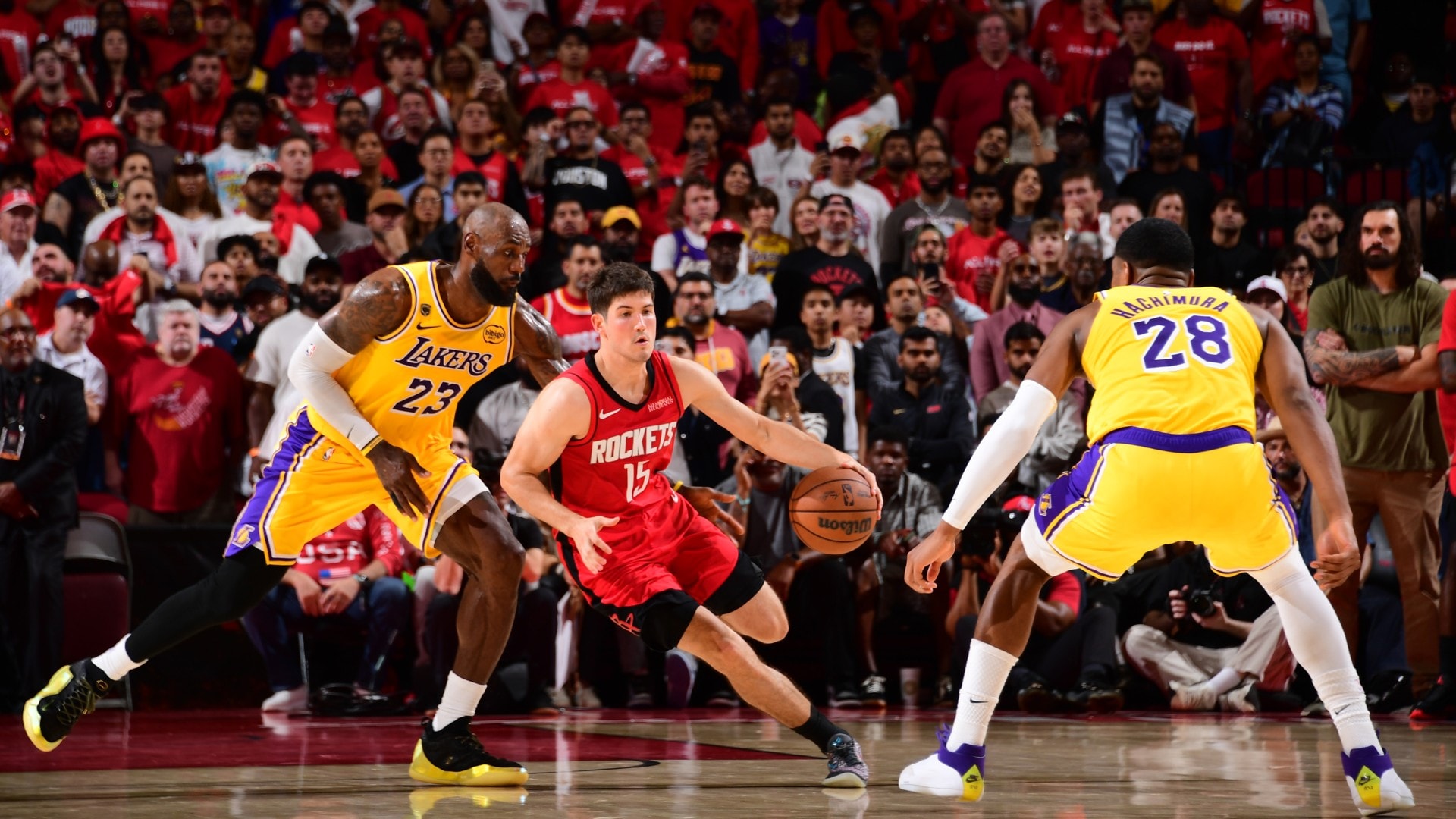
The playoffs, however, introduced a new level of intensity. In the Rockets' first-round series against the Los Angeles Lakers, Sheppard shouldered even more responsibility with Durant sidelined for most games. A pivotal Game 3 saw him lose the ball to LeBron James late in the fourth, leading to a game-tying three and an eventual Lakers overtime win.
His initial playoff stats against the Lakers were concerning, shooting just .267 from the field through three games, including a scoreless Game 2. Yet, in Game 4, Sheppard found his rhythm, matching his combined scoring from Games 1 and 3 with 17 points on efficient 50% shooting and 4-of-7 from beyond the arc. The Rockets' hopes for extending the series hinged on this kind of sophomore brilliance.
The Sheppard Legacy: Family, Mentors, and Mental Fortitude
Irrespective of the season's final outcome, Sheppard's foundation remains rock solid, rooted in his parents, Jeff and Stacey Sheppard. Both were collegiate basketball stars at the University of Kentucky; Jeff a two-time national champion and 1998 Final Four MOP, and Stacey a three-time All-SEC selection. Growing up under this legacy, Reed navigated immense pressure from high school through his time with legendary coach John Calipari at Kentucky.
"There’s always been noise in Reed’s life because he’s the son of two Kentucky basketball players," Jeff Sheppard told The Athletic, highlighting Reed's lifelong preparation for pressure. This constant support continues, with Stacey often in Houston and Jeff attending East Coast games.
As the highest Kentucky draft pick since Karl-Anthony Towns in 2015 (surpassing a list that includes Shai Gilgeous-Alexander and Devin Booker), Sheppard arrived in Houston with significant curiosity. He openly credits his parents for being the bedrock of his journey.
"I’ve learned everything from them," Sheppard affirmed. "They’ve been a huge part of my journey... I went to the gym with my dad to work out. I remember me and my mom traveling to all the travel ball games... I have just learned so much from them."
Jeff Sheppard has experienced firsthand the "roller coaster" of an NBA parent. "Wonderful highs, lots of lows, and sometimes you just gotta hold on," he described, but ultimately, "It’s a great journey, and I wouldn’t trade it for anything."
The sting of his rookie playoff debut was profound: scoreless in 10 minutes across three games against the Warriors, and a DNP in a critical Game 7 loss. This tough initiation amplified the criticism surrounding his high draft selection.
"There’s a lot of people talking and a lot of noise," Jeff noted, acknowledging the intense scrutiny. While Reed's life had always involved pressure, the unique challenge of limited playing time in the NBA created "a whole ‘nother set of mental and emotional challenges."
VanVleet's injury, while a setback for the team, became a catalyst for Sheppard. His father, Jeff, observed that Reed, a 21-year-old living his dream, approached the increased opportunity with a pure desire to learn, develop, and win, devoid of overanalysis.
Without VanVleet, the Rockets needed Sheppard's growth to accelerate. His inner circle shielded him from external noise. Jeff Sheppard explained, "The story is either how great you are or how terrible you were. It’s usually not in the middle. It’s always that extreme."
Unfazed by the media's extremes, Sheppard dedicated his offseason to self-improvement in Houston. He worked diligently with athletic trainer Brady Welsh and mental performance coach Jonathan Roche, refocusing his mindset to rediscover the pure joy of basketball.
The Rockets organization also provided vital support. Sheppard spent his summer with assistant coach Cam Hodges, refining his game and building strength. This holistic approach ensured he was learning, regrouping, and, crucially, moving forward.
His clutch genes flashed again on March 22. Against a rallying Miami Heat, Sheppard sank a game-winning floater with 12.7 seconds left, securing a 123-122 Rockets victory. His stat line: 23 points, 14 assists, and zero turnovers in 37 minutes, making him the youngest Rockets player ever to achieve such a feat.
"We put it in his hands a ton," remarked Rockets coach Ime Udoka, praising Sheppard's ability to dissect defenses and make correct reads. "You can see him kind of growing up right in front of your eyes," Udoka affirmed, underscoring his timely development.
Jeff Sheppard credits a "team" approach, including veteran teammates like Jeff Green, whose "incredible impact" provided positive influence and guidance. His supportive "village" extends to Aaron Holiday, Steven Adams, and the mentoring of Fred VanVleet and Kevin Durant. Jeff noted, "Fred has been a tremendous mentor... Reed was really looking forward to playing with Fred."
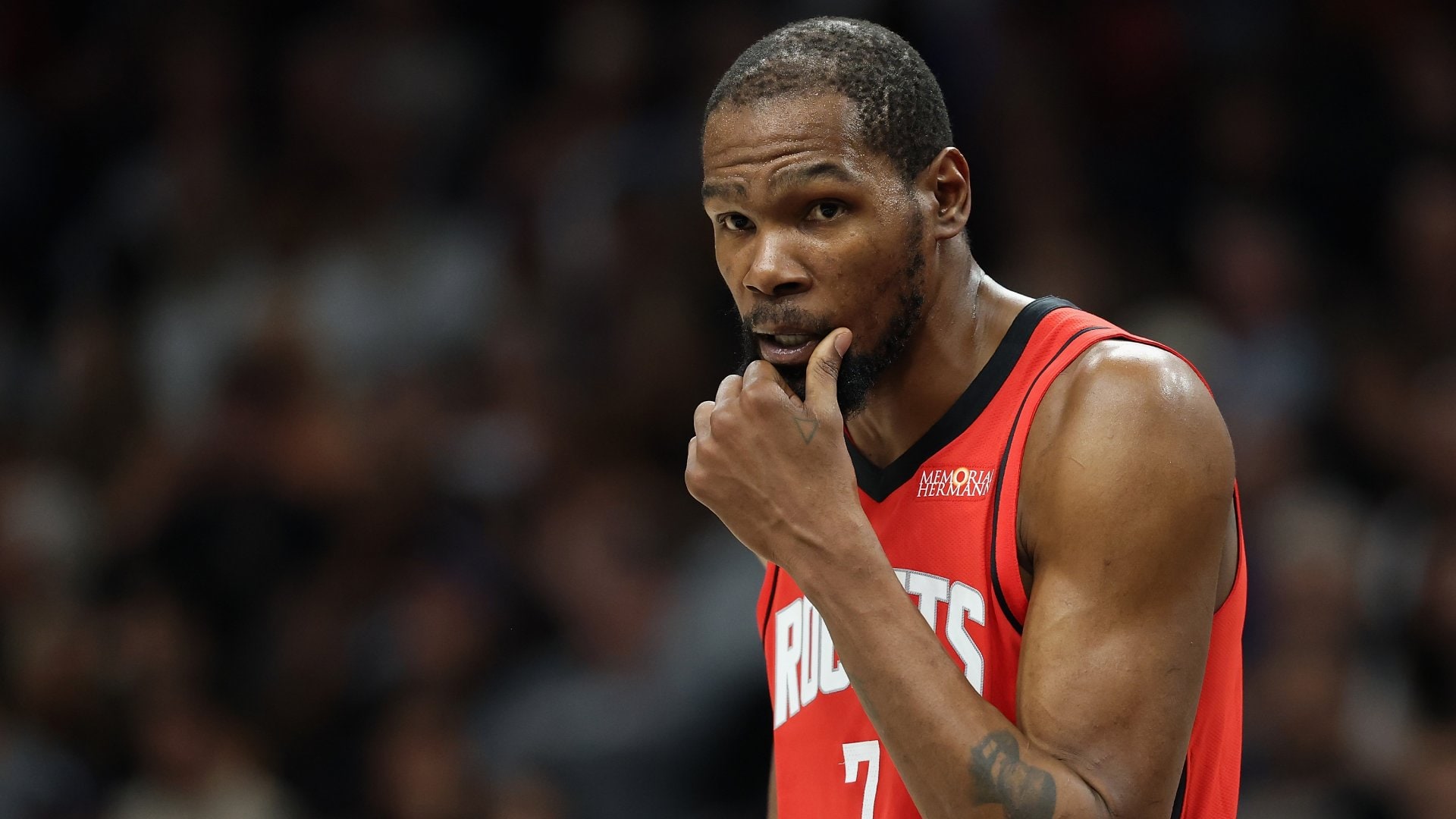
Kevin Durant's "loud words" and even "louder example" have been crucial in Sheppard's development, helping him navigate the complexities of professional basketball.
Despite the triumphs, the "noise and expectations" persist. Yet, Sheppard remains grounded. "Stay humble. Stay grateful for every opportunity and just really kind of sinking into that," he concluded, a testament to his resilient and mature approach.