
Club Rivalry Plaguing the National Identity
The Green Falcons are at a crossroads, and a former club president isn't holding back: the very soul of the Saudi national team is being torn apart by a bitter club rivalry, threatening to derail their 2026 World Cup ambitions before a ball is even kicked.
Key Takeaways
- Prince Abdulrahman bin Musaad warns of rampant club loyalties (Al-Hilal vs. Al-Nassr) overshadowing national team unity.
- He fears a "complete mess" for the Saudi national team at the 2026 World Cup due to insufficient preparation time.
- Strong criticism of Salem Al-Dossari's penalty-taking ability and perceived double standards in player defense.
- A strategic call to focus on the 2034 World Cup (hosted by Saudi Arabia) and mitigate losses in the interim.
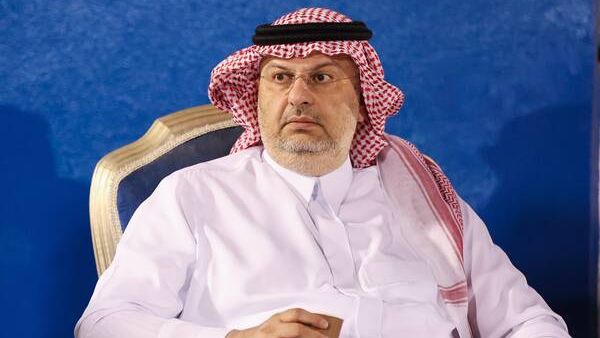
Prince Abdulrahman bin Musaad, the outspoken former Al-Hilal president, has fired a warning shot across the bow of Saudi football. He claims the Saudi national team has devolved into a battleground, where the green of the national jersey is obscured by the yellow of Al-Nassr or the blue of Al-Hilal. This intense club tribalism, he argues, is actively undermining the unity vital for international success.
Such deep-seated rivalries manifest in a contentious blame game following poor performances. Some fans target players like Salem Al-Dossari and Mohammed Kanoo, while others direct their ire at Nawaf Al-Aqidi and Ayman Yahya. This selective criticism creates a toxic environment that the Saudi Arabian Football Federation (SAFF) must address, protecting its players from unfair accusations of lacking national commitment.
The Double Standard: Al-Dossari's Penalty Woes
Adding to the controversy, Prince Abdulrahman personally urged Salem Al-Dossari to step away from penalty duties for both club and country, citing his poor record. He highlighted a curious paradox: many Al-Hilal fans oppose Al-Dossari taking penalties for their club, yet they defend his misses for the national team, even comparing him to legends like Maradona. This glaring inconsistency in fan expectations further exposes the club-over-country mentality.
A Bleak Outlook for the 2026 World Cup?
The former president painted a grim picture for the Saudi national team's prospects at the 2026 World Cup. He insists that no coach, including current manager Hervé Renard, can achieve anything significant. The short preparation window before the tournament means fundamental changes are simply not feasible.
His primary goal for the tournament is to avoid a humiliating "scandal." He articulated fears of heavy defeats, such as a 7-0 loss to Spain, a 5-0 thrashing by Uruguay, or a 3-0 defeat to Cape Verde. These stark predictions underscore his deep concern for the team's readiness and potential for embarrassment on the global stage.
Echoes of Argentina: A Past Glory, A Future Worry
It’s crucial to acknowledge that the current scenario vastly differs from the build‑up to the 2022 World Cup, where the Green Falcons famously stunned Argentina. Back then, the team enjoyed relative harmony and a clearer tactical identity under Hervé Renard, going into that tournament with plenty of breathing room and a domestic league with fewer foreign players, which many argue helped maintain cohesion.
Now, with mounting criticism over heavy domestic club influence and recent poor results in friendlies — coupled with internal debates about personnel and strategy — Saudi Arabia’s preparations are clouded by uncertainty, raising questions about whether they can replicate that shock moment on football’s biggest stage.