
.png)
Senegal's World Cup Journey: From 2002 Upset to 2026 Contenders
Senegal's World Cup journey is not just a tale of football; it's an epic saga of triumph, heartbreak, and an unyielding quest for glory that has captivated the globe. From their stunning debut to enduring a cruel twist of fate, the Lions of Teranga have forged a unique path, now poised as genuine contenders for 2026. This is a story of resilience, vision, and a golden generation ready to rewrite history.
Key Milestones in Senegal's World Cup Story:
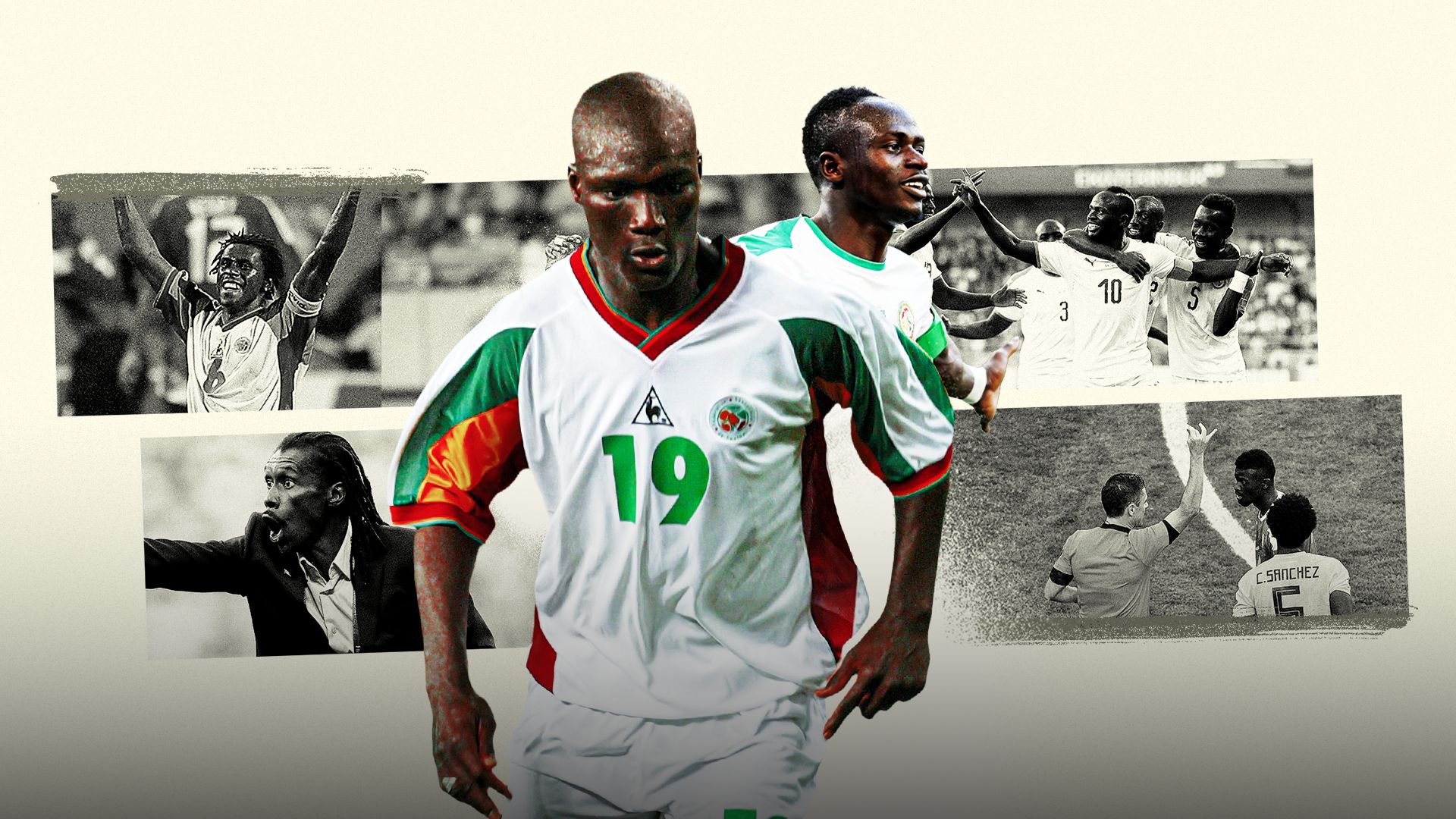
- 2002 Debut: Senegal shocked the world by beating defending champions France 1-0 in their World Cup debut, reaching the quarterfinals.
- 2018 Heartbreak: Eliminated from Russia 2018 on the Fair Play rule, a cruel twist of fate despite strong performances.
- Cissé's Vision: Coach Aliou Cissé, a 2002 legend, has meticulously built the Lions of Teranga into Africa's most formidable squad.
- 2026 Ambition: With a golden generation led by Sadio Mané and Nicolas Jackson, Senegal is poised to make a deep run in the expanded 2026 World Cup.
The Roar Heard 'Round the World: Senegal's Unforgettable 2002 Debut
Senegal's introduction to the World Cup stage in 2002 was nothing short of legendary. Grouped with reigning champions France, alongside Denmark and Uruguay, the Lions of Teranga were widely dismissed as mere participants. Yet, in the tournament's opening match, they delivered a monumental shock.
Papa Bouba Diop's gritty goal against their former colonial power, France, secured a stunning 1-0 victory. This wasn't just an upset; it triggered a cultural earthquake, echoing across Africa and beyond. Led by their charismatic captain, Aliou Cissé, the team played with an infectious blend of swagger, unity, and unbridled joy.
Their vibrant style, marked by exuberant goal celebrations and relentless pressing, saw them draw with Denmark and Uruguay, then overcome Sweden with a golden goal in the Round of 16. Senegal ultimately reached the quarterfinals, becoming only the second African nation to achieve this feat after Cameroon in 1990. Though their run ended against Turkey, their message was loud and clear: African football had arrived. Pioneers like El Hadji Diouf, Khalilou Fadiga, and Tony Sylva etched their names into history.
The Decades of Silence and a Captain's Return
Following the euphoria of 2002, expectations for Senegal soared. However, the subsequent years brought a stark silence. The nation failed to qualify for the 2006, 2010, and 2014 World Cups, a decade-long absence that felt like exile. A complex mix of internal politics, coaching instability, and a generational gap hampered their progress, and the magic of their debut faded.
Yet, beneath the surface, a new era was quietly brewing. Investments in youth academies began to yield results, with talented players emerging in European leagues. In 2015, the Senegalese Football Federation made a bold, symbolic move: appointing Aliou Cissé, the inspirational captain from 2002, as head coach. Despite initial criticisms regarding his inexperience, Cissé brought an invaluable sense of continuity and a deep understanding of what Senegal could be, armed with a clear vision of discipline, identity, and long-term growth.
A Cruel Twist of Fate: The 2018 Fair Play Heartbreak
The 2018 World Cup in Russia was meant to be Senegal's grand resurgence. Sixteen years after their dazzling debut, they returned with a disciplined, talented squad blending seasoned experience with youthful exuberance. Placed in Group H alongside Poland, Japan, and Colombia, they started strong with a 2-1 victory over Poland and a thrilling 2-2 draw against Japan.
Heading into their final group match against Colombia, a draw would have secured their passage to the knockout stages. However, a 1-0 defeat left Senegal level on points, goal difference, and goals scored with Japan. In an unprecedented and truly heartbreaking moment in World Cup history, Senegal was eliminated on the Fair Play rule, having accumulated more yellow cards (six) than Japan's four. While agonizing, this exit highlighted the critical need for tactical discipline and composure, reinforcing lessons that would shape their future.
Rising from the Ashes: AFCON Glory and Qatar 2022 Progress
The heartbreak of 2018 forced Senegal to regroup, not just tactically but spiritually. They returned to the drawing board, recalibrated their ambitions, and began a purposeful rebuild. This dedication bore spectacular fruit in 2021 when they lifted the Africa Cup of Nations for the very first time. This triumph was both a breakthrough and a coronation, signaling that the Lions of Teranga were ready to roar on the global stage once more.
Carrying this continental momentum and a newfound confidence, Senegal entered Qatar 2022 with renewed belief. Despite losing star forward Sadio Mané to injury just days before the tournament, the team displayed remarkable resilience. After a hard-fought opening defeat to the Netherlands, they bounced back with crucial wins over Qatar and Ecuador to secure passage to the knockout rounds. Their journey ended in the Round of 16 with a 3-0 defeat to England, a stark reminder of the gap to elite European sides. Nevertheless, Cissé, now in his seventh year as coach, had undeniably instilled a durable identity and collective purpose, transforming Senegal from a team of fleeting moments into a formidable, structured machine.
Africa's Elite: The Golden Generation Poised for 2026
Senegal's current squad is arguably the most complete and formidable in African football history. It's a roster defined not just by individual brilliance, though there's an abundance, but by exceptional balance, strategic depth, and invaluable experience.
At the heart of this golden generation is Sadio Mané, the undisputed talisman whose influence extends far beyond goals. Revered for his blistering pace, clinical finishing, profound intelligence, humility, and relentless work ethic, Mané embodies Senegalese excellence. He is the emotional engine, the player who carries the weight of national expectation with grace, galvanizing everyone around him.
A new wave of talent is surging alongside him, epitomized by Nicolas Jackson. The dynamic forward, currently making waves, injects boundless dynamism into Senegal's attack. At 24, Jackson plays with fearless urgency, thriving on space, pressing relentlessly, and finishing with flair. His runs stretch defenses, his touch invites chaos, and his confidence is infectious. In a squad rich with veterans, he is the wildcard, capable of tilting a match with a single moment of brilliance.
Anchoring the defense is Kalidou Koulibaly, the indomitable center-back whose blend of physicality and finesse has established him as one of the world's most respected defenders. A natural leader and vocal organizer, Koulibaly provides both steel and serenity to the backline. His ability to read the game, win crucial duels, and launch attacks from deep makes him the spine of Cissé's system—a true general on the pitch. Protecting him is Edouard Mendy, a goalkeeper whose journey from rejection to Champions League glory is legendary. Mendy remains a commanding presence, known for his razor-sharp reflexes, unwavering composure under pressure, and vital leadership from the back.
In midfield, the emergence of Pape Matar Sarr has added a new, vibrant dimension. The Tottenham midfielder operates with a maturity beyond his years, gliding across the pitch with purpose and precision. Equally adept at breaking up play and driving forward, Sarr is the quintessential box-to-box force, stitching defense to attack with vision, bite, and boundless energy. This core, bolstered by a talented bench including Iliman Ndiaye, Ismaila Sarr, and Abdou Diallo, forms the heartbeat of a team no longer content with mere potential. They are the architects of a new ambition, built on trust, experience, and a shared hunger for history.
Cissé's long tenure has been instrumental in creating this continuity. His pragmatic style, once questioned, now appears prophetic. Senegal doesn't just play with flair; they play with profound purpose. With the 2026 World Cup expanding to 48 teams, offering more opportunities and potential for upsets, Senegal is better equipped than ever to go deep. What truly sets this squad apart isn't just talent; it's the undeniable cohesion. These players know each other, having won together, lost together, and grown together. They carry the scars of 2018 and the lessons of 2022, transforming them into not just a team, but a unified force.
Beyond the Pitch: Senegal's Enduring Legacy and African Blueprint
Senegal's World Cup narrative transcends mere results; it's a powerful reflection of national pride, representation, and the enduring spirit of a people. The Lions of Teranga play with a distinctive rhythm—a captivating fusion of European tactical structure and an inherent African spontaneity. Their fans are renowned globally for their fervent passion, while their players carry the weight of history not as a burden, but as potent fuel.
From the bustling streets of Dakar to the elite academies of Europe, Senegalese footballers are raised with the vibrant memory of 2002 and the stinging disappointment of 2018. They understand what it means to shock the world and what it feels like to fall just short. Critically, they now possess the knowledge and conviction required to build something lasting.
Senegal's ascent serves as a compelling model for African football: unwavering coaching stability, strategic investment in youth development, and a clearly defined identity. These are no longer luxuries but absolute necessities for sustained success. Senegal, perhaps more than any other African nation, embodies this understanding, evolving into a blueprint that extends beyond borders. European clubs now actively scout Senegalese talent with serious intent, and young players across the continent see a clear pathway, a purposeful trajectory, and a promise of what can be achieved.
The Hunt for History: Senegal's 2026 World Cup Ambition
Senegal's fifth World Cup appearance in 2026 will not be about redemption; it will be about realization. The squad is primed, the coach is seasoned, and the scars of past disappointments have healed. The dream of reaching football's pinnacle remains vividly alive. They've conquered world champions, reached the last eight, and been eliminated by the narrowest of margins. Now, their sights are set undeniably higher.
For Senegal, the World Cup is more than just a tournament; it's a proving ground, a mirror reflecting national ambition, and a stage where unfinished business demands resolution. This time, they aren't merely hoping; they are hunting. They are hunting for history, to become the first Senegalese squad, and potentially the first African team, to reach a World Cup semi-final, or perhaps even surpass that milestone. They are hunting for validation, to emphatically prove that their golden generation is not just talented, but truly timeless. They are hunting for justice, to unequivocally exorcise the lingering ghosts of 2018, when yellow cards, not goals, cruelly ended their campaign.
Most profoundly, they are hunting for something deeper—a moment that transcends football itself. A moment that will electrify a continent, unite a nation, and irrevocably rewrite the narrative of what African teams can achieve on the global stage. Senegal's journey has always been defined by rhythm and resilience, by pride and perseverance, by the profound power of sport to embody a people's spirit. In 2002, they shocked the world. In 2018, they were undone by the rulebook. In 2022, they meticulously rebuilt. And in 2026, they return not as underdogs, but as formidable contenders. The Lions of Teranga have roared before, but now, they are truly ready to rule.
When they step onto the pitch in North America, they will carry not just the hopes of Senegal, but the immense weight of a continent. The memory of every near-miss, the fiery ambition of every child who grew up dreaming in the shadow of 2002, and the unshakeable belief that this time, the story will end differently. The Fair Play rule may have once written them out, but this time, Senegal is fiercely writing its own ending. One pass at a time. One goal at a time. One magnificent roar at a time.


