
The roar of an F1 engine is only truly amplified by the legend of the asphalt it conquers, and throughout history, a select few circuits have etched themselves into the very soul of the sport. These aren't just stretches of tarmac; they are battlegrounds where champions are forged and unforgettable sagas unfold.
The Best of the Best: Key Factors
- Historic Significance: Tracks that have witnessed pivotal moments and championship deciders.
- Driver Challenge: Layouts demanding peak skill, bravery, and precision.
- Unpredictable Drama: Circuits consistently delivering thrilling races and upsets.
- Enduring Legacy: Venues whose impact transcends generations of F1.
Brands Hatch: Britain's Untamed Jewel
With a mere 14 F1 Grand Prix races under its belt, Brands Hatch might seem an underdog, but its undulating curves and relentless pace secured its legendary status. From 1964 to 1986, it famously alternated with Silverstone as the British GP host, earning immense respect from drivers.
Its notorious corners like Paddock Hill Bend, Hawthorns, and Dingle Dell demanded unwavering commitment. This iconic track saw Jack Brabham famously run out of fuel in 1970, handing victory to Jochen Rindt. It also hosted Nigel Mansell's maiden F1 win in 1985, a day also marking Alain Prost's first world title. Though safety concerns ultimately deemed it too narrow for modern F1 after Jacques Laffite's career-ending crash in 1986, Brands Hatch remains a poignant symbol of raw, uncompromising British racing.
Circuit Gilles Villeneuve: Canada's High-Wire Act
No circuit encapsulates "anything can happen" quite like Circuit Gilles Villeneuve. Hosting 44 F1 Grand Prix, Montreal's unique blend of high-speed sections and unforgiving concrete barriers creates an electrifying atmosphere. The infamous "Wall of Champions" at the final chicane stands as a testament to the precision required, humbling even the sport's elite.
This Canadian classic has delivered some of F1's wildest moments. Who can forget Jenson Button's incredible drive from the back to a last-lap victory in the epic 2011 race? Or Robert Kubica's emotional sole F1 win in 2008, following a pitlane collision involving Lewis Hamilton and Kimi Raikkonen? Named after the beloved home hero, Gilles Villeneuve, who secured his first F1 win here in 1978, this track consistently guarantees thrills and tests the nerves of every driver.
Kyalami: Africa's Forgotten Speed Temple
The original Kyalami circuit, a daunting 2.5-mile layout, was a true test of bravery and raw speed, far removed from its later iterations. Debuting in 1967, its high-altitude setting and sweeping corners made it one of the fastest tracks on the calendar, with Nigel Mansell's 1985 pole reaching an astonishing average of 147.2mph.
While marked by tragedy, including the fatal accidents of Peter Revson in 1974 and Tom Pryce in 1977, Kyalami also produced moments of sheer brilliance. Alain Prost's incredible recovery from a lap down in 1982 after a drivers' strike showcased its capacity for drama. The absence of an F1 race in Africa feels wrong, and a return to the historic challenges of Kyalami, even in a modified form, would be a welcome revival for the sport.
Interlagos: Brazil's Championship Crucible
The Autódromo José Carlos Pace, better known as Interlagos, is a masterclass in motorsport theatre, having hosted 42 F1 Grand Prix. From its original sprawling 4.9-mile layout to the iconic 2.7-mile configuration introduced in 1990, this Brazilian circuit consistently delivers. Home heroes like Emerson Fittipaldi and Carlos Pace initially ignited local passion, but it was Ayrton Senna's hard-fought home victories in 1991 and 1993 that truly cemented its legendary status.
Interlagos became F1's ultimate season-closer for years, producing legendary championship deciders. Think Lewis Hamilton's dramatic last-corner title snatch in 2008 against Felipe Massa, or Sebastian Vettel's recovery drive in 2012. Even as a mid-season fixture, its unique anti-clockwise flow, significant elevation changes, and notoriously unpredictable weather – with Max Verstappen mastering the rain in 2016 and 2024 – ensure it remains one of the most anticipated and thrilling races on the calendar.
Suzuka: Japan's Precision Playground
Since its arrival in 1987, the figure-eight design of Suzuka has been an instant classic, challenging drivers with its relentless technicality. Owned by Honda and designed by John Hugenholtz, it’s a circuit where mistakes are punished and precision reigns supreme. It immediately delivered drama, with Nigel Mansell's season-ending qualifying crash in 1987 followed by Gerhard Berger's first Ferrari win.
Suzuka is etched into F1 championship lore, most notably through the intense Ayrton Senna vs. Alain Prost title clashes of 1989 and 1990. Both Mika Hakkinen and Michael Schumacher sealed drivers' crowns here, with Schumacher's 2000 triumph ending Ferrari's long wait. While modern F1 cars struggle for overtaking opportunities, as seen even in Max Verstappen's 2025 victory, the legendary S-curves and Degner sequence continue to test the very limits of driver skill, hoping for the 2026 regulations to restore its racing prowess.
Monaco: Glittering Anachronism, Ultimate Challenge
The Monaco Grand Prix is F1's opulent paradox. Despite criticism for being "unsuitable" for modern racing and genuine overtakes being rarer than hen's teeth since Michele Alboreto passed Alain Prost in 1985, it has hosted an incredible 71 F1 Grand Prix and remains utterly essential. This street circuit, with a history stretching back to 1929, is the one race every driver yearns to win.
Its relentless tight turns and unforgiving barriers demand absolute precision and intense concentration for nearly two hours. Qualifying at Monaco is a breathtaking spectacle, a high-wire act with no room for error. While it often delivers processional races, it also springs spectacular upsets, like Olivier Panis's improbable victory from 14th on the grid for Ligier in 1996. Legends like Ayrton Senna (6 wins), Graham Hill (5 wins), and Alain Prost (4 wins) have dominated here, proving that while Monaco may not offer wheel-to-wheel action, it remains the ultimate test of a driver's mettle.
Monza: The Temple of Speed and Passion
The Autodromo Nazionale Monza isn't just a race track; it's the beating heart of Italian motorsport, having hosted a staggering 75 F1 Grand Prix. Only absent for one year since the championship's inception in 1950, Monza embodies pure speed. Before the chicanes arrived in 1972, it delivered legendary slipstreaming battles, like the incredible 1971 race where the top five were covered by just 0.61 seconds, with Peter Gethin achieving a record-breaking 150.8mph average.
Even with its modern layout, Monza remains uniquely fast. Max Verstappen's 2025 pole position at an astounding 164.5mph and a race average of 155.8mph speak volumes. Despite its tragic history, marked by the deaths of Wolfgang von Trips in 1961, Jochen Rindt in 1970, and Ronnie Peterson in 1978, Monza has also given us countless magic moments: Charles Leclerc snatching victory from McLaren in 2024, Lewis Hamilton defeating the Ferraris in 2018, and Gerhard Berger's emotional 1988 Ferrari 1-2 after Enzo Ferrari's passing. The roar of the Tifosi ensures that a season without Monza is simply unthinkable.
Silverstone: The Crucible of British Racing
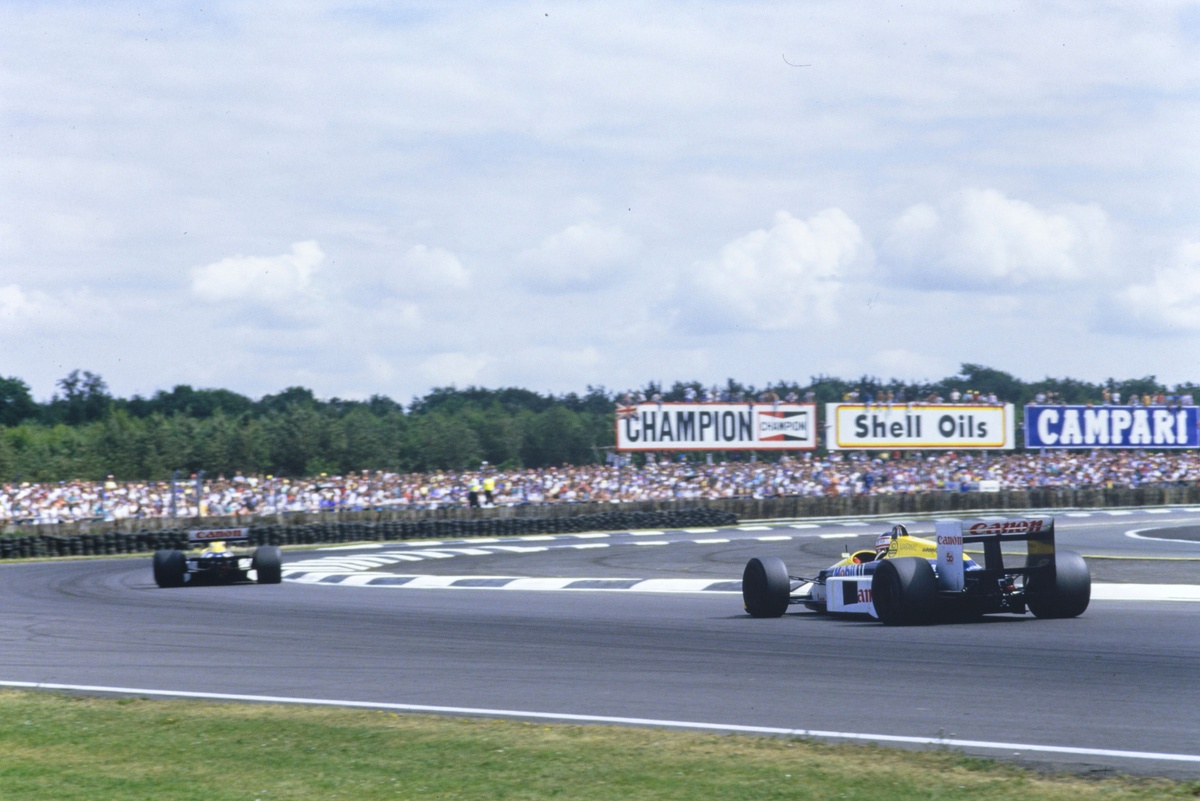
As the venue for the inaugural F1 World Championship race in 1950, Silverstone holds an unparalleled place in motorsport history. With 60 F1 Grand Prix hosted, it's not just a track; it's the spiritual home of British racing, constantly evolving yet retaining its visceral challenge. Legendary duels, like Jackie Stewart vs. Jochen Rindt in 1969, and iconic moments such as Nigel Mansell's famous dummy on Williams team-mate Nelson Piquet in 1987, or Lewis Hamilton's wet-weather masterclass in 2008, are woven into its fabric.
Even with significant reconfigurations in 1991 and 2010, sections like the breathtaking Maggotts/Becketts complex continue to push drivers to their absolute limit. Silverstone consistently ranks as a fan favourite, thanks to its high-speed flow and rich racing heritage. Having overcome past threats to its place on the calendar, including successfully hosting two races during the COVID-hit 2020 season, Silverstone stands as an unshakeable pillar of Formula 1.
Spa-Francorchamps: The Untamed Ardennes Beast
Universally lauded by drivers as their favorite, Spa-Francorchamps is a legendary circuit where modern F1 cars truly sing. Its high-speed sweeps through the picturesque Ardennes forest create an unparalleled test of courage and skill, having hosted 58 F1 Grand Prix. Both its formidable 8.8-mile original layout (used until 1970) and the awe-inspiring 4.3-mile modern version contribute to its mythos.
The original track was terrifyingly fast, claiming lives but also witnessing Jim Clark's four victories despite his personal dislike for its danger. The current layout, since 1983, has maintained much of that challenge and majesty. It's a circuit where the best truly shine, with Michael Schumacher boasting six wins, and Ayrton Senna and Lewis Hamilton each with five. From Mika Hakkinen's audacious three-wide overtake in 2000 to Jenson Button's sublime 2012 success, combined with its famously fickle weather, Spa delivers unforgettable drama year after year, epitomized by the iconic Eau Rouge.
Nürburgring Nordschleife: The Green Hell Reigns Supreme
If any circuit embodies the raw, untamed spirit of Grand Prix racing, it is the Nürburgring Nordschleife. Though it last hosted an F1 event in the tumultuous 1976 German Grand Prix, its 22 F1 Grand Prix races over the fearsome 14.2-mile layout cemented its status as the "greatest race circuit in the world." Built in the 1920s, this undulating, narrow track, known as "The Green Hell," was a brutal driving challenge that only the true titans could master.
Legends like Juan Manuel Fangio (whose 1957 victory is often called his finest), Stirling Moss (defeating faster Ferraris in 1961), and Jackie Stewart (whose heroic wet-weather drive in 1968 is etched in legend) found their greatest triumphs here. Yet, its inherent danger was undeniable, culminating in Niki Lauda's near-fatal crash in 1976, which marked F1's departure. The Nordschleife is more than a track; it's a monument to an era when danger and glory were intertwined, forever holding its top spot in the pantheon of F1 circuits.