
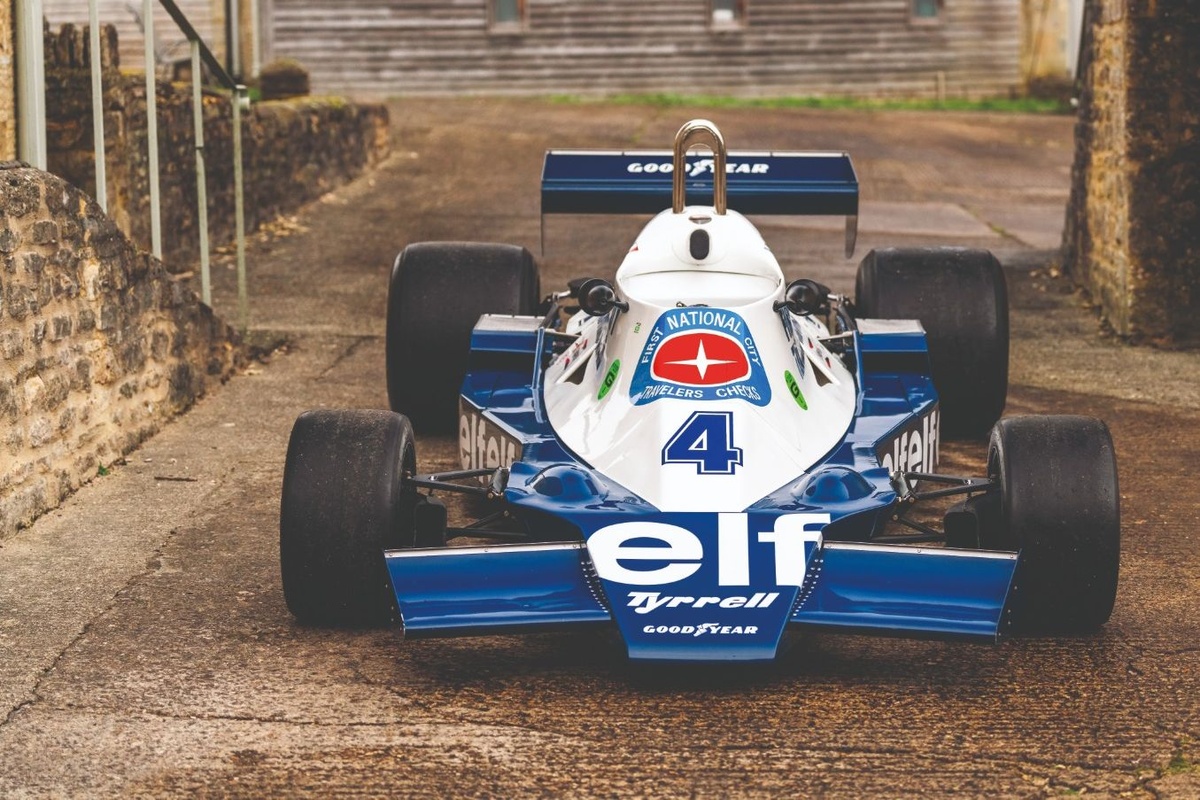

The Tyrrell 008 of 1978 wasn't just a conventional comeback after the audacious six-wheeled P34; it was a silent, unsung pioneer, a machine that nearly rewrote Formula 1 history as its first ground-effect fan car.
This 1978 F1 challenger, a testament to Tyrrell's innovative spirit, delivered a defining season for Patrick Depailler and left an indelible mark on motorsport history.
Key Highlights of the Tyrrell 008
- Tyrrell almost launched F1's first hidden fan car, predating Brabham's notorious BT46B.
- Patrick Depailler clinched his unforgettable maiden Grand Prix victory at the 1978 Monaco GP aboard the 008.
- The car introduced groundbreaking active camber control and pioneering data-logging electronics.
- It provided a vital, albeit brief, resurgence for the independent Tyrrell team after a challenging period.
A Phoenix from Six Wheels: The 008's Genesis
After the extraordinary, yet ultimately complex, Tyrrell P34 six-wheeler stumbled in its second season, Tyrrell needed a clear reset. The 008 emerged as the antidote, promising a return to four-wheeled simplicity and conventional design. However, this seemingly 'safe' option harbored a secret ambition that could have stunned the F1 world.
This machine was the first Tyrrell not designed by Derek Gardner, the genius behind the team's Jackie Stewart glory days. Instead, Maurice Phillippe took the helm, signalling a fresh chapter for the Surrey-based squad. The goal was simple: to stand out in a grid saturated with Cosworth DFV engines, much like the original impetus for the P34.
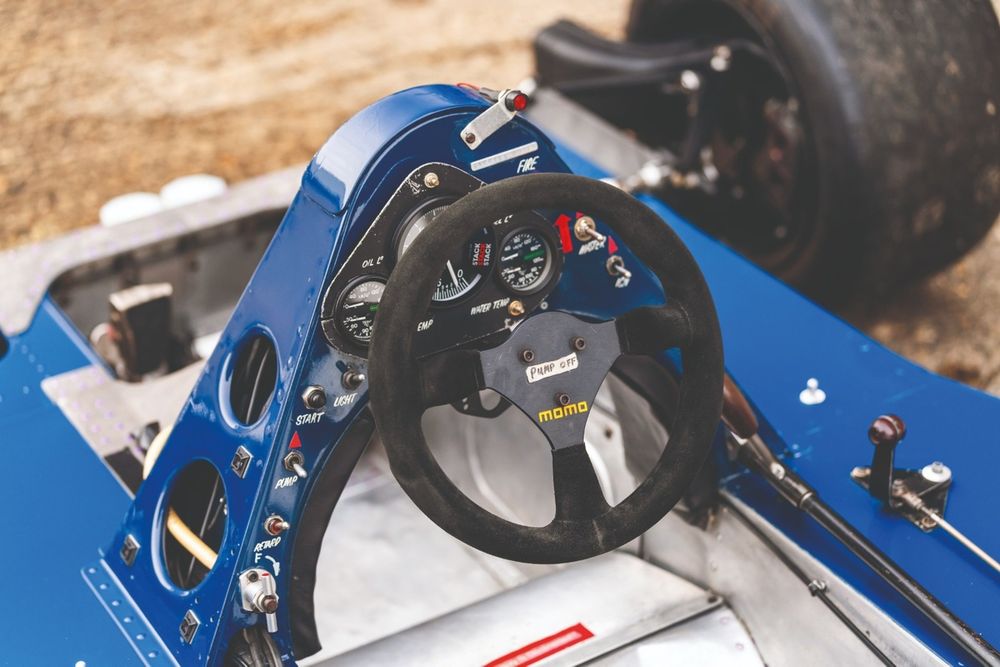
The 008 represented Tyrrell having to go back to the drawing board to re-establish its credentials.
Photo by: Jonny Lau/Machina Studios
The Secret Weapon: A Fan Car Ahead of Its Time
What many don't know is that the Tyrrell 008 nearly became F1's first ground-effect fan car, years before Gordon Murray's infamous Brabham BT46B. Maurice Phillippe's initial design for the 008 included a hidden fan, buried within the chassis, aiming to create revolutionary downforce and cooling.
Unlike Jim Hall's Chaparral 2J or Gordon Murray's Brabham, Phillippe's fan was completely concealed. Its presence was only hinted at by the car's lack of visible radiators, which were placed horizontally underneath the chassis. The fan, driven by the crankshaft, pulled air through these radiators and expelled it over the engine, delivering both improved cooling and added aerodynamic grip.
Working alongside engineer John Gentry, Phillippe’s team tested multiple fan configurations, some reportedly producing jet-like, siren-style noise during bench testing. However, during a single evaluation run at Paul Ricard, the system suffered persistent overheating issues when the DFV engine approached 10,500rpm. The concept was ultimately abandoned, and conventional radiators were quickly reinstated. Ken Tyrrell’s frustration when Niki Lauda later won with the Brabham fan car is often linked to this missed opportunity.
The Visionary: Maurice Phillippe's Radical Design
Maurice Phillippe, best known for his legendary Lotus designs such as the 49 and 72, brought his unconventional engineering mindset to Tyrrell. His arrival created internal tension with Derek Gardner, who eventually left the team, allowing Phillippe to take full control of the 008 project.
Engineer John Gentry later recalled Phillippe’s hands-on approach, describing long working sessions where he would personally explain his design philosophy late into the night, shaping the car’s bold and unconventional direction.

Designer Phillippe, here with Depailler at Long Beach in ’78, didn’t shy from being hands-on.
Photo by: Phipps/Sutton Images/Getty Images
Depailler's Defining Season: Monaco Glory
The 1978 F1 season proved to be Patrick Depailler's most consistent campaign with Tyrrell, ultimately culminating in his long-awaited maiden Grand Prix victory. Despite earlier setbacks, including heartbreak at the South African GP where he ran out of fuel on the final lap, Depailler remained a constant presence at the front of the field.
His breakthrough arrived on May 7 at the Monaco GP, driving chassis 008/3. Starting from fifth on the grid, Depailler took advantage of Carlos Reutemann’s poor launch and John Watson’s brake issues to move into contention. He then executed a controlled drive to the front, holding off a charging Niki Lauda to win by 22 seconds at his 69th attempt.

Depailler’s day of days came in Monaco when he won on his 69th attempt.
Photo by: LAT/Getty Images
This victory briefly propelled Depailler to the top of the World Championship standings. Although subsequent retirements ended his title challenge, he still collected strong results, including podiums in Argentina and Long Beach, and a standout second place in a wet and chaotic Austrian GP. He eventually finished fifth in the Drivers’ Championship.

Depailler was the most prolific starter for Ken Tyrrell’s Formula 1 team.
Photo by: Phipps/Sutton Images/Getty Images
Pioneering Tech: Active Camber & Early Data
Beyond its on-track achievements, the 008 quietly introduced several technical innovations. It featured an early form of active camber control, regarded by some as a precursor to Formula 1 active suspension systems. This allowed adjustments in handling balance, shifting the car between oversteer and understeer characteristics.
Even more significant was its early adoption of data-logging technology. Backed by sponsor Data General, a system developed by Dr. Karl Kempf used microprocessors to record key performance data such as suspension movement, steering input, and lateral g-forces. This laid foundational work for the advanced telemetry systems now standard in modern F1.

Foremost of the 008’s innovations was the pioneering use of data-logging technology.
Photo by: Phipps/Sutton Images/Getty Images
Beyond the Chequered Flag: A Lasting Legacy
Tyrrell's Shifting Fortunes
The 1978 season marked a high point for Tyrrell, as the team finished fourth in the Constructors’ Championship. However, that momentum did not last. Depailler departed for Ligier in 1979, where he initially found success before his tragic hang-gliding accident cut his career short. The loss of key sponsors, including Elf and First National City Bank, triggered a financial decline for Tyrrell. The team would not win again until Michele Alboreto’s 1982 Detroit victory, which also marked the final win for the iconic Cosworth DFV engine era.

British garagiste Tyrrell ran the all-French line-up of Pironi and Depailler in 1978.
Photo by: Schlegelmilch/Getty Images

Eventual runner-up Depailler leads Peterson’s Lotus in a soggy Austrian Grand Prix.
Photo by: Phipps/Sutton Images/Getty Images
The 008/3: From Grand Prix Winner to Historic Icon
Chassis 008/3, the Monaco-winning car, went on to enjoy a second life in historic racing. It was later driven by Desire Wilson in the Aurora AFX British F1 Championship, where she secured multiple podiums, and was eventually acquired by Pink Floyd drummer Nick Mason, who raced it in historic events and reportedly became the first winner of a 1970s F1 historic race.
Today, 008/3 remains a prized historic machine, recently displayed during the reopening of Tyrrell’s original workshop and currently offered for sale—an opportunity for collectors to relive a piece of Patrick Depailler’s legacy at the Monaco Historic Grand Prix.
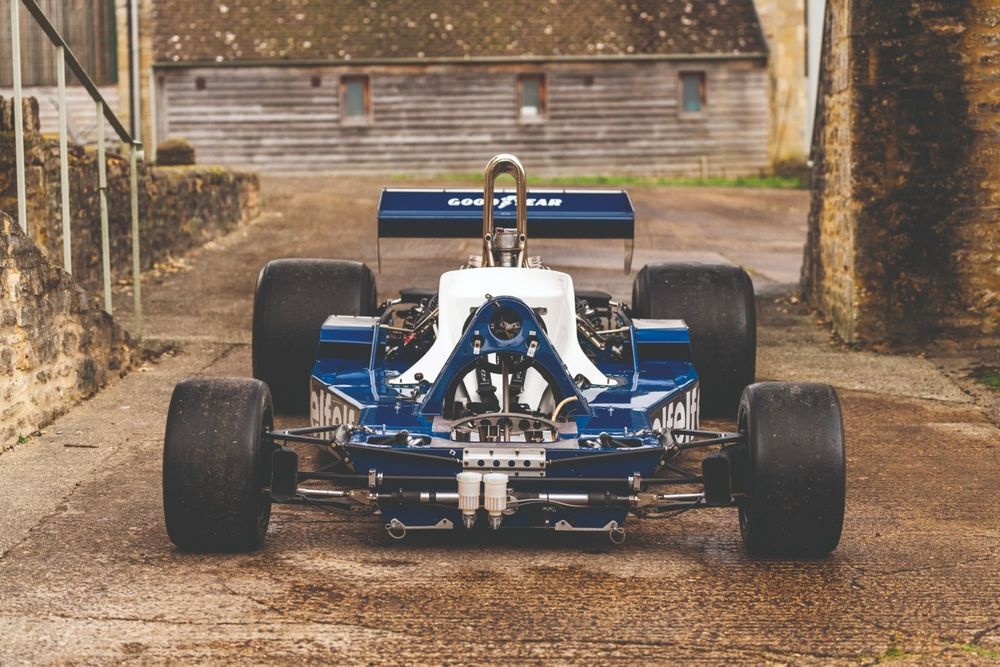
In the wake of the complex P34, the 008 met the criteria of being simple, easy to work on and conventional.
Photo by: Jonny Lau/Machina Studios
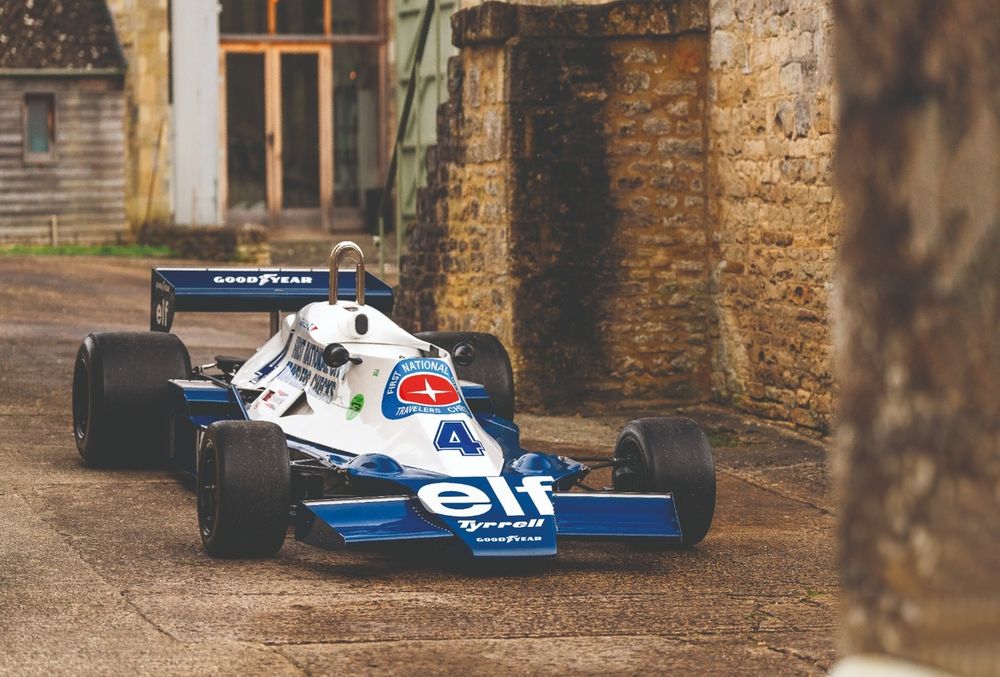
It is claimed that 008/3 was the first winner of a historic race for 1970s Formula 1 cars.
Photo by: Jonny Lau/Machina Studios
Tyrrell 008: Key Specifications & 1978 Race Stats
1978 Season Performance:
- GPs: 16
- Wins: 1 (Patrick Depailler, Monaco)
- Other Podiums: 4
- Pole Positions: 0
- Fastest Laps: 0
- Key Drivers: Patrick Depailler, Didier Pironi, Desire Wilson (Aurora F1)
Technical Specifications:
- Chassis: Aluminium monocoque
- Suspension: Double wishbone front with inboard coil springs and dampers; rear upper links with fabricated steel uprights
- Engine: Naturally aspirated Cosworth DFV V8
- Engine Capacity: 2993cc
- Power: 485bhp
- Gearbox: Hewland FGA 400 five-speed
- Brakes: Ventilated discs front and rear, 4-pot aluminium calipers
- Tyres: Goodyear
- Weight: 585kg
.png)


