
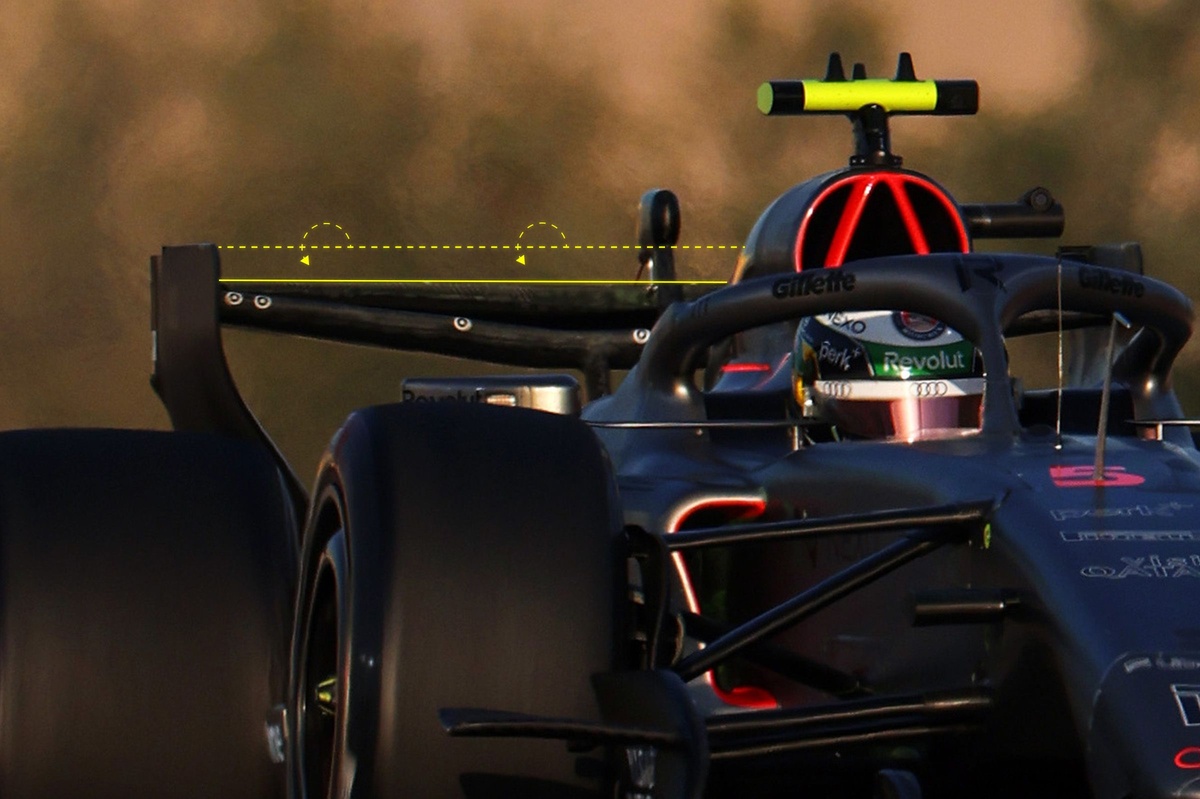

The 2026 Formula 1 season isn't just on the horizon; it's already sparking an engineering revolution, with teams like Audi and Alpine spearheading radical aerodynamic innovations that promise to redefine speed and strategy. The battle for supremacy is no longer just about engine power; it's about mastering the air itself.
Key Points on F1 2026 Active Aero Evolution
- Audi has made a significant shift in its 2026 rear wing design, now mirroring Alpine's pioneering active aerodynamic concept.
- The upcoming F1 2026 regulations demand unparalleled aerodynamic efficiency, primarily driven by critical hybrid energy management.
- Teams like Audi, Alpine, and Ferrari are pushing design limits with innovative rear wing solutions focused on drag reduction and enhanced stability.
- This new approach, involving a downward-moving flap, requires increased actuator effort but offers notable benefits during early braking.
The Dawn of Active Aero: F1's 2026 Mandate
The technical rules for Formula 1 in 2026 are forcing every team to rethink fundamental car design, especially concerning aerodynamic efficiency. With hybrid-imposed energy management limitations, cutting drag isn't just an advantage; it's a necessity. Engineers have been granted more freedom, particularly with active aerodynamics, which will be deployed extensively on straights.
This shift allows for innovative solutions to minimize drag and conserve precious energy. Pre-season testing for the 2026 concepts has already unveiled a fascinating array of designs. Ferrari, for instance, is testing an extreme 180-degree rotating wing, showcasing an audacious interpretation of the new rules.
However, it's the concepts from Alpine and now Audi that are generating significant buzz. Their shared philosophy targets intelligent rear wing movement to achieve maximum performance.
Audi's Strategic Aerodynamic Pivot
During initial shakedowns in Barcelona, Audi showcased a distinct rear wing design. Its primary flap would lift, with the secondary element passively following. However, the German manufacturer has since made a significant strategic pivot.
In the second week of testing in Sakhir, Audi adopted a configuration strikingly similar to Alpine's. This crucial change involves the actuator now pushing the second element of the wing downward, with the first remaining passive. This radical reversal of movement aims to unlock new levels of efficiency.
Unpacking the Alpine Innovation
Alpine was arguably the first to truly break from conventional DRS concepts with their unique rear wing mechanism. Their design strategically rotates on its leading edge, with the actuator specifically engaging the second flap to move it downward. The pivot point, ingeniously placed on the first flap, allows for this precise, opposite-direction opening.
This innovative approach offers several tangible aerodynamic advantages. Notably, it promises greater stability during the crucial transition phase into early braking zones. However, this method isn't without its challenges; the actuator must exert considerably more force than a traditional DRS system to overcome the air's drag and reposition the flap. While Alpine's solution is quite complex, featuring multiple attachment points, Audi's adaptation appears streamlined, relying on a single attachment to the upper flap.
The Race for Supremacy: Beyond DRS
The 2026 Formula 1 regulations are proving to be a fertile ground for engineering creativity, pushing teams to explore concepts far beyond simple drag reduction. The evolution of active aerodynamics exemplified by Audi's adoption of Alpine's ingenious rear wing design signifies a new era.
Expect the competition for aerodynamic supremacy to intensify, with every team scrutinizing these groundbreaking solutions. The pursuit of ultimate efficiency will undoubtedly lead to some of the most technologically advanced and thrilling F1 cars we've ever seen.