
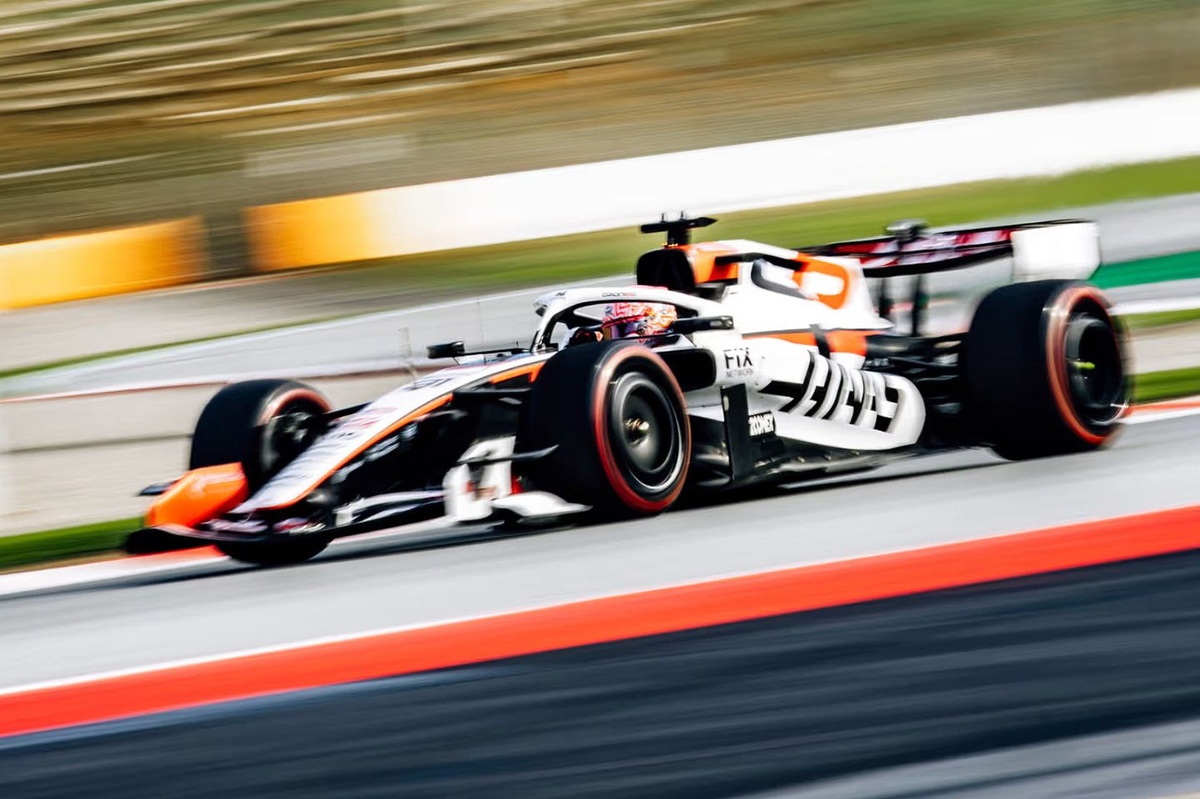

Hold onto your helmets, F1 fans – the initial buzz from the 2026 F1 car shakedown isn't exactly a green light for thrilling on-track battles. Early indications from the Barcelona pre-season test suggest that overtaking might become even harder than before, a stark warning from those who've actually driven the new machinery.
The Haas F1 team drivers, Esteban Ocon and Oliver Bearman, were among the first to log significant laps in the new VF-26 prototypes. Their feedback post-Barcelona testing is crucial, and it’s painting a concerning picture for fans hoping for more wheel-to-wheel action in 2026 F1 cars.
Key Takeaways from Barcelona:
- Esteban Ocon and Oliver Bearman report significant difficulties following cars.
- Drivers experienced notable front downforce loss and critical balance shifts in turbulent "dirty air."
- The new 'Overtake Mode' (replacing DRS) still requires substantial optimization and has not yet convinced drivers of its effectiveness.
- Despite regulations designed to promote closer racing, early signs point to potential challenges for on-track passing.
The New Era of F1: What's Changing?
The 2026 F1 regulations aim to revolutionize the sport with significant technical overhauls. These include a substantial reduction in downforce, targeting a 15-30% cut, and a massive decrease in drag, potentially up to 40%. A key innovation is the new 'Overtake Mode,' designed to replace the familiar DRS, offering a power boost to drivers within one second of a competitor.
Redesigned Aerodynamics and the Power Boost
The intent behind these changes is clear: to create lighter, more agile cars that encourage closer racing. However, balancing raw speed with the ability to follow another car closely without losing performance is a perennial challenge. The initial data from the prototype runs suggests this balance might still be elusive.
Driver Concerns: "Difficult to Pass"
First impressions from the cockpit are invaluable, and the feedback from the Haas F1 team drivers paints a cautious picture. Their experiences at the Barcelona pre-season test highlight specific issues that could impact the racing spectacle.
Ocon's Initial Impressions
Veteran driver Esteban Ocon didn't mince words about his observations. He noted a considerable loss of front load when trailing other cars, a phenomenon that appeared even more pronounced than with current generations. While acknowledging that the 'Overtake Mode' is still in its nascent stages and requires fine-tuning, his first, candid thought was concerning: "it looks to be difficult to pass." This direct statement serves as a significant red flag for the sport's objective of enhancing thrilling racing.
Bearman Echoes the Warning
Rising talent Oliver Bearman corroborated Ocon's observations, adding further weight to the concerns. The young Briton specifically highlighted a "quite a big shift in car balance" when operating in the turbulent "dirty air" directly behind another car. He even suggested that this balance shift felt more significant than in previous car generations, intensifying worries about how closely drivers can follow without losing crucial aerodynamic performance.
The Stakes for F1's Future
These early findings from the Barcelona pre-season test are more than just technical data points; they represent a critical juncture for Formula 1. The sport's leadership has been resolute in creating regulations that promote closer racing and more dramatic overtakes. If the 2026 F1 cars inadvertently make passing harder, it could undermine the very essence of what fans crave – exhilarating, wheel-to-wheel competition.
Optimisation and further development will be paramount in the coming months and years to ensure the new era delivers on its promise of truly spectacular and engaging racing.


