
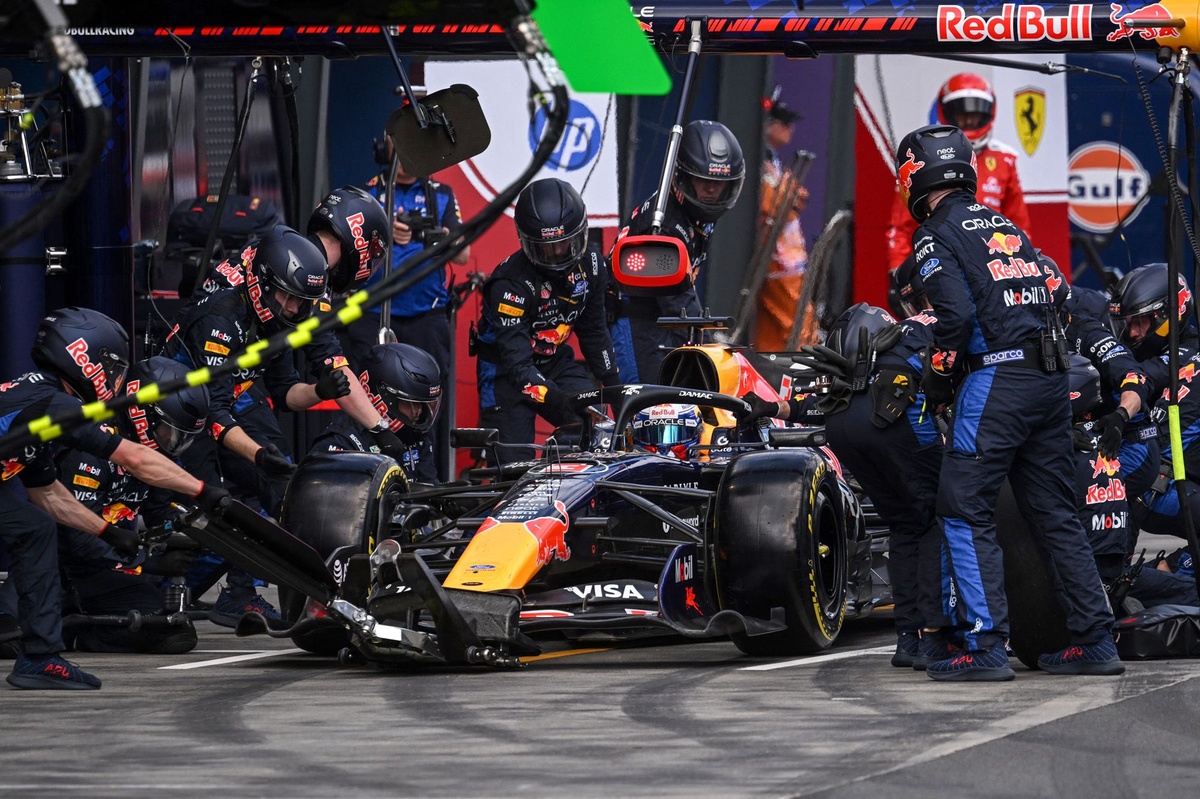

The thrill of Formula 1 often hinges on bold pitstop calls and unexpected strategic gambles, but the early 2026 F1 season is hinting at a strategic drought, threatening to turn races into predictable processions. With every grand prix so far dominated by a single-stop strategy, fans are left wondering where the drama has gone. Pirelli, the sport's exclusive tyre supplier, is acutely aware of the situation and exploring options to reignite the strategic fire.
Key Points for F1 2026 Tyre Strategy:
- The initial F1 2026 season has seen races predominantly decided by a single pitstop.
- New, more durable Pirelli tyre compounds combined with lighter, less downforce-dependent cars are prolonging tyre life.
- Pirelli motorsport boss Mario Isola confirms the manufacturer is assessing softer tyre selections to encourage varied strategies.
- Any adjustments will factor in the rapid car development expected throughout the first year of new regulations.
The Strategic Slump: Where's the Pit Lane Drama?
The sight of cars cruising to victory on a single set of tyres might be efficient, but for fans, it often translates to less excitement. The 2026 F1 season has already witnessed Mercedes securing wins in Australia and China with straightforward one-stop races, mirroring the strategy of most front-runners. This predictability stands in stark contrast to nail-biting finishes like the 2019 Hungarian Grand Prix, where Lewis Hamilton's aggressive two-stop strategy ultimately overcame Max Verstappen's one-stop gamble. That kind of strategic chess is precisely what's missing.
Unpacking Tyre Durability: Why F1 2026 is Different
So, why are the F1 2026 tyres holding up so well? Several interconnected factors are at play. Pirelli has introduced a more robust range of compounds, dropping the softest C6 and focusing on the C1 to C5 spectrum. This inherently means tougher rubber for the new, lighter and narrower tyres.
Crucially, the radically redesigned 2026 F1 chassis contributes significantly. Cars are 32kg lighter and generate substantially less downforce compared to previous generations. This reduction in load translates to less stress on the tyres, particularly through high-speed corners. Furthermore, drivers are now frequently 'lifting and coasting' to manage battery life with the power units relying on a near 50:50 electrical energy split, further reducing demands on the rubber. The outcome? Slower lap times and, consequently, extended tyre durability.
A Familiar Echo: The 2017 Season Resemblance
This isn't the first time Formula 1 has grappled with overly durable tyres following a regulation shake-up. The 2017 season saw a similar trend, with a dominant one-stop strategy in 13 out of 20 races. That year, regulations aimed to boost mechanical grip by increasing tyre width by 25%. While it achieved its goal, it also inadvertently led to extended tyre life. Pirelli responded in 2018 by introducing a wider array of compounds, including the 'hypersoft' to inject more strategic variety. The question now is whether a similar intervention is needed for F1 2026.
Pirelli's Response: Can Softer Tyres Save the Strategy?
Pirelli motorsport boss Mario Isola, who is set to depart the manufacturer this summer, has made it clear that the initial goal for the new tyres was to enable a mix of one and two-stop strategies across the three chosen compounds for each race. He acknowledges the current trend and emphasizes data collection.
"We were working around this concept to try to generate the same situation as last year, not knowing exactly which was the performance of the new cars," Isola stated in China. He confirms the possibility of making changes: "If in some circuits we need to go one step softer, there is the possibility to change the selection... we can change the selection in agreement with the FIA." This proactive stance offers hope for more dynamic races ahead.
The Evolving Beasts: Cars Will Get Faster
However, any immediate overhaul needs careful consideration. It's still the very beginning of a new regulatory cycle, and F1 teams are renowned for their relentless development. The cars competing now are likely to be significantly different by the second half of the season.
As teams unlock more performance and increase speeds, the stress on the tyres will naturally escalate. "If the cars are much quicker, also the stress on the tyre is much higher and the selection could be ideal," Isola noted. A steep development curve means that what seems overly durable now might be perfectly balanced later, making a rush to introduce drastically softer compounds for 2027 potentially premature. The challenge for Pirelli and the FIA is to find the sweet spot, balancing early-season thrills with long-term strategic integrity.