
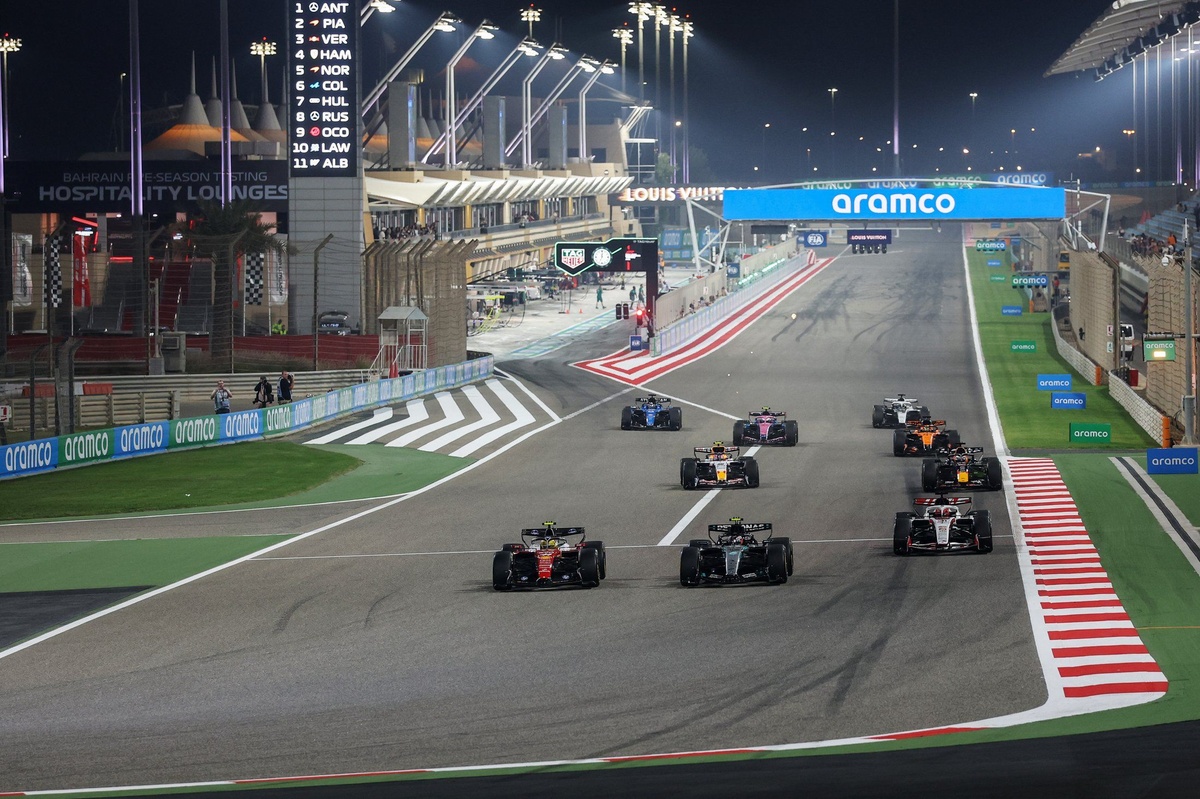

The Dawn of a New F1 Machine
For 14 years, DRS was the go-to overtaking aid. Now, that era is over. Active aerodynamics are here, applying to both the front and rear wings, providing dynamic adjustments throughout the lap, not just for closing in on rivals.
Lighter, Leaner, Less Downforce
For 2026, the F1 chassis sheds approximately 32kg, making cars more agile. Coupled with significantly less downforce, drivers will face a fresh challenge in controlling these machines. The engine, too, undergoes a monumental shift, demanding a near 50:50 balance between traditional internal combustion power and electrical energy.
Navigating 'Straight Mode' and 'Corner Mode'
Drivers can now activate 'straight mode' in designated zones, opening both front and rear wings to a lower angle of attack. This slashes drag and boosts top speed, with the front wing contributing to stability. Crucially, once a driver lifts for a corner, the wings snap back to a higher-downforce configuration. Unlike DRS, these modes are available throughout the race, adding layers of strategic thinking for optimal performance.
The Electric Revolution: Power Unit Dynamics
The increased reliance on electrical energy fundamentally changes how teams and drivers manage power. The new regulations introduce several new power unit settings and modes that will dictate race outcomes.
'Overtake Mode' vs. 'Boost Mode': Strategic Power Plays
Replacing the role of DRS for direct overtaking, 'overtake mode' acts as a push-to-pass function, delivering a maximum 350kW for longer. It's strictly for when a car is within one second of a rival in specific zones. Conversely, 'boost mode' is a manual button on the steering wheel, unleashing a team-specific power unit setting or an injection of harvested battery power. This versatile mode can be deployed for both attacking and defending scenarios.
The Recharge Riddle: F1's "Formula E on Steroids"?
This is where the 2026 regulations get truly contentious. With a heightened dependence on electrical energy, managing battery charge throughout a lap becomes paramount. Drivers like Max Verstappen have even dubbed the new F1 a "Formula E on steroids" due to the necessity of recharging.
To keep batteries topped up, drivers may need to resort to unconventional tactics: downshifting on a straight or even 'lift-and-coast' into corners. While counter-intuitive to traditional racing instincts, these strategies could be vital for achieving the fastest overall lap times. Circuits will now be categorized as 'energy-rich' (easier to recharge, typically low-speed) or 'energy-poor' (challenging, like Monza), adding another strategic layer.
Superclipping: Harvesting on the Edge
'Superclipping' was a hot topic during testing. This ingenious technique allows cars to harvest energy even when the driver is at full throttle, often at the end of straights or through high-speed corners. The MGU-K temporarily diverts power that would normally go to the rear wheels, storing it for later deployment, albeit at the cost of a slight speed reduction. While the initial limit for superclipping was 250kW, there were trials in Bahrain for a 350kW limit, aiming to reduce the need for drivers to 'lift-and-coast' purely for regeneration.
Under the Hood: Engine Controversies & Complexity
Beyond the visible aerodynamic changes, the engine bay holds its own share of new rules and, inevitably, controversies.
The Compression Ratio Conundrum
Originally, the engine's compression ratio was reduced from 18:1 to 16:1 for 2026. However, Mercedes reportedly identified a clever loophole concerning Article C5.4.3, which dictates that the ratio is measured via a static test at ambient temperature. Mercedes allegedly found a way to increase the compression ratio while the engine was running, reverting it for measurement. This sparked outcry from rival power unit manufacturers. The FIA has since clarified, with new measurement tweaks set to be enforced from June 1st.
Mastering the Start: Turbo Lag and Anti-Stall
Race starts in 2026 are set to become significantly more complex. The removal of the MGU-H – previously a crucial component for instant acceleration by spinning up the turbo – means drivers must now rev their engines higher for up to ten seconds to spool the turbo and overcome lag. Timing this new procedure perfectly will be critical, as a slight misjudgment could pitch the car into an anti-stall, severely impacting a driver's race. Nailing the starts could easily be a defining element in the early rounds of the season.
The Pre-Season Playbook: Why 'Sandbagging' Still Matters
As always, pre-season testing will be shrouded in mystery. 'Sandbagging' – the intentional underperformance by a team or driver to mask their true potential – remains a powerful tactic. By running with more fuel, using harder tyres, or even drivers consciously lifting off, teams aim to keep their rivals guessing. Revealing their full hand too early allows competitors to potentially copy innovative car components, negating any hard-won advantage built during the off-season. Expect the mind games to be in full swing.