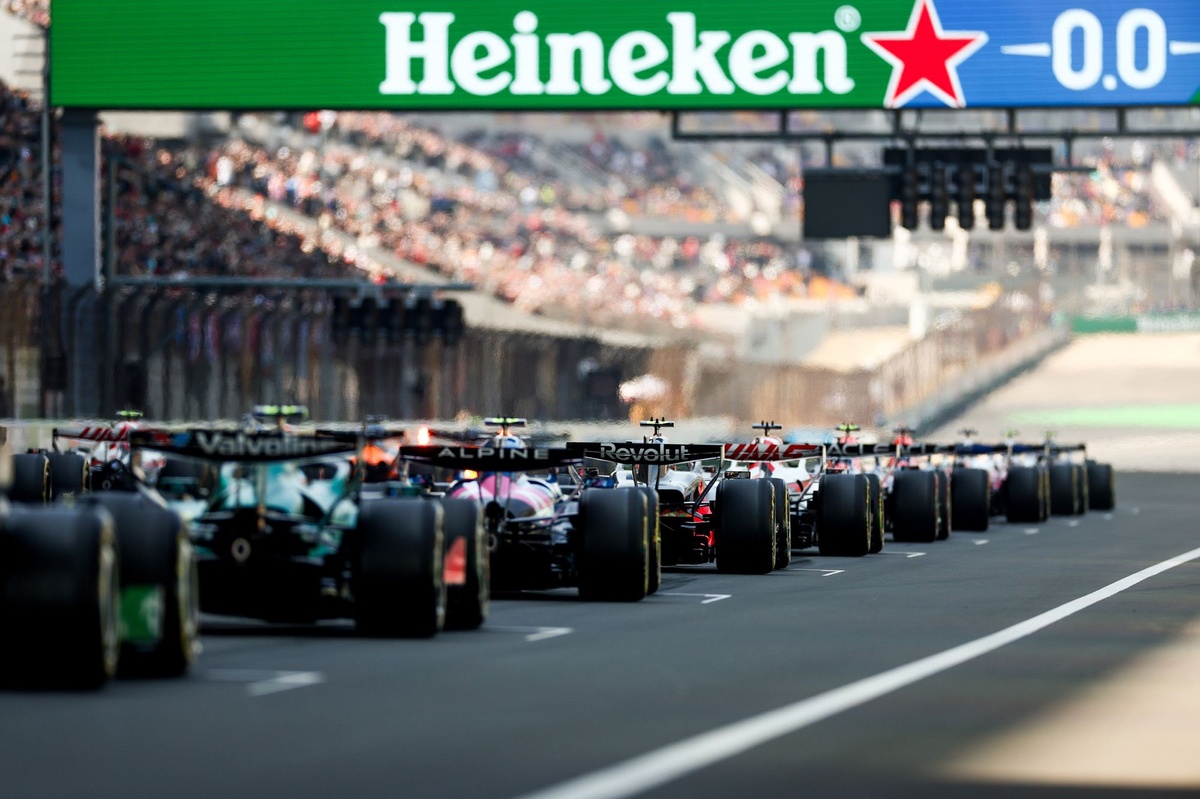

F1 2026 Rules: FIA Tweaks Power & Pace for Miami GP
F1's future hung precariously in the balance after just three races, but the FIA has bravely stepped in with a rapid-fire set of regulation tweaks for the 2026 season, kicking off the new era of racing refinement at the Miami Grand Prix. After an intense period of review involving F1, the teams, and drivers, significant adjustments are on the horizon, aiming to refine the racing spectacle and enhance safety.
Key Points:
- Qualifying Overhaul: Reduced energy recharge limits and increased recovery power aim to banish the 'lift-and-coast' spectacle from time trials.
- Safer Racing: Enhanced MGU-K deployment rules and variable power caps target dangerous closing speed differentials, sparked by incidents like Oliver Bearman's Suzuka crash.
- Wet Weather Warrior: New measures for intermediate tyres and restricted electrical power promise safer, more predictable racing in challenging conditions.
- Start-Line Safety Test: A 'low power start detection' system will be trialed in Miami practice to prevent dangerous stalled cars on the grid.
A Bold New Direction for F1's Future
The FIA's intervention comes after the initial races highlighted critical areas needing immediate attention. While the 2026 regulations are still some way off, the issues surrounding energy management, closing speeds, and wet weather unpredictability have already surfaced. The sport's governing body, alongside teams and drivers, meticulously dissected the early season's dynamics, culminating in a series of rule changes ratified for the upcoming Miami Grand Prix.
These proactive adjustments are designed not just to patch up immediate concerns but to lay a stronger foundation for the sport's hybrid future, which is expected to dominate until at least 2030.
The Push for Purer Performance
Unleashing Qualifying Speed
One of the primary objectives was to restore the raw spectacle of qualifying. The current rules have sometimes led to drivers 'super clipping' or 'lift-and-coasting' into corners, a sight that diminishes the flat-out aggression fans crave. To combat this, the FIA has implemented a maximum energy recharge limit of 7MJ per lap, which can be further reduced depending on the circuit.
Crucially, the maximum energy recovery from the MGU-K has been boosted from 250kW to 350kW. This increase should significantly shrink the 'super clipping' distance, making the braking zones appear more conventional and less visually jarring for spectators.
Tackling Dangerous Closing Speeds
Concerns about significant closing speed differentials were dramatically underscored by Oliver Bearman's high-speed incident at Suzuka, where he was caught out by the slower Franco Colapinto. To mitigate such dangers in races, the qualifying changes to energy recovery also apply.
Furthermore, the 'boost' button, which provides 350kW of on-demand power, cannot be activated until the MGU-K is already deploying over 150kW. This prevents sudden bursts of acceleration in tricky scenarios. Perhaps the most impactful change is the variable maximum deployment: 350kW in straight-mode zones utilizing active aero, but capped at 250kW in cornering sections. This aims to equalize energy deployment across the field in critical downforce areas.
Navigating the Storm: Wet Race Upgrades
Safety in wet conditions has also received a crucial update. For intermediate tyres, blanket temperatures will be increased. More significantly, the FIA plans to limit energy deployment in wet races, likely to 200-250kW, disabling boost or overtake modes. This will reduce the high torque output of the electrical systems, lessening the chance of drivers losing control. Additionally, rear lights are being revised to enhance visibility for trailing cars.
Innovation at the Start Line: Miami Tests New Tech
In a forward-looking move, a novel system will be tested during Miami practice sessions to address the perilous issue of slow or stalled cars at race starts. The FIA has dubbed this a 'low power start detection' system. If a driver experiences a slow getaway after clutch release, the MGU-K will automatically deploy a small amount of energy to help the car accelerate to a minimum safe speed. This aims to prevent drivers behind from having to make sudden, dangerous evasive maneuvers, with rear lights signaling any slow starters.
The Verdict: Is It Enough for the Long Haul?
These changes embody a 'suck it and see' approach, understandable given the lack of dedicated test races for future regulations. While Haas' head of car engineering, Hoagy Nidd, acknowledges that reducing recharge limits might simplify energy management in 'normal' driving, he also notes it could lead to less overall battery energy, potentially resulting in more 'clipping' and fewer moments of full-throttle performance.
F1 remains committed to a notional 50:50 split between internal combustion and electrical power, which inherently limits the scope of changes. While a universal 250kW MGU-K output might offer smoother energy management, it's unlikely to happen with the current philosophical constraints. The impact of these tweaks will be closely monitored over the next few races, as F1 navigates the complex path to a more engaging and safer 2026 season. Only time will tell if these adjustments are truly enough to future-proof the spectacle.