
The Dawn of a New Aero Era: 2026 Regulations Unpacked
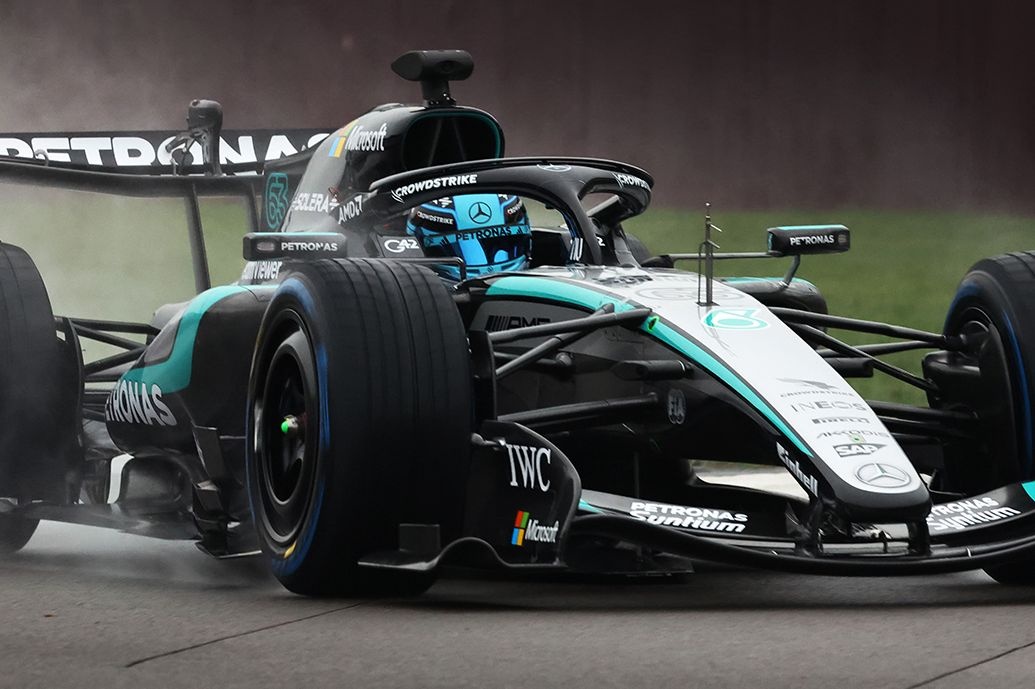
Formula 1's future has just been glimpsed, and it's full of intriguing secrets! The 2026 regulations are set to shake up the grid, and early shakedowns by powerhouses like Mercedes and Ferrari have revealed a revolutionary aerodynamic trick: mysterious holes in their diffusers.
Caution is always needed when interpreting F1 launches, particularly under new regulations. Past examples, like Red Bull’s sidepod experiments, show that teams deliberately keep rivals guessing during pre-season.
Initial 2026 runs show teams exploring higher rake philosophies, pushrod front suspensions, and Ferrari even testing active aerodynamics on track. But the standout innovation lies in the diffuser area.

Credit: Mercedes AMG
Different diffuser philosophy due to simpler floors?
In previous regulations (2022–2025), most downforce came from Venturi tunnels under the floor, so sealing the diffuser was essential. This year, flatter floors reduce natural airflow, forcing teams to find alternative methods. Mercedes and Ferrari appear to be using slotted diffusers to channel sidepod airflow toward the diffuser ramp.
This airflow also helps counter “tyre squirt”—the disturbed air from rear tyres—potentially improving overall diffuser performance.
Inwash further affects floor performance
Another factor that plays a role in the reduced floor performance is the return of something that resembles the barge boards of the past. The key difference, however, is that their function is different this time.
Whereas teams previously used barge boards to direct wake from the front tyres outwards – creating outwash – the FIA now primarily intends these elements as ‘inwash devices’. The main element must point inwards, as it should reduce the effect of dirty air for the car behind.
Alpine technical director David Sanchez commented on Mercedes’ approach: "It's a bit unusual, it's an interesting interpretation, but not a total surprise. The interaction between the bodywork, diffuser, and rear corner will be a work in progress, and people will still want to see how the diffuser looks from the underside."
The 2026 regulations mark a new era of innovation, with teams exploring creative ways to reclaim lost downforce and adapt to a radically different aerodynamic landscape.