
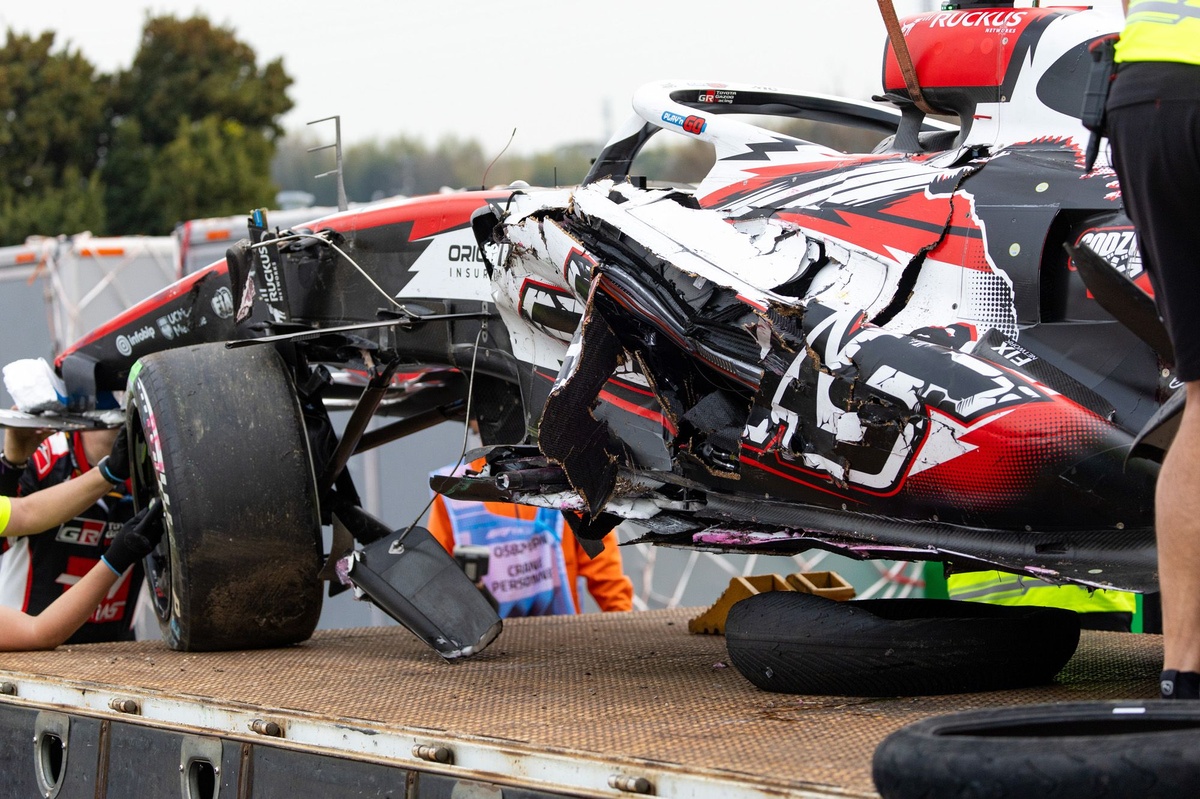

Key Takeaways from the Suzuka Incident
- Oliver Bearman suffered a 50G impact after a high-speed collision at Spoon Corner.
- The incident highlights extreme closing speeds due to F1's new energy management regulations.
- Drivers, led by Carlos Sainz, had warned the FIA and F1 of these dangers.
- The FIA confirms urgent meetings in April to review the 2026 regulations and address safety concerns.
The Suzuka Scare: A Perilous Glitch in the System
Oliver Bearman's incident at Suzuka was more than just a racing mishap; it was a chilling exposé of a critical flaw in the 2026 technical regulations. During lap 21, the Haas driver, trailing Franco Colapinto's Alpine, experienced a sudden, unexpected reduction in the gap. This occurred due to a massive difference in electrical boost near Spoon Corner.
Despite the Alpine not actively harvesting energy—meaning no warning lights—Bearman's closing speed rocketed to a dangerous 45km/h. Traveling at an astonishing 308km/h, he was forced into an evasive maneuver.
The resulting sideways skid across the track, through the run-off, and into the barrier registered a staggering 50G impact. This wasn't a minor fender-bender; it was a violent reminder of the razor-thin margins in F1.
Drivers' Dire Warnings: "We Told You So"
Formula 1 drivers didn't mince words after the Japanese Grand Prix, echoing a sentiment of "we told you so" regarding the new energy management protocols. Carlos Sainz, a director of the Grand Prix Drivers' Association, publicly criticized the current setup.
"There were a lot of big moments there in the first three laps while we were all sorting out our energies," Sainz stated, highlighting the chaos of differing energy deployments. He emphasized that even without the 'boost button,' engine output variations create unpredictable closing speeds.
Sainz went further in an interview with Sky F1, revealing, "We've been warning them [F1 and the FIA] about this happening." He stressed that such accidents were inevitable and urged for a safer solution to manage these extreme speed differentials.
FIA Takes Notice: April Discussions Critical for F1 Safety
The governing body, the FIA, has now publicly addressed the escalating concerns. They acknowledged the "contribution of high closing speeds" to Bearman's accident and stated their commitment to safety.
A revision to the energy management regime has been under consideration since before the season began. Initially, the focus for the upcoming April 9th F1 Commission meeting was primarily on improving the 'show' in qualifying, with commercial interests satisfied with the racing spectacle.
However, the severity of the Bearman incident has drastically shifted priorities. The FIA confirmed that the 2026 regulations, particularly concerning energy management, include adjustable parameters that need optimization based on real-world data. They will now conduct a "structured review" and "detailed analysis" in April.
While the thrill of unpredictable racing is a draw, the inherent dangers of these new systems cannot be ignored. The FIA's promise of "close and constructive collaboration" with all stakeholders must deliver tangible safety improvements. The sport's future, and its drivers' well-being, depend on it.