
Beyond the Official Calendar: A Different Kind of Glory
Imagine a parallel universe where every roaring engine, every daring overtake, and every checkered flag from F1's non-championship races contributed to a parallel title chase. This fascinating 'what if' in motorsport history, initially sparked by Jackie Stewart's unique 1969 VAT69 Sportsman of the Year award, unveils a captivating narrative of forgotten glory and alternative champions.
Key Insights: F1's Lost Crowns
- Non-championship F1 races were a vital, albeit unofficial, part of the racing calendar for decades.
- Applying a hypothetical points system reveals legendary drivers like Jim Clark, Stirling Moss, and even John Watson as potential "non-title" champions.
- These events served as crucial testing grounds for cars and emerging talent, offering unique challenges.
- Tragic incidents, like Jo Siffert's death in 1971, and financial pressures ultimately led to their decline by the 1980s.
For a period, the motorsport world operated with an intriguing dual reality: the official Formula 1 World Championship and a bustling circuit of non-championship races. These standalone events, often held at iconic venues like Brands Hatch and Silverstone, offered drivers and teams crucial track time, valuable prize money, and a chance for glory without championship pressure. The very idea of an alternative F1 series was subtly hinted at by the 1969 VAT69 Sportsman of the Year award, which recognized Jackie Stewart for scoring over 69 points across official GPs and specific non-title races like the Race of Champions and the BRDC International Trophy.
The Evolution of Unofficial Grand Prix Racing
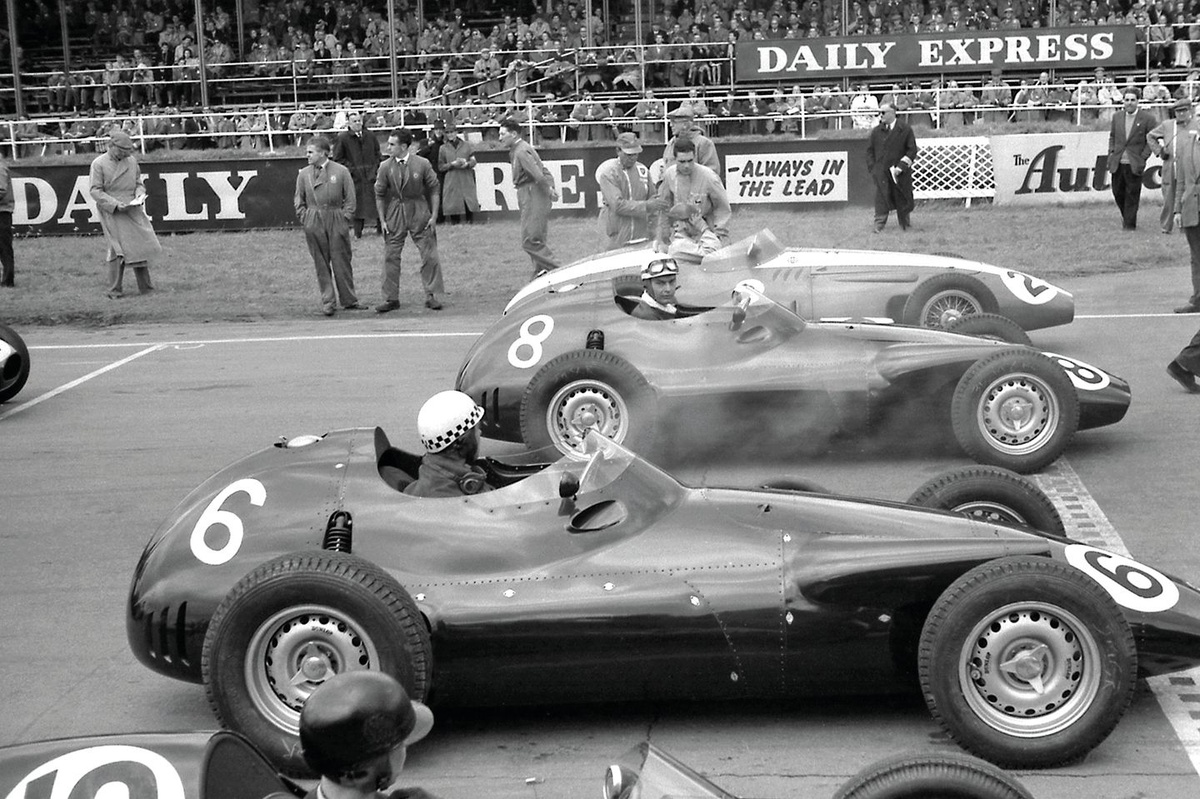
The landscape of non-championship F1 racing was far from static. In the early 1950s, the lines blurred significantly, with Formula Libre events dominating. It was a wild west, where a short dash at Castle Combe could technically be grouped with an international-caliber Syracuse Grand Prix featuring works teams from Ferrari, Maserati, and Gordini. This era posed a challenge for any consistent hypothetical championship.
The introduction of the popular 1.5-litre unsupercharged Formula 2 in 1957 helped streamline the scene, pushing many smaller events into the F2 category and clarifying the non-title F1 calendar. However, 1961 brought a fresh wave of complexity with the controversial 1.5-litre engine restriction for F1. This led to an 'overcrowded' calendar, prompting figures like Colin Chapman to advocate for non-championship F1 races to transition to F2 cars, a vision that largely took hold by 1965. From then on, only a few 'hardy perennials' remained, though a brief resurgence occurred in the early 1970s before constructors eventually consolidated around the official Grand Prix calendar.
Defining the Phantom Champions: A Hypothetical Roll of Honor
For this fascinating exercise, we applied the standard Formula 1 World Championship points system of the respective eras to these non-title events, giving us a comprehensive look at who would have excelled outside the official calendar.
Jim Clark's Unchallenged Reign
Underscoring his absolute mastery of the 1.5-litre F1 era, Jim Clark emerges as the most dominant figure in our hypothetical non-championship series. He would have secured an incredible four titles between 1962 and 1965, even pipping rival Graham Hill by a single point in '64. Legends like Jack Brabham and Stirling Moss also notched up multiple "phantom" titles, with Jackie Stewart narrowly outpointing Jochen Rindt in 1969-70.
Early Era Stars and Surprises
The early years reveal fascinating alternative champions. In 1951, Louis Rosier, affectionately known as 'Le Metronome' for his consistent finishes in his Talbot-Lago, takes the crown. The 1952 title would go to Piero Taruffi, just ahead of Luigi Villoresi. Maurice Trintignant's consistency saw off Ferrari teammates Jose Froilan Gonzalez and Mike Hawthorn in 1954, while Jean Behra, often unlucky in official GPs, was a serial winner in non-title events, collecting five victories in 1957 with Maserati and BRM machinery. A real dark horse, Roy Salvadori, piloted his Gilby 250F to the 1955 "title" with wins at Goodwood and Aintree.
Innes Ireland, the de facto Lotus team leader, claimed our 1960 crown with victories at Goodwood, Silverstone, and Snetterton, showcasing his competitiveness in shorter-form races.
Stirling Moss: A Roman Holiday and Aintree Duel (1958)
The 1958 season offers a captivating scenario. While Ferrari's squadron of Mike Hawthorn, Peter Collins, and Luigi Musso each secured wins on home soil, it was Stirling Moss in the rear-engined Cooper who emerged as our 'champion' with victories at Aintree and Caen. Moss himself recalled the thrilling BARC 200 at Aintree: "I remember having my hands full there with a challenge from Jack Brabham. My engine was overheating at the end and he made up nearly four seconds on the last lap. But he ran wide on the last corner and I just beat him to the line." This era even considered the exotic Monzanapolis 500, which, if included, would have tilted the title to Luigi Musso.
McLaren's Emergence Down Under (1968)
In 1968, despite only three non-championship races, the grids were packed with Grand Prix quality. Bruce McLaren's sleek, Robin Herd-designed McLaren M7A burst onto the scene with a dominant flag-to-flag victory at Brands Hatch. As McLaren noted in Autosport, he was "delighted to win... Mine looked as though we’d only just warmed it up." A month later, Denny Hulme led a McLaren 1-2 at Silverstone's International Trophy. Despite missing the Oulton Park Gold Cup to focus on Can-Am, Bruce McLaren's early season triumphs would have earned him the 1968 non-championship title.
BRM's Tragic Peak and Stewart's Close Call (1971)
The 1971 season saw an expanded non-title calendar, marked by both brilliance and tragedy. The 12-cylinder Ferrari and Matra cars initially dominated, but BRM's V12, particularly in the hands of Pedro Rodriguez, was exceptionally quick, securing a dominant win at Oulton Park's Spring Cup. Designer Tony Southgate recalled the engine being "at its peak then, although reliability was a problem." Young talent Howden Ganley also impressed in his BRM outings.
However, the season concluded with the hastily arranged 'Victory' race at Brands Hatch, where poleman Jo Siffert tragically lost his life in a fiery crash. The race was abandoned, and with half-points awarded, Jackie Stewart would have narrowly clinched the 1971 'non-title' by half a point over John Surtees and Peter Gethin. It was a season that encapsulated the highs and profound lows of this unique racing era, even coining a new term: Siffert's 'yumping' to describe the car's behavior.
John Watson's Unexpected 1975 Triumph
In a true 'didn't see that one coming' moment, the 1975 non-championship title would have gone to John Watson. Despite his Surtees TS16 often being outpaced by the formidable Shadow DN5, 'Wattie' consistently delivered competitive showings, earning enough points with a second at Brands, fourth at Silverstone, and fifth at Dijon to claim the hypothetical crown.
The Fading Roar: An Era Closes
The dramatic 1978 International Trophy at Silverstone, where torrential rain transformed the track into a treacherous river and caused significant damage to new machinery, proved to be a nail in the coffin for many non-championship races. Keke Rosberg's and Emerson Fittipaldi's miraculous escapes highlighted the chaos, but constructors were left with heavy repair bills, signaling the end for such ventures. Though Bernie Ecclestone ensured the Race of Champions staggered on until 1983, the curtain had effectively fallen.
These non-championship races were more than just forgotten footnotes; they were vibrant testing grounds, career launchers, and stages for unforgettable moments. They offered a raw, unfiltered slice of Formula 1 history, showcasing legendary talent and providing an intriguing look at who might have worn a different kind of crown in a parallel racing universe.