
Formula 1 is currently enjoying an unprecedented boom across the United States, with three vibrant races annually and surging popularity. But F1's relationship with America wasn't always so smooth. For decades, the pinnacle of motorsport wrestled with finding its footing stateside, often navigating challenging venues and an ambivalent audience. Yet, amidst this complex history, several circuits shone brightly, hosting unforgettable races that etched their names into F1 lore. We're looking beyond the modern era of Circuit of The Americas, Miami, and Las Vegas, and also excluding the early anomalous Indianapolis 500s, to spotlight the five most impactful American F1 circuits.
Key Points for American F1 History:
- F1's journey in the US has been a rollercoaster, marked by struggles and spectacular moments.
- Historic tracks like Watkins Glen offered unique challenges and celebrated champions.
- Gritty street circuits in Detroit and glamorous Long Beach delivered raw, unscripted drama.
- Indianapolis Motor Speedway brought F1 to a massive stage, despite its controversial moments.
5. Motor City Mayhem: Detroit's Gritty Street Fight (1982-1988)
Few tracks embodied raw, urban challenge quite like the Detroit Street Circuit. Hosting seven races between 1982 and 1988, this tight, ninety-degree corner-filled layout wasn't universally loved, but it certainly delivered drama. It was a true test of driver skill and car reliability, often pushing both to their limits. Who could forget John Watson's incredible charge from 17th on the grid to victory in the inaugural 1982 race?
Michele Alboreto secured Tyrrell's final Grand Prix win here in 1983, highlighting the circuit's ability to produce unexpected heroes. The 1984 GP featured a thrilling, near two-hour duel where rookie Martin Brundle almost caught Nelson Piquet, finishing just 0.8 seconds behind – a result later stripped due to the infamous Tyrrell disqualification. Even as the track surface deteriorated, Ayrton Senna demonstrated his street circuit mastery with a hat-trick of wins, including his final Detroit GP victory in 1988 before the event moved to Phoenix.
4. The One-Hit Wonder: Riverside's Untapped Potential (1960)
Despite hosting only a single world championship race in 1960, Riverside International Raceway holds a special place in F1 history as one of North America's most respected and challenging circuits. It was a layout that truly tested a driver's mettle, boasting a mix of fast sweeps and technical sections.
This Californian gem hosted the 1960 season finale, notably skipped by Ferrari. Stirling Moss ultimately dominated for Lotus-Climax, after overcoming a quick start from newly crowned double world champion Jack Brabham and local hero Dan Gurney. Despite the circuit's quality and perfect weather, a mere 20,000 spectators attended, underscoring F1's early struggles to capture the American imagination. It remains a poignant reminder of what could have been.
3. Brickyard's F1 Chapter: Highs, Lows, and Massive Crowds (2000-2007)
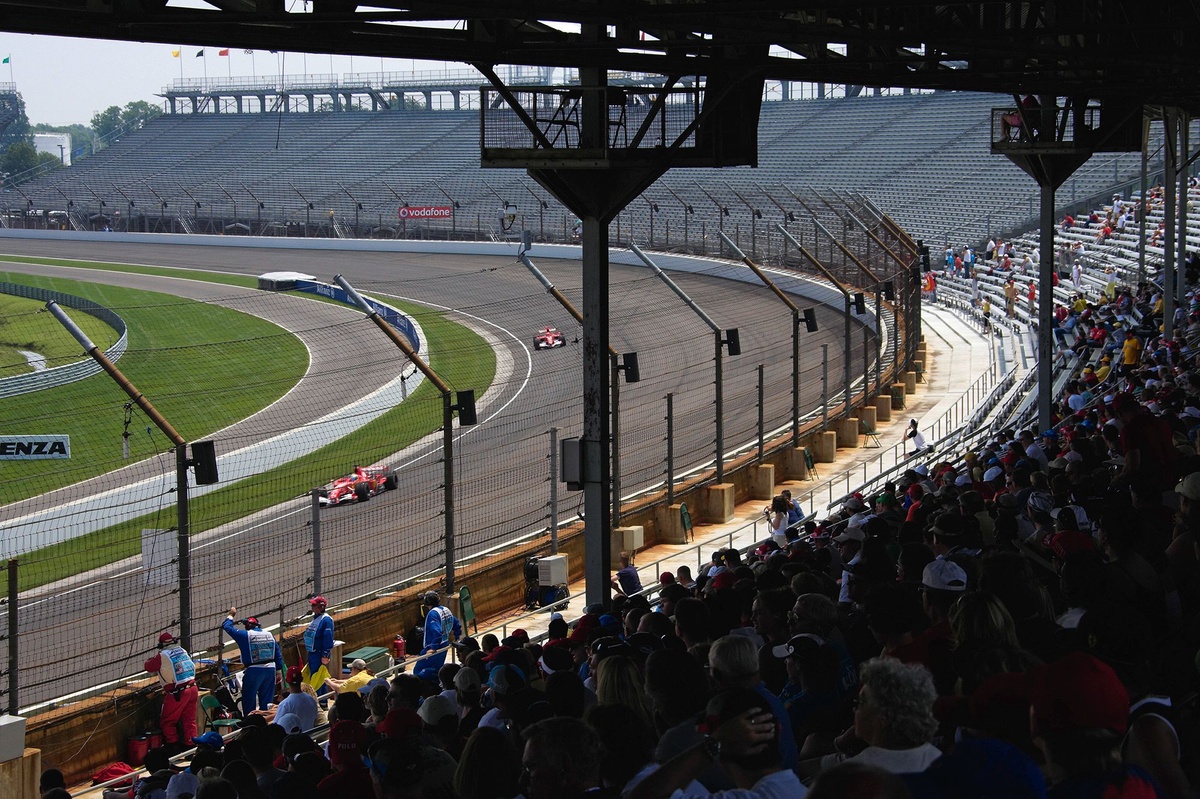
While we omit the early Indianapolis 500s that counted for the championship, the Indianapolis Motor Speedway carved its own distinct legacy in modern F1. From 2000 to 2007, the Brickyard sought to re-establish F1's presence in the US, drawing an astonishing 250,000 fans to its debut. This was the right stage for the sport, combining the iconic oval's banking with a bespoke infield section.
Early races saw titans like Michael Schumacher and Mika Hakkinen claim victories, with Hakkinen's 2001 win coming less than three weeks after the 9/11 attacks, lending F1 much-needed gravitas. However, the Indy F1 era was not without its controversies. Ferrari's orchestrated 'photo finish' in 2002 left a sour taste, and the infamous 2005 Michelin tyre debacle, where 14 cars retired on the formation lap, nearly derailed F1's American ambitions entirely. Yet, the circuit persevered, culminating in an electrifying 2007 duel between Fernando Alonso and rookie Lewis Hamilton, with Hamilton clinching a narrow 1.5-second victory. Financial disagreements ultimately ended F1's stint at this iconic venue, but the memory of F1 cars thundering into the banked Turn 1 remains vivid.
2. California Cool: Long Beach, The Street Circuit Masterpiece (1976-1983)
If ever there was a street circuit perfectly suited for Formula 1, it was the Long Beach Grand Prix. Known as the 'US GP West', this track joined the calendar in 1976 and quickly became a fan favorite. Its stunning Californian coastal setting and challenging layout, featuring tight turns and fast straights, consistently produced captivating racing.
The 1977 race saw local hero Mario Andretti snatch victory from Jody Scheckter by a mere 0.8 seconds after Scheckter suffered a late puncture. Nelson Piquet secured his maiden F1 win here in 1980, dominating from pole. Perhaps the most legendary moment came in 1983, when McLaren teammates John Watson and Niki Lauda achieved an astonishing 1-2 finish after starting 22nd and 23rd respectively, overcoming Michelin tyre struggles to deliver one of F1's greatest comebacks. Political wrangling unfortunately led to F1's departure, leaving Long Beach to become a beloved IndyCar staple, a testament to the circuit's enduring appeal and F1's missed opportunity.
1. The Grand Dame: Watkins Glen's Enduring Legacy (1961-1980)
Undisputedly the most significant American circuit in Formula 1 history, Watkins Glen International hosted more US Grand Prix events than any other, with 20 races between 1961 and 1980. This flowing, high-speed track in upstate New York, with its natural elevation changes and demanding corners, became a true classic and a beloved fixture on the F1 calendar.
The Glen saw its share of legends. Graham Hill achieved a remarkable hat-trick of wins from 1963-1965, while Jim Clark delivered the sole victory for BRM's infamous H16 engine here in 1966. Future world champions Jochen Rindt (1969) and Emerson Fittipaldi (1970) secured their first GP wins at this iconic venue. Gilles Villeneuve's wet-weather masterclass in 1979 remains a highlight, showcasing supreme car control. The circuit also bore witness to tragedy, with the deaths of François Cevert (1973) and Helmut Koinigg (1974) serving as stark reminders of the sport's inherent dangers. While modern F1 safety standards would likely necessitate significant reconfigurations, Watkins Glen remains revered for its character, atmosphere, and the unforgettable chapters it wrote in F1's American story.