
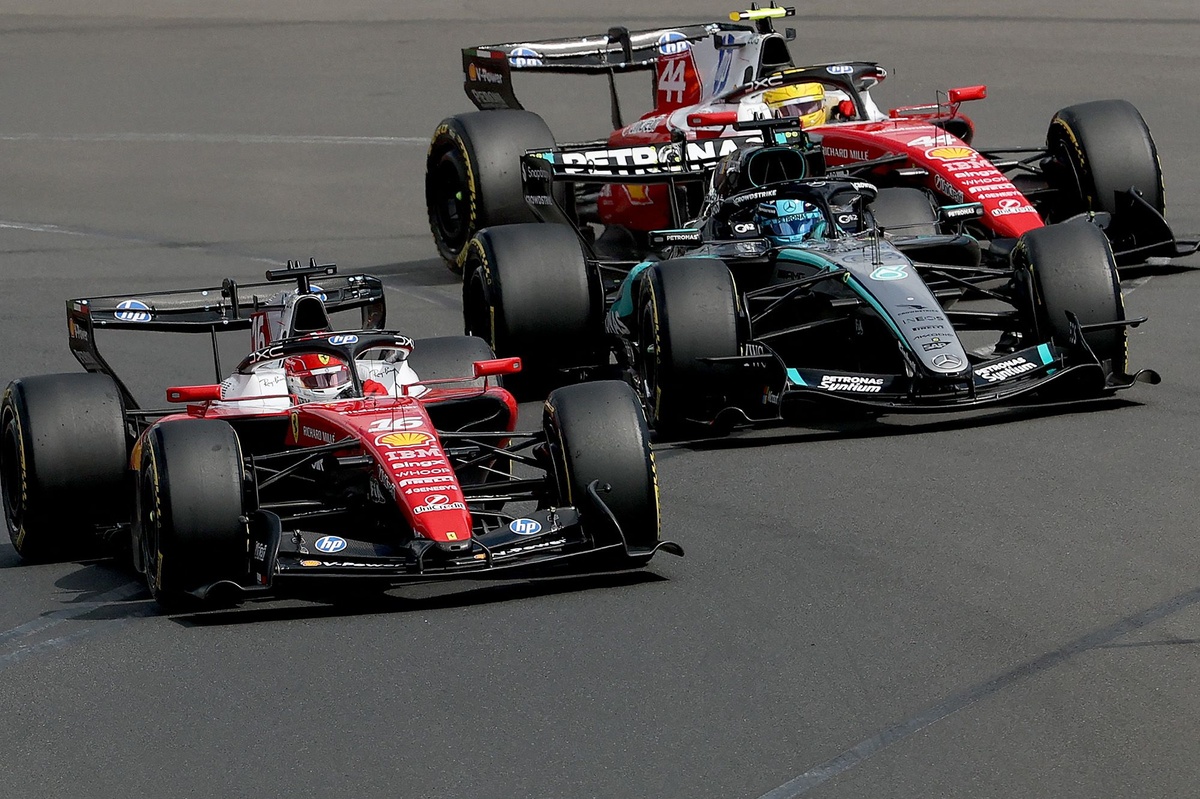

The roar of a Ferrari engine, bursting off the line with unparalleled aggression, has ignited the hopes of a fanbase starved for championship glory. After years of near misses and strategic gambles, Scuderia Ferrari enters the 2026 F1 season with a car that, at least in some crucial areas, looks genuinely capable of challenging for the ultimate prize. But the road to redemption is fraught with challenges, primarily from a dominant Mercedes.
Key Takeaways from Ferrari's Early 2026 Season:
- Unmatched Race Starts: Ferrari's innovative smaller turbocharger design grants them a significant advantage off the line, often catapulting their drivers into an early lead.
- Strong Chassis Foundation: The SF-26 boasts an excellent chassis, providing drivers Charles Leclerc and Lewis Hamilton with a comfortable and competitive platform through corners.
- Power Unit Deficit: Despite their starting prowess, Ferrari currently lags behind Mercedes in top-end power, a gap estimated at 0.4-0.5 seconds per lap.
- Development is Paramount: Ferrari's championship aspirations heavily rely on their ability to close the power gap, potentially leveraging the FIA's ADUO system for critical upgrades.
The Launch Pad: Ferrari's Start Line Dominance
Witnessing a Ferrari launch off the grid this season is like watching a slingshot in action. From the Bahrain pre-season tests to the opening rounds, the SF-26 has consistently outpaced rivals, leaving other teams in its dust as the lights go out. This isn't just luck; it's a testament to Maranello's ingenious engineering.
The 2026 regulations, with the removal of the MGU-H, brought fears of increased turbo lag. While other manufacturers seemingly dismissed this, Ferrari saw an opportunity. Their solution? A smaller, lighter turbocharger that spools up faster, delivering torque to the rear axle precisely when it's needed most. Even the FIA's introduction of a five-second pre-start window couldn't fully neutralize Ferrari's blistering advantage, as seen with Leclerc's jump on George Russell in Australia and Hamilton's move on Antonelli in China.
SF-26: A Chassis Masterpiece, But a Power Unit Puzzle
Beyond the rocket starts, the SF-26 is proving to be a genuinely quick package. Charles Leclerc confirms the chassis’s strength, stating it is “one of the most balanced cars we’ve had in recent years,” with the platform offering consistent grip and confidence through medium- and high-speed corners. Lewis Hamilton, adapting quickly to life in red, has echoed similar sentiment, noting the car’s predictability allows him to “push harder earlier in stints” without overdriving the rear tyres.
Power Gap Threatens Ferrari’s Title Charge
But even with such a strong foundation, Ferrari’s Achilles’ heel remains clear: raw power. On the straights, the SF-26 consistently loses out to Mercedes machinery, with data suggesting a deficit of roughly four to five tenths per lap when top-end performance is fully exploited. The contrast is stark, what Ferrari gains in the opening metres, it gradually gives back over a lap as rivals claw back time with superior deployment and terminal speed.
This imbalance has shifted the Scuderia’s focus sharply toward development. Engineers in Maranello are already prioritising upgrades aimed at improving combustion efficiency and energy deployment, while also exploring how to maximise gains under the FIA’s ADUO development framework. The challenge is not just catching Mercedes, but doing so quickly enough to keep both championship fights alive.
The message inside Ferrari is clear: the foundation is there, the package is competitive, but without closing the power unit gap, a title charge may once again slip just out of reach.