
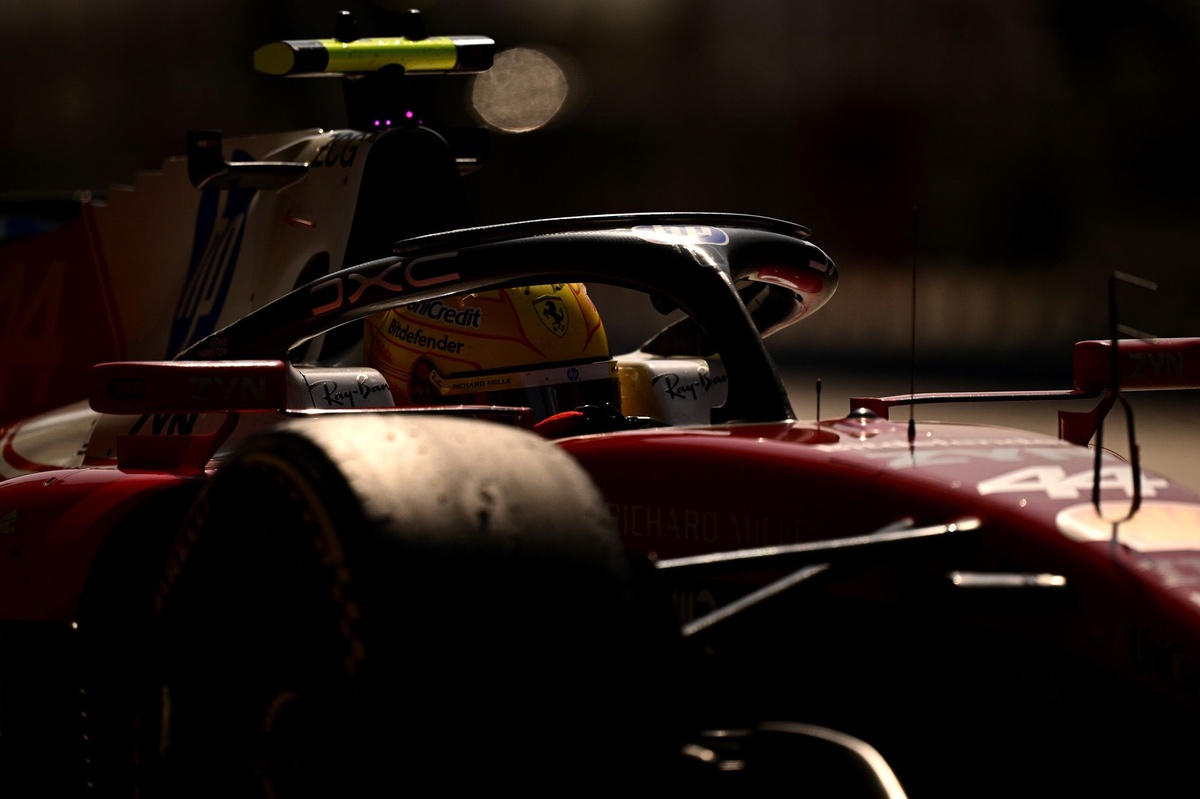

The roar of a Ferrari F1 engine isn't just about raw power; it's about reliability, innovation, and a strategic edge. As the Scuderia returns to Bahrain, a detailed look under the hood reveals bold moves that could redefine their 2026 season.
Key Takeaways:
- Ferrari brings a new power unit and significant aerodynamic updates to the second Bahrain F1 test.
- The previous 067/6 engine showcased impressive durability, logging 4300 km – equivalent to 14 Grands Prix – with only minor glitches.
- Strategic use of a smaller Honeywell turbo aims to minimize lag and optimize race starts, a move already sparking debate.
- Concerns rise over increased gearbox stress due to new energy recovery strategies, prompting potential design reinforcements.
Ferrari's Engine Durability: A Major Leap Forward
Ferrari is back at the Bahrain International Circuit, armed with a suite of aerodynamic enhancements and a completely fresh power unit. This isn't just standard procedure; it marks a significant step.
The initial 067/6 engine, extensively tested across Barcelona and the first Bahrain session, delivered an astonishing performance. It clocked over 4300 km, a distance roughly equal to 14 Grands Prix, proving its robust reliability.
Team Principal Fred Vasseur highlighted the positive data gathered from fuel pick-up tests. This crucial information will refine their race simulations, ensuring compliance with FIA fuel regulations and optimizing performance.
While a minor glitch did occur during a long run on the final day in Sakhir, the overall endurance showcased by the 067/6 engine is a massive confidence booster for the Maranello squad. This unit will now undergo forensic inspection by Enrico Gualtieri’s engine department.
The Gearbox Gauntlet: Reinforcements on the Horizon
With a new power unit comes the strong likelihood of a fresh gearbox as well. This component faces unprecedented demands in the upcoming season.
Modern energy recovery strategies often involve utilizing shorter gears, which in turn pushes engine revs higher. While beneficial for turbo response, this puts immense strain on the individual gears and the entire transmission.
The racing world is keenly watching transmission wear, an aspect that could surprisingly become a performance differentiator. Ferrari is reportedly considering necessary reinforcements to prevent potential failures, a prudent move in this high-stakes environment.
The 'Small Turbo' Strategy: Unlocking Start Line Advantage
Ferrari’s engineering team made a deliberate choice during the design of the 067/6: a smaller Honeywell turbocharger. This decision wasn't accidental; it’s a calculated gamble to gain an edge.
The primary objective is to dramatically reduce turbo lag. By doing so, Ferrari aims to lessen the reliance on the MGU-K during initial acceleration, instead channeling more electric energy for outright straight-line speed.
This "small turbo" philosophy truly shines during the race start. Simulations in Bahrain revealed that loading the turbocharger for an optimal launch requires pushing the internal combustion engine to higher revs.
Teams with larger turbos inherently need more time to complete this intricate start procedure, giving Ferrari a potential crucial advantage off the line.
FIA Standoff: Safety vs. Performance
The activation of the starting system typically takes around 10 seconds. This timing is now under scrutiny, especially for cars starting further down the grid who might arrive at their slots later.
Ferrari stands firm against any rule changes that might jeopardize their small turbo advantage. However, McLaren Team Principal Andrea Stella has voiced legitimate safety concerns regarding potential car stalls within the dense grid, posing a significant risk.
The F1 Commission is set to convene this week to tackle these contentious issues. Expect intense discussions, with compromises likely on the table regarding various technical facets, including the Mercedes engine’s compression ratio.
The battle isn't just on the track; it's in the rulebooks and engineering labs, as Ferrari pushes the boundaries of performance and reliability.