
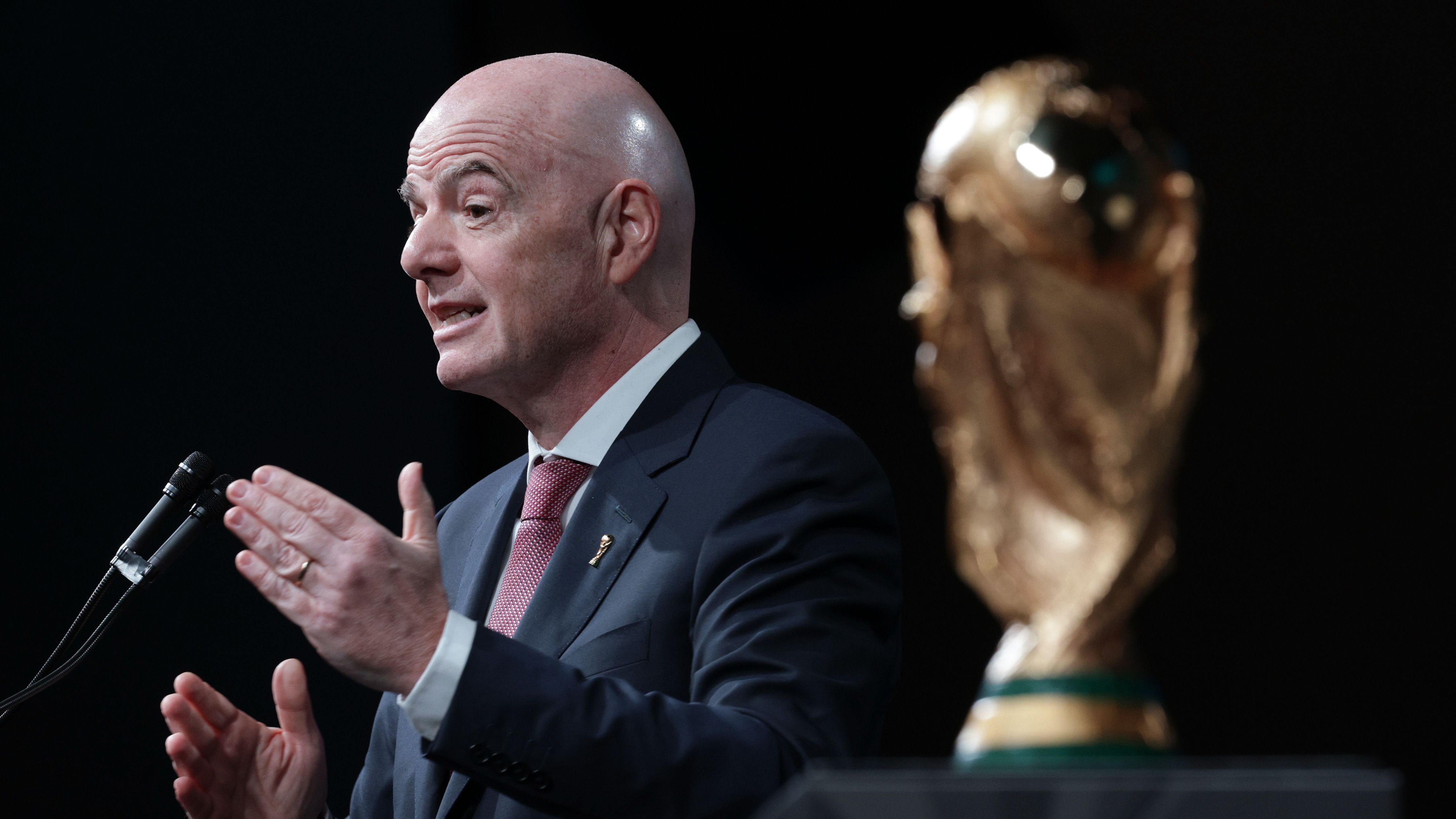

FIFA President Gianni Infantino is attempting to paint a picture of unbridled global celebration for the 2026 World Cup, but a harsh geopolitical reality threatens to turn that dream into a logistical nightmare. While Infantino predicts record-breaking excitement and packed stadiums across the United States, Mexico, and **Canada**, mounting international conflicts and logistical hurdles are casting a long shadow over the preparations for football's biggest spectacle.
- FIFA is downplaying serious geopolitical tensions, particularly the USA's ongoing conflicts involving Iran.
- International football is already experiencing disruptions, with teams facing travel and visa hurdles for qualifiers.
- Former US President Donald Trump's dismissive comments on Iran's participation highlight deep political rifts.
- Concerns are mounting over US visa restrictions and soaring ticket prices potentially alienating fans and participants.
Infantino's Grand Vision vs. Global Turmoil
Despite escalating geopolitical tensions, FIFA President Gianni Infantino remains steadfast in his commercial-first narrative for the 2026 World Cup. Speaking to Spanish publication AS, Infantino glossed over the active military conflicts, focusing instead on the tournament's unprecedented scale and staggering ticket demand. He described the event as "fantastic, phenomenal" with "unprecedented excitement."
FIFA boasts an incredible 500 million ticket requests within just four weeks, far outstripping the available seven million tickets. This commercial success, however, seems to overshadow the very real security and logistical concerns raised by participating nations, especially given the USA's involvement in conflicts with Iran and Israel.
The Shadow of Conflict: USA, Iran, and Football
The ongoing military conflicts are already creating tangible disruptions in international football. The Iraqi Football Federation, for example, has urgently requested the postponement of their World Cup intercontinental play-off in Mexico. This critical plea is due to severe logistical crises, including closed airspace and complex visa issues directly linked to the security situation with Iran.
This volatile environment prompted former US President Donald Trump to offer a starkly dismissive view on Iran's potential participation. Speaking to POLITICO, Trump bluntly stated, "I really don't care" about Iran potentially pulling out, labeling them a "badly defeated country." Such comments highlight the deep political chasm that FIFA appears to be ignoring as the tournament approaches. Tellingly, recent FIFA meetings in Atlanta concerning tournament logistics proceeded without any Iranian representatives, signaling a critical breakdown in communication.
Beyond the Pitch: Visa Roadblocks and Fan Frustration
Beyond the geopolitical firestorm, host nation policies present significant operational challenges. The United States' strict immigration rules have already caused chaos, as seen when Jamaican side Mount Pleasant had ten players denied entry for a regional match. Andrew Giuliani, head of the White House FIFA World Cup Task Force, emphasized the impossibility of standard entry for certain nations, doubling down on a tough security stance.
Giuliani underscored the administration's firm position, noting it would be "foolish to just open borders" given the current climate. This raises alarm bells for the expanded 48-team tournament, where countless fans, staff, and players could face insurmountable visa hurdles. Moreover, while FIFA celebrates record ticket applications, many supporter groups are voicing intense backlash against what they perceive as exorbitant ticketing policies, accusing the governing body of pricing out the everyday fan from football's ultimate festival. The 2026 World Cup risks becoming a party accessible only to a select few, battling both political and financial barriers.


