
The Unthinkable Partnership: Ford and Red Bull's Shared Past
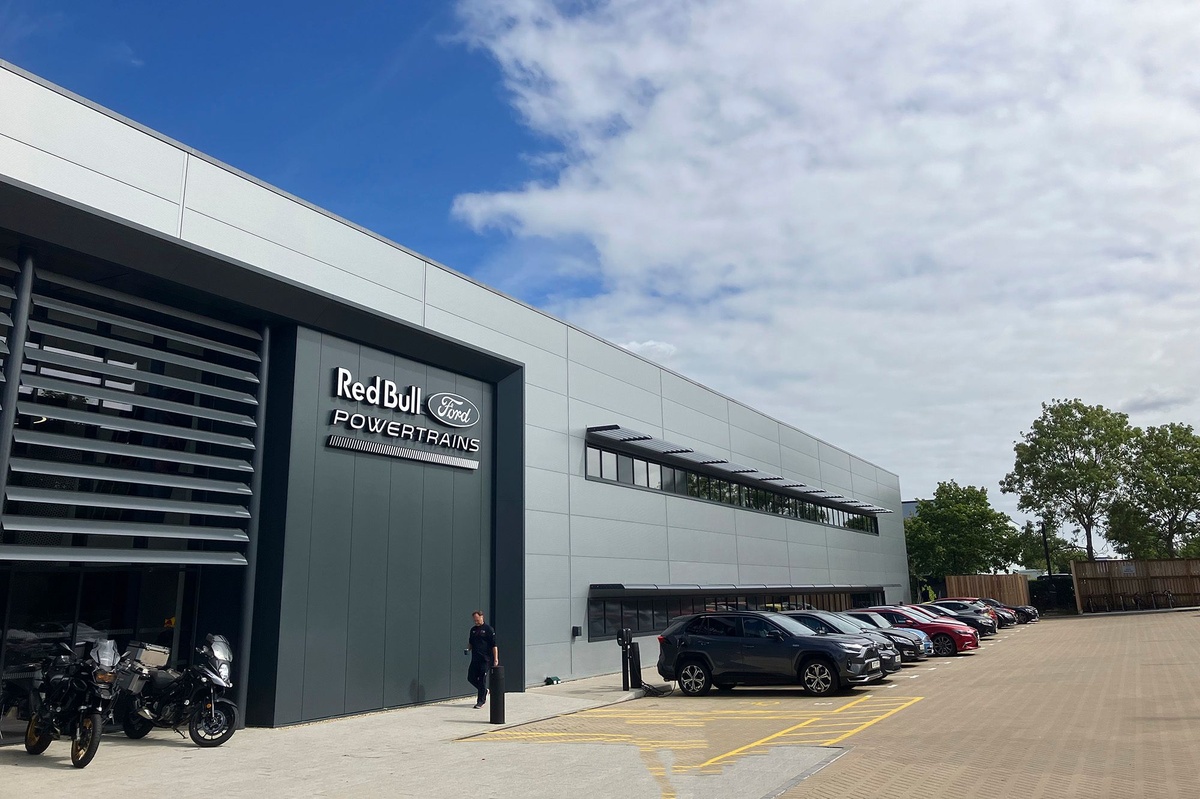
The return of Ford as an F1 engine partner with Red Bull Racing isn't just a comeback story; it's a full-circle moment laden with irony and ambition.
Key Points:
- Ford is re-entering Formula 1 as an engine supplier with reigning champions Red Bull Racing.
- This partnership ironically sees Ford link up with the team that bought its failed Jaguar Racing outfit for a nominal £1 in 2004.
- The Blue Oval boasts a legendary F1 history, most notably with the game-changing Cosworth DFV engine, which secured 174 Grand Prix wins.
- Ford's last official F1 win in 2003 was mired in controversy and didn't even feature a podium celebration.
The Unthinkable Partnership: Ford and Red Bull's Shared Past
History has a peculiar way of echoing itself, and Ford's decision to partner with Red Bull Racing for its Formula 1 engine comeback is a prime example. This collaboration isn't merely a strategic alliance; it’s a narrative twist connecting one of F1's most dominant modern teams with the very legacy Ford once abandoned.
The irony is palpable: Red Bull Racing was essentially forged from the ashes of Ford's most humbling F1 failure. In 2004, after a bruising five seasons and immense financial drain, Ford sold its Jaguar Racing team to Red Bull for a symbolic £1. Now, decades later, the Blue Oval returns to power the very enterprise it once offloaded, aiming to reclaim its rightful place among F1's elite engine suppliers.
When Ford Ruled the Grid: The DFV Era
Before the Jaguar misstep, Ford's name was synonymous with F1 dominance, largely thanks to its revolutionary partnership with Cosworth. The Ford-Cosworth DFV engine didn't just win races; it redefined the sport.
A Rocky Start for a Legend
While the DFV's official debut is often cited as the 1967 Dutch Grand Prix, Ford had a fleeting, less successful appearance a season prior. In 1966, McLaren experimented with a downsized 4.2-litre Ford V8 from Indy 500 fame. Bruce McLaren himself struggled with its power-to-weight ratio, leading to an early retirement at Monaco and limited success at Watkins Glen.
The Birth of the Game-Changer
Desperation fueled innovation in 1966 as F1 transitioned to 3-litre engines. Lotus boss Colin Chapman approached Cosworth founders Mike Costin and Keith Duckworth for a new design. Securing a crucial £100,000 investment from Ford of Britain's Walter Hayes – who famously persuaded Henry Ford II – the Double Four Valve (DFV) V8 was born. This engine was unique, designed to be a stressed, load-bearing component of the chassis, revolutionizing car design.
Unprecedented Success and Democratization
Jim Clark delivered the DFV's maiden victory in the Lotus 49 at the 1967 Dutch GP, signaling a new era. The engine's reliability and immense power quickly made it the engine of choice for nearly every team on the grid. Graham Hill became the first Ford-Cosworth world champion in 1968, and the DFV went on to power 174 Grand Prix wins, 10 constructors' championships, and 12 drivers' titles. It effectively democratized F1, allowing smaller teams to compete at the highest level by offering a potent, accessible powertrain.
Navigating the Turbo Storm and Beyond
The DFV's reign eventually faced its greatest challenge: turbocharging.
Missing the Turbo Beat
Cosworth initially resisted turbo technology, viewing forced induction with disdain. This led to a late and somewhat uninspired foray into the turbo era. Early Ford-Cosworth turbo projects, like the four-cylinder 1.5-litre unit for Haas-Lola in 1986, struggled with reliability and power, ultimately failing to make a significant impact before the FIA phased out turbos.
N/A Power Resurgence: The HB & Zetec-R
As F1 returned to naturally aspirated engines in 1989, Cosworth adapted, developing the DFR and then the all-new HB V8. This new architecture proved competitive, powering Alessandro Nannini to a controversial win at the 1989 Japanese GP and Nelson Piquet to further victories. The HB was notable for its lightness and agility, which appealed to teams like Benetton and Jordan, where a young Michael Schumacher made his debut.
Schumacher famously won his first world championship in 1994 with a Benetton B194 powered by Goddard's Ford-badged Zetec-R engine. While other manufacturers chased raw horsepower, Ford's V8 offered superior balance and handling, a key factor in Benetton's success.
The Cat That Couldn't Roar: Jaguar Racing
The late 1990s saw Ford embark on an ambitious, yet ultimately disastrous, project to establish its own works team.
A Lavish, Doomed Experiment
In a grand marketing play, Ford bought the Stewart Grand Prix team in 1999, rebranding it as Jaguar Racing for the 2000 season. With massive investment, star driver Eddie Irvine, and grand aspirations, the team was meant to elevate the Jaguar brand. Instead, it became a symbol of corporate misdirection and internal strife. Constant management changes, political battles, and a revolving door of personnel – including almost securing Adrian Newey – crippled any chance of success.
The £1 Sale & A Fading Roar
By 2004, Jaguar Racing was bleeding around $50 million annually. Ford cut its losses, selling the team and its immense debts to Red Bull for just £1. This painful exit also saw Ford sever its historic link with Cosworth, selling the engine manufacturer separately. The final chapter of this era was particularly anticlimactic: Ford's last Grand Prix victory, with Giancarlo Fisichella driving a Jordan-Ford at the chaotic 2003 Brazilian Grand Prix, was only confirmed days later after an appeal, meaning no podium celebration for the winner. A truly ignominious end to a once-proud legacy.
A New Horizon: Ford's Future with Red Bull
Now, as Ford prepares to re-enter F1 with Red Bull, the hope is that this new chapter will draw more from the glory of the DFV era than the missteps of Jaguar Racing. The stage is set for a powerful return, with Ford partnering with a team that knows how to win, eager to write a new, triumphant history.