
The roar of a phenomenal start turned to a collective sigh of frustration as Isack Hadjar's Australian Grand Prix dream evaporated in a puff of power – or lack thereof. The young Red Bull driver, who qualified a stunning third, saw his incredible launch wasted by an energy deployment failure, sparking a candid call for his team to "do better."
Key Takeaways from Hadjar's Australian GP:
- Isack Hadjar showcased immense potential with a P3 qualifying and a lightning-fast start.
- A critical battery deployment issue prevented him from capitalizing on his launch for the lead.
- The Red Bull driver's race was cut short on lap 11 due to a mechanical breakdown.
- Hadjar expressed clear frustration, urging Red Bull to improve preparation for race scenarios.
Igniting the Grid, Losing the Lead
The start of the Australian Grand Prix was a moment of pure brilliance for Isack Hadjar. Launching from third on the grid, he bolted off the line, instantly challenging polesitter George Russell for the lead. It was a move that had fans on their feet, a clear statement of intent from the rookie.
However, the exhilaration was brutally short-lived. Just as he seemed poised to snatch the top spot, his Red Bull machine suffered a critical energy deployment failure. "The start was amazing... I started the race with no battery for the launch," Hadjar revealed post-race. "I had a very good launch, I was taking the lead easy... and once I thought, ‘oh, I'm going to take the lead’, no more power – so that was great."
The Unraveling Down Under
What followed was a heartbreaking spiral. Unable to deploy energy effectively, Hadjar was quickly swallowed up by rivals. First, Charles Leclerc surged past, followed by Lewis Hamilton on the opening lap. The dream of a podium challenge rapidly faded.
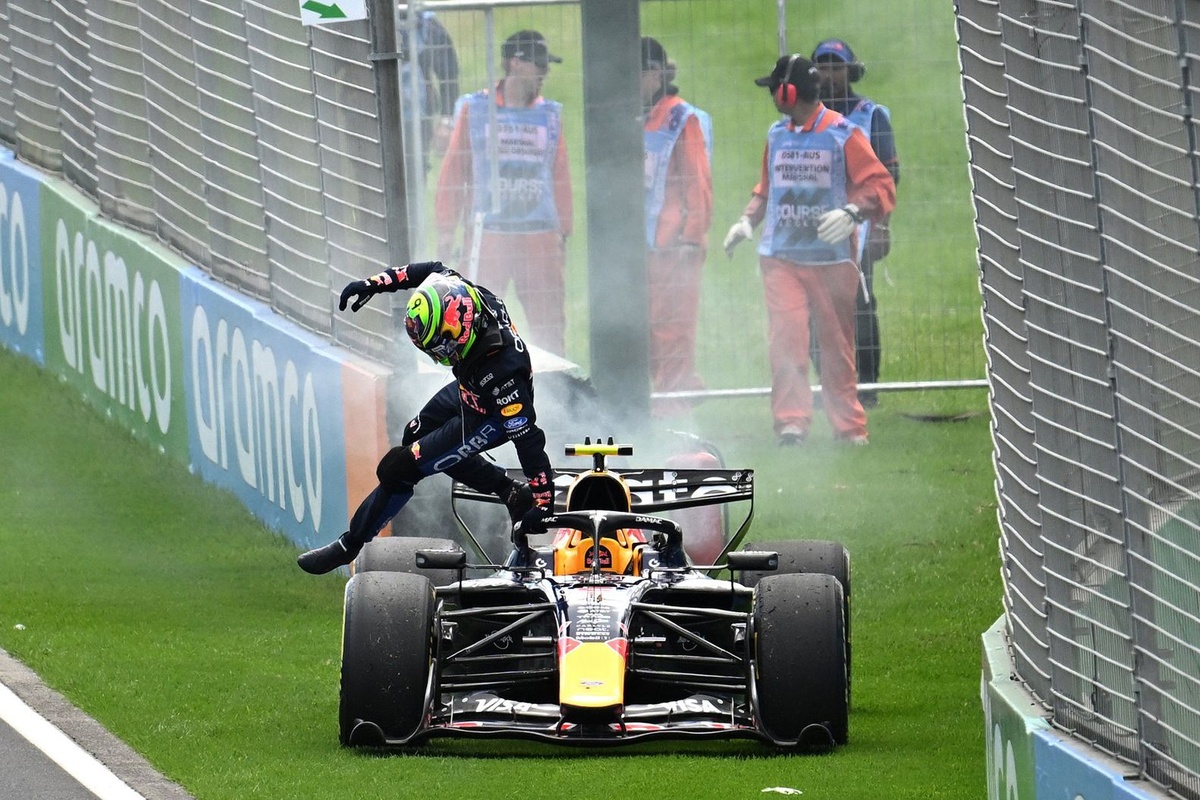
The woes continued as the race progressed. "The engine sounded terrible," he recounted, knowing his race was in jeopardy. His valiant efforts to hold off other drivers, like keeping Arvid Lindblad at bay, were overshadowed by the car's escalating issues. Ultimately, his RB22 broke down on lap 11, forcing a premature retirement from a race that promised so much.
Hadjar's Candid Call: "Red Bull Needs to Do Better"
Despite the crushing disappointment, Hadjar remained composed, pinpointing the root of the problem. He clarified that the lack of energy deployment wasn't a 'technical issue' in the traditional sense, but rather an oversight in preparation for race-day scenarios. "We need to do better to avoid this from happening," he asserted.
"We didn't manage to simulate it in the whole six days of testing, in free practice as well. Honestly, it's just new scenarios. A race scenario is different. It’s a good experience at least." This critique puts the spotlight firmly on Red Bull's pre-race procedures, especially with such a promising talent in their ranks.
A Glimmer of Potential Amidst the Frustration
While the race itself was a write-off, Hadjar's stellar P3 qualifying effort in Melbourne served as a powerful testament to his raw pace and potential. It offered a glimpse of what could be, especially for a driver stepping into a team where previous Max Verstappen teammates have often struggled to match the benchmark.
"Honestly, I felt great out there," Hadjar concluded. "Zero mistakes the whole weekend. I feel very comfortable, and it's a shame. I wish I could be still on track fighting for third. It would be fun." His confidence remains unshaken, seeing this as an early, albeit painful, learning curve. The message is clear: Isack Hadjar has the talent; now, Red Bull needs to provide the reliability.