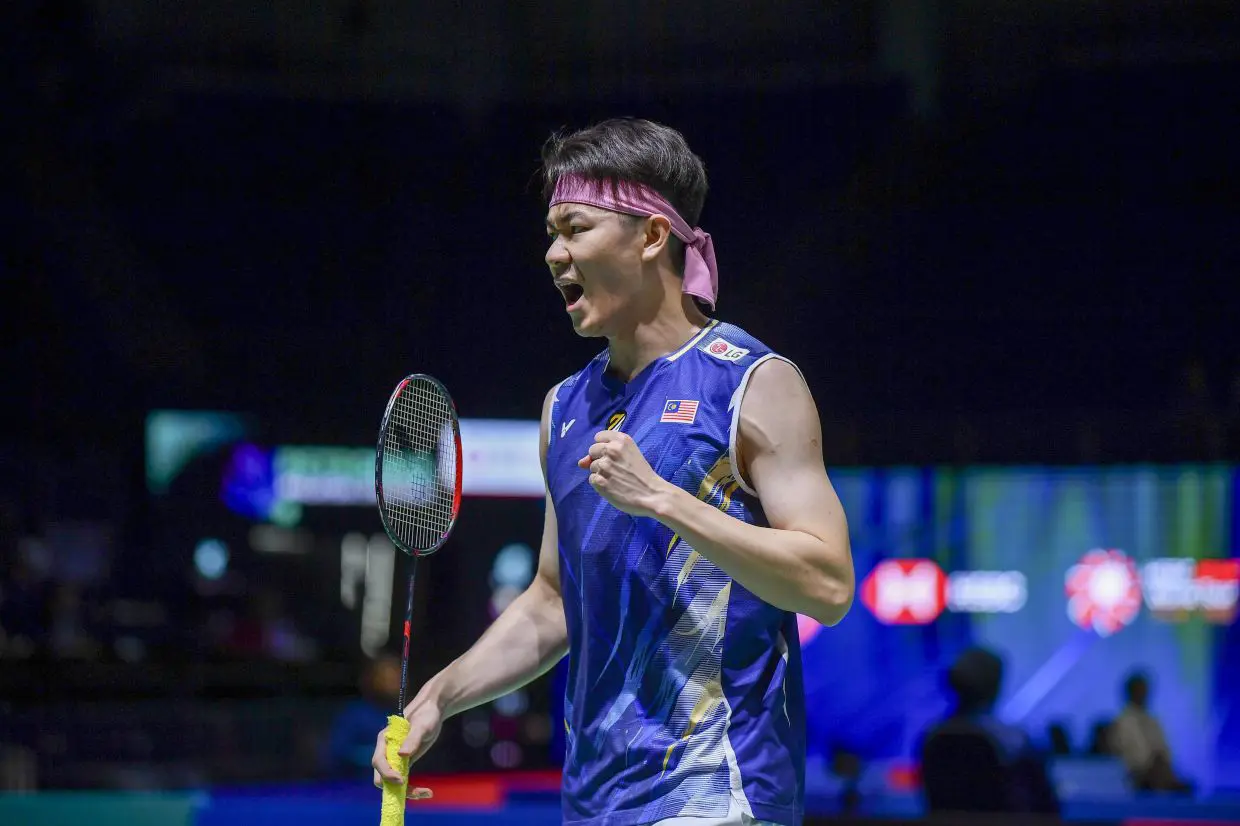
All attention will once again be on Lee Zii Jia as Malaysia prepares for the 2026 Thomas Cup in Horsens, Denmark from April 24 to May 3, with the independent shuttler expected to play a crucial supporting role in the singles lineup.
Despite a difficult run of form and fitness issues, Lee remains an important part of Malaysia’s campaign. His current world ranking places him behind teammates Leong Jun Hao and Justin Hoh in the singles order, with Aidil Sholeh Ali Sadikin also in contention for selection. This positions the former All England champion as a potential third singles option in team ties.
National coach Liew Daren has expressed confidence in Lee’s ability to deliver when called upon, highlighting his experience from multiple previous Thomas Cup appearances. His presence is seen as valuable in high-pressure situations where individual matches can decide the outcome of a tie.
Lee’s preparation has been disrupted by an ongoing ankle issue, limiting his training time at the Academy Badminton Malaysia ahead of the tournament. He only returned to full training in early April, leaving him with a relatively short window to regain match sharpness.
His recent results have also reflected that setback, with limited progress on the World Tour this season and only one quarter-final appearance at the Thailand Masters. The Thomas Cup is therefore seen as an opportunity for him to reset and rebuild confidence on a major stage.
However, Malaysia’s prospects will not rest on one player alone. The team is built around strong doubles depth, led by world-class pairs including Aaron Chia and Soh Wooi Yik, as well as Man Wei Chong and Tee Kai Wun, and Goh Sze Fei and Nur Izzuddin.
Placed in Group B alongside Japan, England, and Finland, Malaysia faces a competitive path to the knockout stage. While progression to the quarter-finals is the minimum target, advancing further will require consistent performances across both singles and doubles disciplines.
As Malaysia heads into the tournament, Lee’s return remains one of the key talking points, but the team’s success will ultimately depend on collective execution in a demanding group stage.