
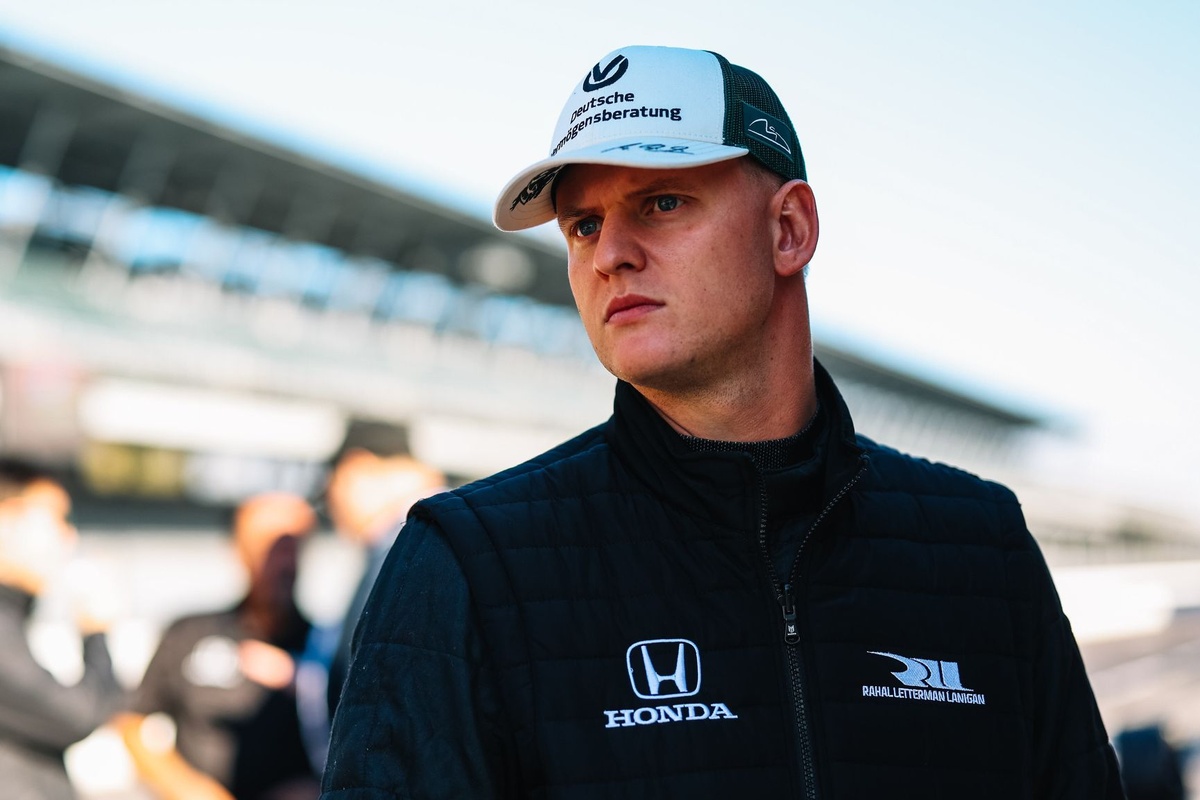

It's been the true crucible of Mick Schumacher's IndyCar career. While his road course transition has been smooth, the son of racing legend Michael Schumacher is about to confront the unique, high-speed world of oval racing, and it's a monumental shift for a European single-seater star.
The Ultimate Test: Conquering the Oval
This Wednesday marks a pivotal moment for Mick Schumacher as he hits the Homestead-Miami Speedway for his first IndyCar oval test. The 1.5-mile track will be his proving ground for a discipline completely alien to his Formula 1 and endurance racing background. It’s not just about speed; it’s about a fundamentally different approach to racing.
Schumacher admits this is the steepest part of his learning curve. He’ll need to master intricate concepts like optimal racing lines, understanding air disturbances from other cars, and adapting to constant left turns. The simulator, while a start, offers limited insight into the physical demands and nuances of real-world oval racing.
“The challenges of it being so different and trying to understand what the high lines are, what the low lines are doing, what we can do in terms of aero disruptions from the front or the back,” Schumacher explained. “That’s all stuff that is very new to me. But I’m very curious and interested in learning about that.” This isn't just a technical challenge; it's a mental and sensory one.
Team Support and Upcoming Hurdles
Fortunately, Schumacher isn't alone. Having signed with Rahal Letterman Lanigan Racing (RLL) in November, he’ll lean heavily on veteran teammate Graham Rahal and newly appointed driver coach Ryan Briscoe. Their combined experience will be invaluable in fast-tracking his adaptation to the unique demands of American oval racing.
The urgency to acclimate is real. A full-field test looms on February 17-18 at Phoenix Raceway, a 1-mile oval that will also host his first competitive oval race on March 7. These dates are critical milestones, demanding rapid progress and a sharp learning curve from the 2020 Formula 2 champion.
One significant cultural and technical shift for Schumacher is the introduction of a spotter. Unlike the independent world of F1, oval racing relies heavily on a dedicated voice guiding the driver through traffic and blind spots. Schumacher, who has always valued extensive communication with his engineers, sees this as a new, exciting dynamic.
He's even pushing for a dual-way radio system, allowing for seamless communication even when multiple team members are talking. This proactive approach underscores his dedication to absorbing every piece of information to gain an edge.
Beyond the Track: A World of Adjustments
It’s not just the racing lines and spotters that are new. Schumacher is also adapting to more subtle, yet impactful, changes. The IndyCar machine lacks power steering, a stark contrast to his F1 experience, demanding greater physical exertion. Even the language of racing is different; meters give way to feet and yards, a small but constant mental recalibration for the German driver.
Driving the No. 47 Honda, a number he carried during his Haas F1 days, Mick Schumacher is clearly embracing every facet of this colossal transition. The world of IndyCar ovals is unforgiving, but with his pedigree and determined mindset, he’s ready to write his next chapter.


