
The MotoGP world is once again grappling with the ghosts of stewarding past, as a thrilling sprint race in Thailand was overshadowed by a contentious call against Marc Marquez. While Pedro Acosta celebrated a hard-fought victory, the real conversation swirled around the stewards' decision, reigniting the age-old debate: how much contact is too much?
Key Points from the Thailand Sprint:
- Marc Marquez received a one-position penalty for an aggressive pass on Pedro Acosta during the Thailand GP sprint.
- The incident sparked widespread debate and visible frustration from Marquez and his Ducati team.
- MotoGP stewarding, led by Simon Crafar, has shown improvement but still struggles with transparent rules for close-quarters racing.
- A growing demand exists for clearer, publicly accessible guidelines to reduce confusion and keep the focus on the on-track spectacle.
The Thailand Tempest: Marquez vs. Acosta Showdown
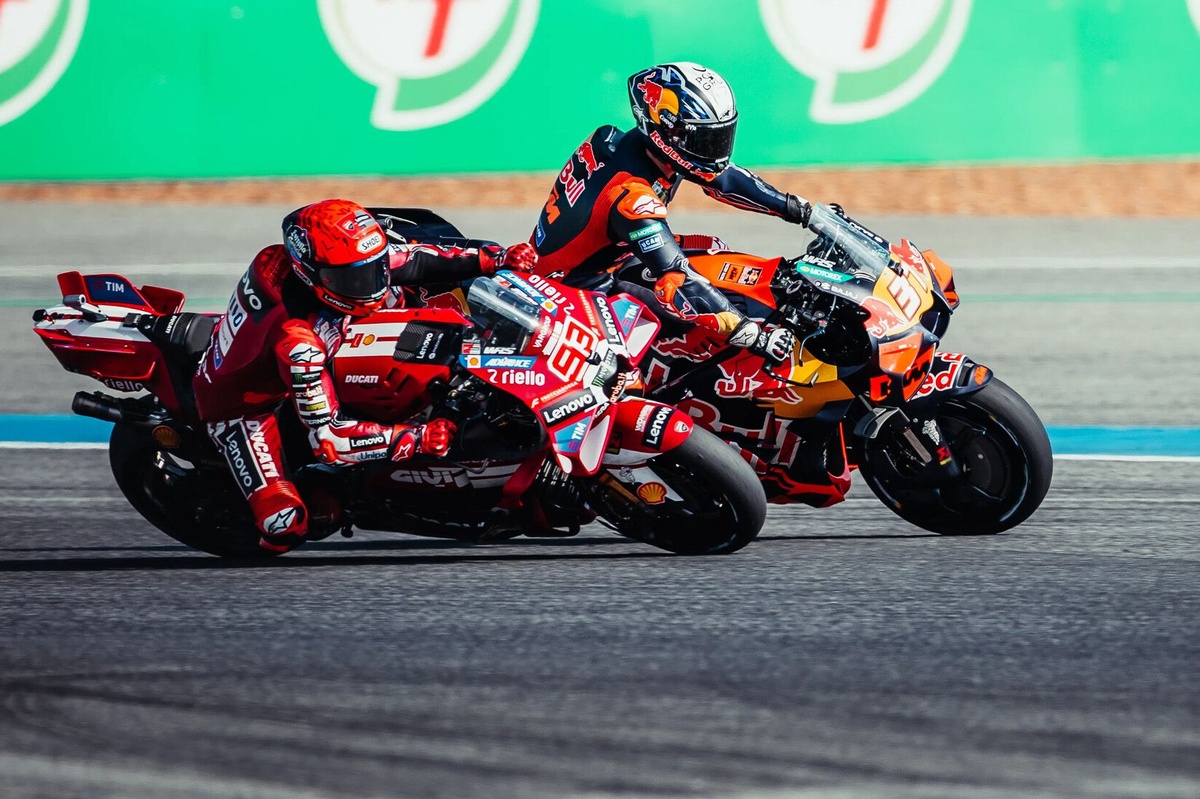
Saturday's sprint race at the Thailand Grand Prix delivered pure adrenaline until the final moments. On the penultimate lap, the legendary Marc Marquez launched a signature block pass on rookie sensation Pedro Acosta into the final turn. The move, aggressive by design, resulted in light contact, forcing Acosta off the track.
The Block Pass Heard 'Round the World
Marquez, skillfully keeping his Ducati within the white lines, believed he had executed a clean overtake. However, the race stewards saw it differently. A swift penalty was issued, instructing the eight-time world champion to concede a position on the very last lap. Reluctantly, Marquez complied, handing Acosta a historic first sprint victory. The decision instantly polarized fans and pundits alike.
A Lion's Roar: Marquez's Discontent
Marquez's frustration was palpable. On the cooldown lap, he famously offered a sarcastic applause to the stewards' office. His post-race interviews did little to mask his agitation, while Ducati team boss Davide Tardozzi immediately questioned the ruling on live television. When a rider of Marquez's stature is involved, controversy inevitably follows, eclipsing even the brilliance of Acosta's charge from sixth on the grid.
Navigating the Grey: The Stewarding Challenge
Dissecting the Marquez-Acosta clash opens a Pandora's Box of opinions, yet some facts are undeniable. Contrary to initial claims, Acosta himself confirmed contact was made. Furthermore, while Marquez suggested a late penalty notification, television graphics indicated the order was issued earlier, though dashboard delays are always a possibility.
"Let Them Race" vs. Clear Boundaries
The incident highlights a fundamental divide in racing philosophy. One camp passionately advocates for a "let them race" approach, believing hard but fair contact is part of the spectacle. The other calls for stricter boundaries to ensure rider safety and prevent aggressive tactics from going unpunished. Both perspectives hold merit, reflecting the inherent tension in high-stakes competition.
The Contact Confirmed: What Really Happened?
Marquez is renowned for his daring, decisive block passes, often leaving rivals little room to react. Acosta, however, has proven he's no pushover, even against the "King of Cervera." The rookie famously went wheel-to-wheel with Marquez on his 2024 MotoGP debut, showcasing his unyielding spirit. Observers found Marquez's move uneasy, as he came from a considerable distance back, leaving Acosta with virtually no escape route. It was fortunate Raul Fernandez didn't capitalize on their scrap for second.
Transparency Troubles: MotoGP's Rulebook Riddle
While the swiftness of the penalty was commendable – avoiding a post-race judicial hangover – a crucial grey area persists. Does Marquez's ability to stay within white lines matter if his rival is forced off? There's no definitive answer, especially given the difficulty in assessing if Marquez could have made the corner without Acosta's outside presence.
A Call for Clarity: Learning from F1
Interestingly, many riders surveyed after the sprint felt the penalty was unnecessary, advocating for more racing freedom. Yet, even Acosta admitted he would attempt the same pass if roles were reversed. Riders are hard-wired to push limits, always hoping a marginal decision might swing their way.
Under chief steward Simon Crafar, MotoGP stewarding has undeniably improved, bringing greater consistency and communication. Even Marquez praised Crafar after a prior incident with Francesco Bagnaia, where the Kiwi took time to hear their perspectives. However, the Thailand GP weekend undeniably exposed a lack of transparency in how decisions are made. Marquez's cryptic reference to "new rules" after the race, without elaboration, points to a clear communication gap. The sporting regulations offer scant detail on concepts like "responsible riding" or "causing a collision." Adopting Formula 1's practice of publicly publishing detailed "rules of engagement" would be a significant step forward for riders, teams, and fans alike.
Moving Forward: Keeping the Focus on the Track
MotoGP has made strides in clarifying track limit infringements, often using automated pressure systems for black-and-white calls. Fans generally understand these rules, especially on the final lap. However, the standards for aggressive overtaking remain shrouded in mystery.
Stewarding will never be entirely free from controversy. Yet, establishing clearer, publicly accessible guidelines for what constitutes acceptable contact versus an illegal maneuver would drastically reduce confusion in grand prix racing. Saturday's sprint delivered some of the most thrilling action since the format's introduction. When MotoGP delivers such a spectacle, the post-race conversation should revolve around the incredible performances on track, not the opaque decisions made in the stewards' office.