
Every pickleball player knows the agony: endless waiting, unbalanced games, and the frustration of a chaotic open-play session. But what if there was a solution that didn't just manage the queue, but revolutionized the entire experience?
Key Points: How PickleQ Dominates Open Play
- PickleQ eliminates long waits and ensures fair play in pickleball open play sessions.
- Advanced matchmaking considers skill, wait time, and opponent variety for perfectly balanced games.
- Seamless integration with DUPR Mode simplifies score reporting and ratings for competitive play.
- Proven success with over 1.5 million player appearances and 2 million games managed since January 2026.
The pickleball boom is undeniable, but it's brought a hidden challenge: managing open-play sessions. Long waits, mismatched skill levels, and repetitive matchups have plagued players, especially in rapidly growing regions like Southeast Asia. Enter PickleQ, the innovative platform designed to transform this chaotic experience into seamless, enjoyable playtime.
The Open Play Dilemma: Why Traditional Methods Fall Short
The founders of PickleQ understood this problem firsthand, experiencing the frustration of both being new players stuck in skill-gap matches and improved players facing the same imbalance. Their conclusion was simple: running a great open-play session demands more than just a paddle stack. It requires careful attention to skill balance, efficient waiting times, varied partners, and fundamental fairness – elements traditional methods simply can't track.
This pain is particularly acute in the Philippines, where pickleball's explosive growth often outpaces court availability. In a busy Metro Manila session, it's common for a dozen players to spend nearly an hour waiting for a single court. Manual paddle stacks lead to accidental skips, repetitive matchups, and courts sitting idle as someone struggles to organize the next game. This issue echoes across Southeast Asian neighbors, from Malaysia to Vietnam, and even in Thailand and Indonesia.
PickleQ: Your All-in-One Solution for Court Management
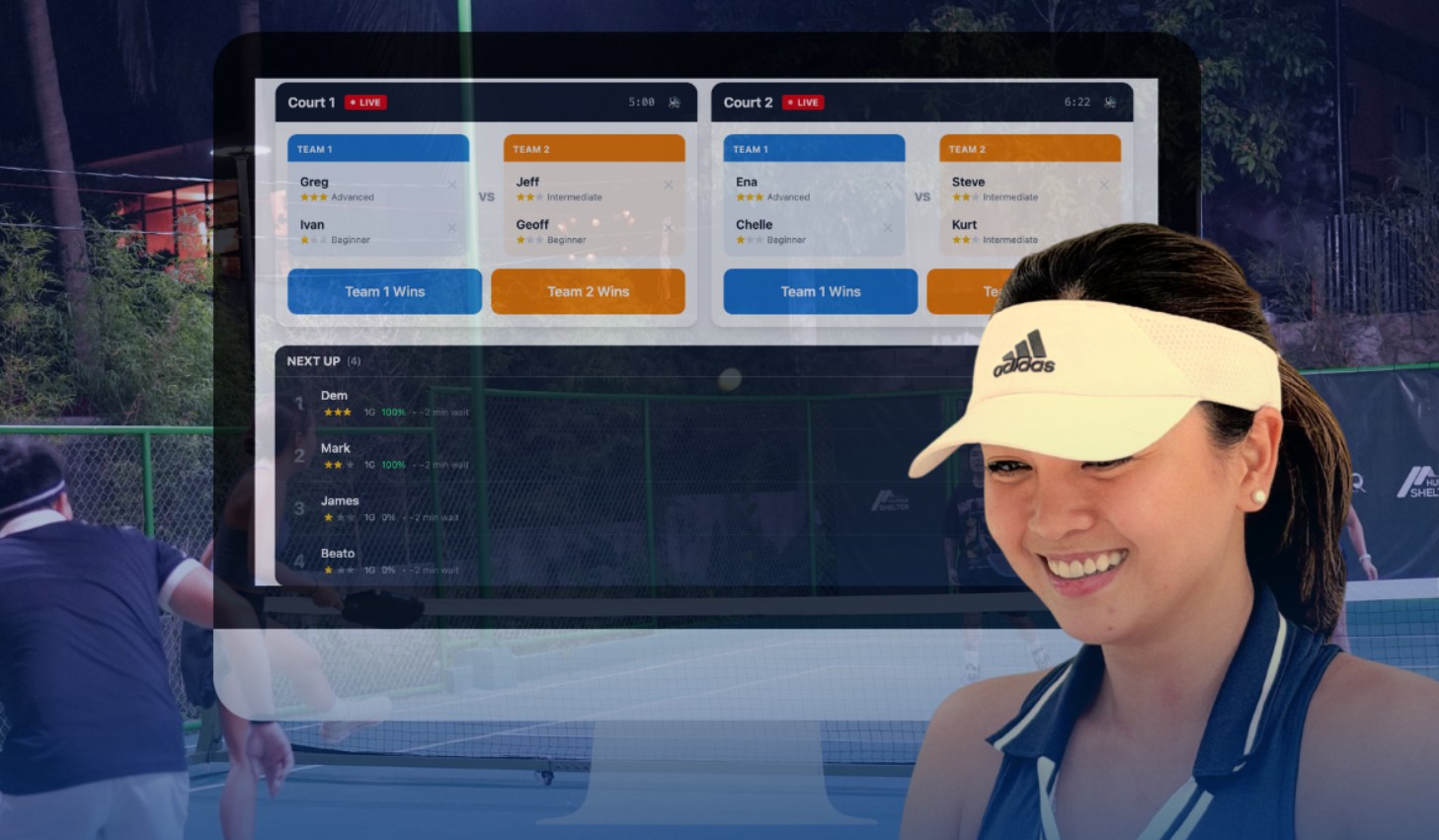
Instead of relying on clipboards and spreadsheets, PickleQ consolidates the entire session onto one intuitive platform. Organizers gain a powerful dashboard to set up sessions, add players and courts, form matches, log scores, and manage rotations with ease. Players, on the other hand, simply check in with a reusable QR code or shared kiosk, then follow the live queue, view upcoming matches, see court assignments, and track their standings directly from their phones.
Much of PickleQ's functionality is a direct result of community feedback. Features like locked partners, dedicated skill courts, and safeguards against repeated opponents came straight from organizers battling these issues daily. Since its launch in January 2026, the platform has seen incredible adoption: over 16,000 clubs created, completing more than 107,000 sessions, representing over 1.5 million player appearances and nearly 2 million games. While PickleQ can't magic new courts, it undeniably helps organizers maximize the efficiency of existing facilities.
The Brains Behind the Brackets: Smart Matchmaking
What truly sets PickleQ apart is its commitment to intelligent matchmaking. The platform meticulously factors in skill balance, waiting time, partner and opponent variety, locked partnerships, and court availability. It even ensures fairness for players at the front of the queue by implementing a hard cap: if a player is skipped twice, they're automatically moved to the front, eliminating subjective judgment calls.
Every proposed update to PickleQ's matchmaking logic undergoes rigorous testing against simulated games before going live. An update might promise better-balanced matches, but if it causes longer waits or uneven participation, it simply won't ship. Repeated tests in a bustling five-court scenario demonstrate courts remaining active roughly 95 percent of the time, with every player logging at least three games. This powerful evidence solidifies the team's argument: open-play rotation is a complex optimization problem, not just a simple scheduling convenience.
Elevating Competitive Play: Seamless DUPR Integration
Beyond open play, PickleQ founders also identified another major headache in competitive pickleball: reporting results to DUPR. At rated sessions, players often scribbled DUPR IDs on paper, leading to staff manually entering scores later. This process could take days, leaving ample room for errors like wrong scores, reversed winners, or results linked to the incorrect players. The issue wasn't DUPR's fault, but rather the friction inherent in a manual data transfer.
PickleQ's answer is DUPR Mode, a key feature of its paid Venue Pro toolkit. This innovation allows organizers to collect DUPR IDs alongside the session roster, record winners and scores the instant a match concludes, keep everything tied to the correct session, and generate a DUPR-ready bulk export in the current 27-column format. To date, organizers have logged over 23,000 games through DUPR Mode and generated more than 550 DUPR-ready exports, covering over 22,000 matches.
For organizers juggling a packed open-play calendar and for players simply seeking a fair shake at court time, the distinction PickleQ offers is truly transformative. Get ready to play more and wait less.