
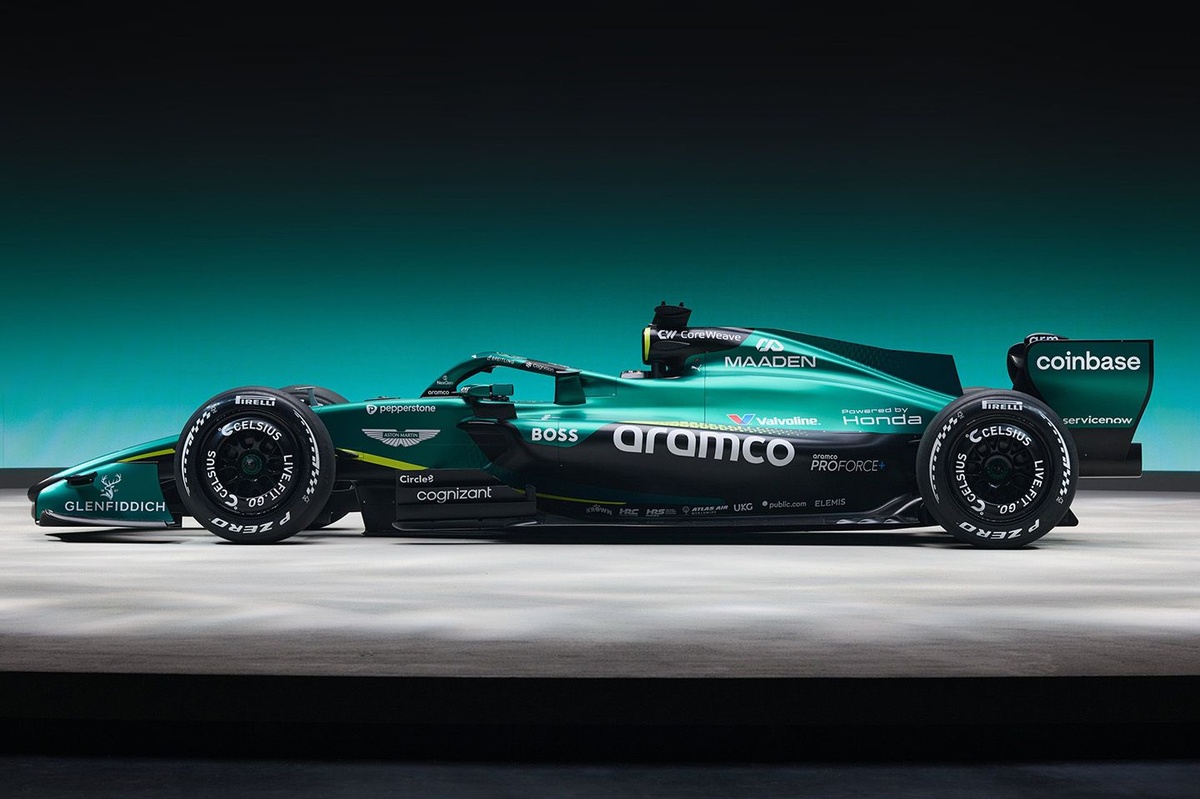

Green Machine's Grand Vision: Why Aston Martin is Playing the Long Game
It's time for Aston Martin F1 to silence the doubters and unleash the beast. With unprecedented investment, a new campus, and the legendary Adrian Newey on board, the green machine is clearly aiming for the very top. Yet, a surprising message echoed from the recent launch: patience is paramount, and the real race is a marathon, not a sprint. This isn't just expectation management; it's a calculated, long-term strategy for F1 supremacy.
Key Takeaways from Aston Martin's F1 Vision:
- Adrian Newey's AMR26 is engineered for extensive in-season development, focusing on fundamental design over initial outright pace.
- Honda's power unit project is undergoing a rebuilding phase, necessitating a patient approach to performance gains.
- Lawrence Stroll's vision emphasises providing the team with the long-term tools, investment, and infrastructure needed to build a championship-winning force, rather than chasing immediate results.
Aston Martin’s launch on Monday evening at the King Abdulaziz Centre for World Culture in Ithra — home to title sponsor Aramco — was opened by Lawrence Stroll with a bold statement of intent.
“As executive chairman, I am proud of what this moment represents, because what defines this team is not only what happens on track. Formula 1 demands courage and rewards those willing to build something extraordinary and to remain unwavering in their ambitions.”
The words reflected the sense that Aston Martin is stepping into a new chapter, particularly with its major Honda partnership and the arrival of Adrian Newey, who has played a key role in shaping the AMR26. Combined with the team’s newly expanded campus and wind tunnel, the foundations for long-term success appear stronger than ever. Stroll made it clear that the ambition is backed by resources, while Newey reinforced that Aston Martin now operates with facilities at the very top level of the sport.
“The facilities are second to none. Lawrence's vision and investment into this building has given us, without a doubt, the best facilities in Formula 1. And that's a tremendous asset,” Newey said.
However, despite the grand setting and confident messaging, the tone in Saudi Arabia also carried a more grounded theme. Aston Martin appeared determined to reset expectations for the season’s opening phase. Both Newey and the drivers stressed that early results — including where the team stands in Melbourne — won’t define the season. What matters most is how quickly the car evolves once development begins to accelerate.
Fernando Alonso echoed that perspective, pointing out that 2026 will likely be shaped by how aggressively teams can upgrade their cars under the new technical landscape.
“The unique thing this year is that the rate of development is going to be very, very high for everyone, because of the new regulations and the complexity of the power units as well,” Alonso said.

Image: Aston Martin Racing
“So I'm not really too concerned about Bahrain or the first couple of races, because I think the championship and having a good or bad season is going to play a little bit more in the second half of the season than in the first half of the season.
“So for us it's important to finish in Bahrain with a good understanding of the car and then from that point think more in races seven, 10 or 12 or whatever and have a clear path of development.”
Lance Stroll also played into the theme of unpredictability, joking that George Russell could win in Melbourne by 30 seconds. While delivered lightly, the comment hinted at the reality that early-season gaps could be large, especially with teams taking different routes in development and performance.
Honda’s Situation Remains a Key Question Mark
Aston Martin’s long-term approach is not just philosophy — it may also be necessity, largely tied to its future power unit partner. Honda has been notably cautious in recent months, and while that aligns with its reserved communication style, there are deeper factors at play.
Honda’s current F1 project differs greatly from the one that powered Red Bull, especially after the manufacturer’s official withdrawal from the sport at the end of 2021. Although Honda continued supplying power units through an arrangement with Red Bull until the end of 2025, the impact of scaling back operations was already felt.
Koji Watanabe previously acknowledged that many staff members had been reassigned away from the F1 program and moved into other R&D work, meaning Honda has since been rebuilding its project as it prepares for its new partnership with Aston Martin.
While Honda’s Sakura facilities remain highly advanced, Watanabe admitted that building a close working relationship across continents comes with challenges, particularly when compared to European-based rivals.
“Our engineers often fly to Silverstone, and also engineers from Aston Martin are working very hard in our factory in Japan. So this in itself is a challenge, and maybe flight costs are a little bit of a disadvantage for us compared to the European manufacturers,” Watanabe admitted.
“But sometimes the time difference is also a favour for us. If we send a question to Silverstone at the end of the working day in Japan, then the next morning, we have already received the answer. It’s a kind of 24-hour development.”
Between logistical obstacles, ongoing technical debates such as the compression ratio issue, and the need to rebuild Honda’s program structure, it is possible that progress on the power unit side could take longer than some expect — even if systems like ADUO may offer opportunities along the way.
Ultimately, Aston Martin’s message was clear: the early races may not provide the full picture. With Newey’s design philosophy, long-term investment, and Honda’s rebuilding process underway, the green machine is positioning itself for a season defined by evolution — not instant impact.


