

The 2026 Formula 1 season is still a distant roar, but the whispers from Barcelona confirm one thing: the aerodynamic battleground is already heating up with unprecedented innovation.
Key Points:
- F1's new active aerodynamics for 2026 allow movable elements on both front and rear wings, usable on every straight.
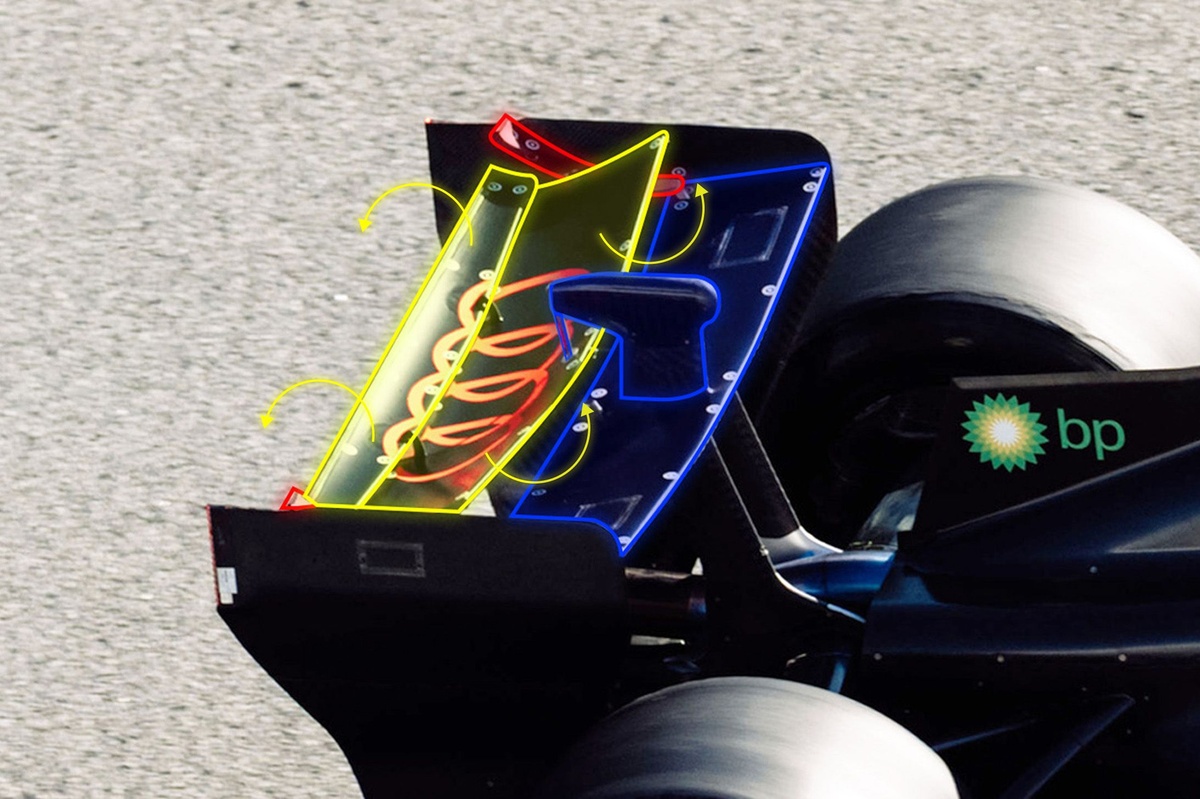
- Audi is pioneering a radical central-pivot design for its rear wing flaps, departing significantly from traditional approaches.
- Unlike rivals, Audi's system features an oblique flap opening and a unique single-actuator mechanism for dual flaps.
- Teams like Alpine are also exploring highly divergent solutions, signaling a new era of aerodynamic creativity.
The Dawn of a New Aero Era in F1
Forget everything you thought you knew about Formula 1 aerodynamics. The upcoming 2026 regulations are not just a tweak; they're a seismic shift, unleashing engineers' creativity like never before. With active elements now expanding far beyond the familiar DRS, every straight will become a canvas for speed.
For years, the Drag Reduction System (DRS) offered a limited window for overtaking, primarily by lifting the leading edge of a single flap. But the 2026 rules fundamentally redefine active aerodynamics. Now, movable elements will adorn both front and rear wings, deployable on any straight, transforming the core purpose of aero management from an overtaking aid to a continuous performance enhancer. This freedom has opened the floodgates for novel designs.
Audi's Engineering Masterstroke: A Central Pivot Revolution
Among the diverse interpretations emerging from early concepts, Audi's rear wing solution stands out as genuinely revolutionary. While most teams stick to variations of the traditional flap movement (leading edge lifts, trailing edge fixed), the engineers in Hinwil have thrown the rulebook out the window. Audi's design positions the rotation pivot for its two rear flaps precisely at the center of the lateral supports. This seemingly minor change yields a massive aerodynamic difference.
The Oblique Angle Advantage
This central pivot completely alters how Audi's flaps operate. Instead of simply tilting up, they open into a distinct oblique inclination. The result is a smaller "gap" compared to rivals' designs in the open configuration. Visually and aerodynamically, this creates a unique effect: the airflow appears to be actively "pushed" downwards, a fascinating re-direction of forces that could offer a distinct advantage in managing drag and downforce through high-speed sections.
A Single Actuator, Dual Flap Dance
Further distinguishing Audi's approach is its innovative actuation system. While many teams employ two separate actuators, one for each movable flap, Audi opts for a single linkage connected only to the first flap. The second flap then moves passively, "dragged along" by small connecting supports. This elegant solution reduces complexity and weight, demonstrating a shrewd understanding of the new regulations' potential.
Alpine's Bold Reversal and the Grid's Divergent Paths
Audi isn't alone in pushing boundaries. Alpine has also unveiled a radically different concept, where its rear wing functions in reverse: the trailing edge collapses while the leading edge remains fixed, effectively extending the mainplane. The sheer variety of approaches, from geometry changes to the number of movable elements, underscores the intense intellectual arms race taking shape. Circuit characteristics will also dictate which solutions teams deploy from race to race, adding another layer of strategic depth.
The Race for Aerodynamic Supremacy
The 2026 F1 season promises a spectacle not just on track, but in the garages. The freedom granted by the FIA's updated regulations is fostering an unprecedented era of engineering creativity. Audi's audacious central-pivot design and Alpine's inverse flap are just early glimpses of the ingenuity we can expect. This isn't just about faster cars; it's about redefining the very science of speed, setting the stage for a truly transformative period in Formula 1.


