
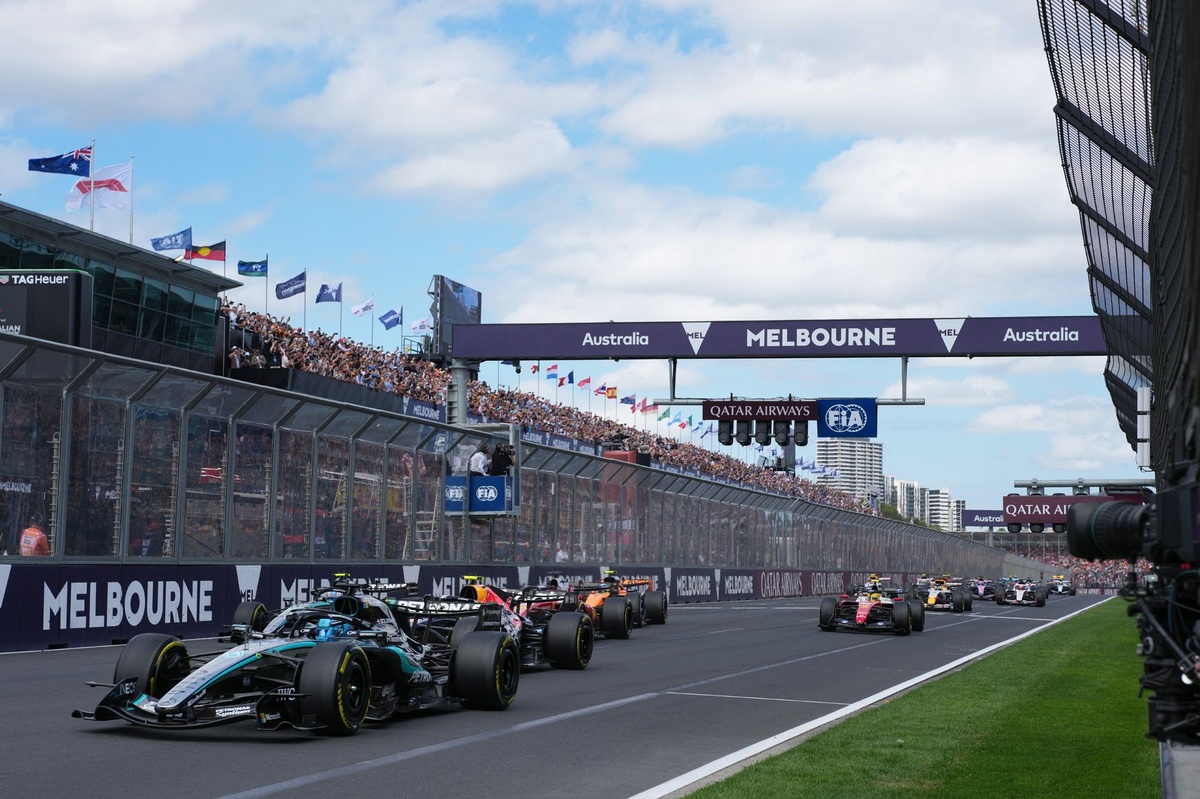

The roar of a new era in Formula 1 has barely begun, yet the radical 2026 regulations are already dividing opinion, sparking an intense debate that questions the very soul of the sport. The season-opening Australian Grand Prix at Albert Park unveiled a brave new world of active aerodynamics and a controversial "overtake mode," leaving both fans and the paddock grappling with a dramatically altered racing landscape.
Key Takeaways from F1 2026 Debut
- The 2026 F1 regulations debuted at the Australian Grand Prix, introducing active aero and a controversial "overtake mode."
- Drivers like Charles Leclerc likened the new boost system to "Mario Kart" mushrooms, while Oliver Bearman found it complex but effective.
- Rival series such as the GT4 European Series and Chip Ganassi Racing openly mocked the new, tech-heavy rules.
- Despite the mixed reactions, the season opener still delivered thrilling racing moments, including 120 overtakes.
A Bold New Era: The 2026 F1 Rules Unveiled
The 8th of March marked a pivotal moment for Formula 1, as the Albert Park circuit in Melbourne played host to the debut of the 2026 regulations. These groundbreaking rules introduce sophisticated active aerodynamics and a new "overtake mode," fundamentally reshaping how drivers approach each lap and each battle. The aim is to create more dynamic racing, but early returns are far from a unified endorsement.
Paddock Divided: 'Mario Kart' or Masterstroke?
The initial reactions from within the paddock have been as varied as the grid itself. While Mercedes, fresh off a dominant 1-2 finish with George Russell leading the charge, expressed understandable satisfaction, others were less enthusiastic. The highly publicized "overtake mode" and complex battery management have drawn comparisons, not to racing legends, but to video games. Is Formula 1 risking its identity in pursuit of artificial excitement?
Driver Verdicts: Leclerc and Bearman Weigh In
The most direct and perhaps telling feedback came from the cockpit. Ferrari ace Charles Leclerc famously quipped over team radio that the new overtake mode felt "like the mushroom in Mario Kart." This isn't merely a playful remark; it underscores a perception that the racing has become less about raw skill and more about managing power-ups.
Haas rookie Oliver Bearman, despite securing an impressive P7 finish, echoed some of these sentiments. He acknowledged the mode made him feel "like I was in F1 and everyone else was in F2," but quickly added, "you have to recharge the battery again, because otherwise you're dead into the next straight." This highlights the intricate, strategic layer that some find engaging, while others might view it as an unwelcome distraction from pure speed.
Rival Series Take Aim: 'We Just Race!'
The F1 debate has even spilled over into the wider motorsport community, with rival racing series taking subtle, and not-so-subtle, jabs. The GT4 European Series posted a video online, proclaiming, "Racing. With no battery boost or active aero in sight. Just saying." This pointed criticism implies F1's new direction deviates from the essence of traditional racing.
Similarly, Chip Ganassi Racing joined the chorus, tweeting: "'Super-clipping', 'downshifting on straights', 'battery management' 😨 Yeah, we don't do that here. We race." These comments reflect a broader sentiment among some purists that F1's technological advancements, while pushing boundaries, might be sacrificing a certain primal appeal of motorsport.
Beyond the Buzz: Early Season Thrills
Despite the polarizing opinions, the Australian Grand Prix was far from boring. The race delivered a spectacular 120 overtakes, showcasing that wheel-to-wheel action remains a core element. Fans were treated to an electrifying early battle between George Russell and Charles Leclerc. Furthermore, Max Verstappen demonstrated his class, charging from the back of the grid to a respectable sixth place. Rookie Arvid Lindblad also made headlines, scoring points on his F1 debut. These moments prove that even with the new complexities, the spectacle of Formula 1 endures.
The Road Ahead: Evolution or Revolution?
The initial outing for the 2026 F1 regulations has certainly ignited conversation. While the full impact will only become clear over time, the debate between innovation and the traditional "racing" feel will undoubtedly rage on. The paddock now turns its attention to Shanghai for the Chinese Grand Prix, where drivers and teams will continue to adapt to this bold, new chapter in Formula 1 history.


