
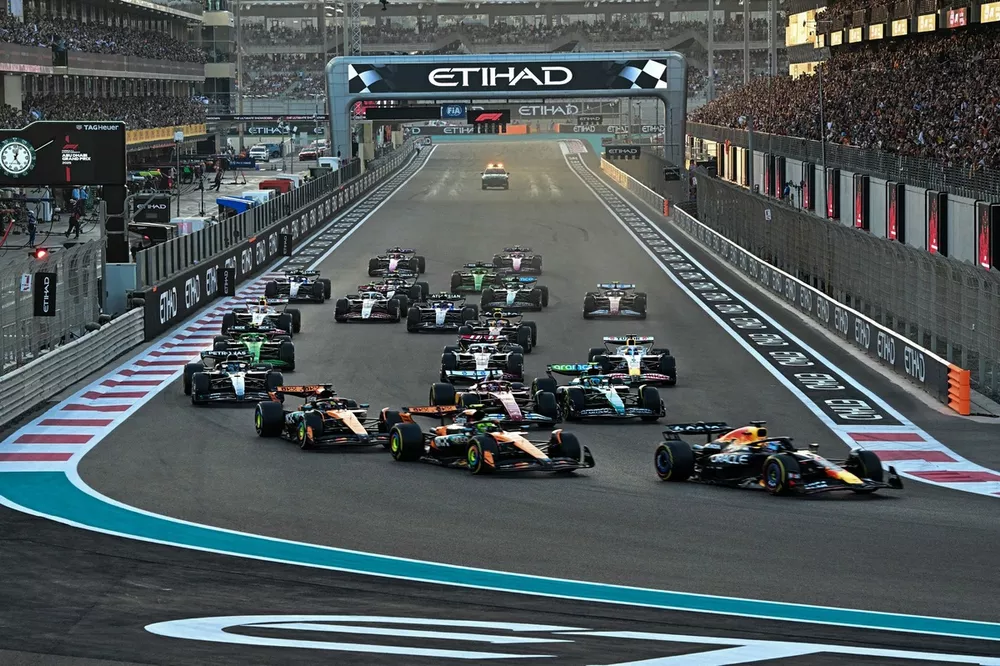

With the 2025 Formula 1 title decider in Abu Dhabi, the regulatory cycle of the ground-effect cars has come to an end. The regulations introduced in 2022 had three aims: improving racing by allowing drivers to follow each other more closely, closing up the field, and creating a sustainable championship – also financially.
As Nikolas Tombazis, FIA’s single-seaters director, looks back, his assessment is twofold: yes, overall things have gone in the right direction, but it hasn’t been good enough in all areas.
“I think we've made a significant step in the right direction on most of these aims, but I certainly wouldn't claim total success on everything, so I wouldn't give us an A star. I would give us a B or a C, or something like that,” Tombazis told select media, including Motorsport.com.
“I think we've made a significant step in the right direction on most of these aims, but I certainly wouldn't claim total success on everything, so I wouldn't give us an A star. I would give us a B or a C, or something like that,” Tombazis told select media, including Motorsport.com.
The areas that have gone well relate mainly to the financial sustainability of F1. Tombazis acknowledges that the cost cap has made regulating the series much harder for the FIA - due to its complexity - but that it has made F1 much more stable and healthier than before. “I would certainly say that we cannot even imagine not having the financial regulations now. So I think that has been a success,” the Greekman added.
As for improving the racing itself, the picture is slightly different. “The technical side, I think yes, definitely cars did get to a point where they could race each other more closely,” said Tombazis, referring to 2022 and 2023.
Asked which areas this relates to specifically, Tombazis clarified: “The main areas were first of all the front wing endplate. The front wing endplate was originally planned to be a very inwashing device. And gradually, all the ruling to do with how the profiles go around and join into the endplate, that was not tight enough. It led to profiles being quite outwashing in that area and creating a lot of outwash.
Asked which areas this relates to specifically, Tombazis clarified: “The main areas were first of all the front wing endplate. The front wing endplate was originally planned to be a very inwashing device. And gradually, all the ruling to do with how the profiles go around and join into the endplate, that was not tight enough. It led to profiles being quite outwashing in that area and creating a lot of outwash.
“The other area where they exploited a lot was the drum design of the front wheel, the furniture on the inside of the front wheel. And I would also say the edges of the floor were in that category. These were the main areas of performance deterioration from the intent of the rules.”


