
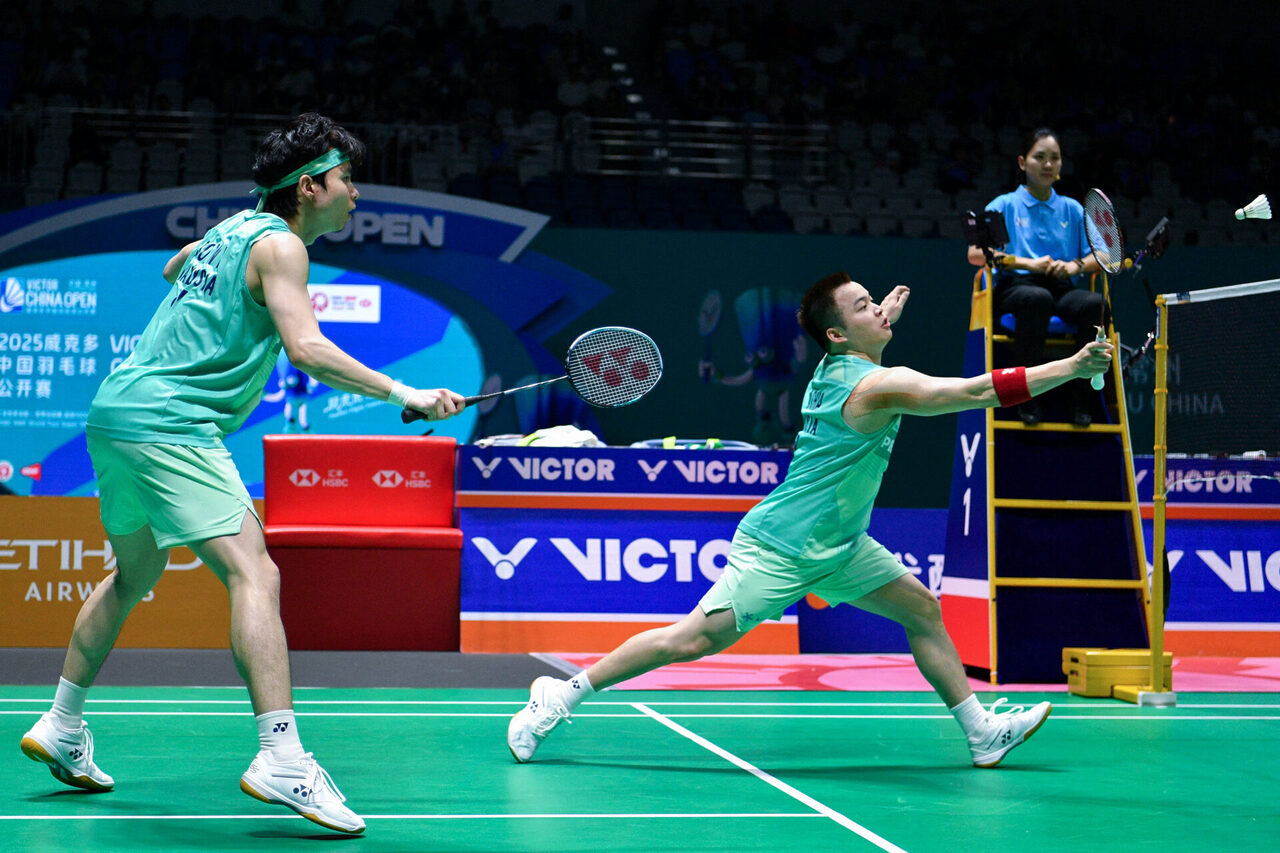

Heading into the Bangkok SEA Games, the Badminton Association of Malaysia (BAM) set ambitious goals—four gold medals and a total of seven medals. The reality, however, was far from expectations. Malaysia managed only one gold, two silvers, and six bronzes. While nine medals may sound decent on paper, the outcome clearly missed the mark in terms of quality.
The biennial event underlined a troubling trend: Malaysian badminton appears to be standing still, while Indonesia and Thailand continue to make strong progress.
China, on the other hand, took a completely different approach. For the last four editions of the SEA Games, they have rested their top players to focus on the World Tour Finals (WTF) in Hangzhou from Dec 17–21—a high-stakes tournament offering RM12.5 million in prize money.
Malaysia’s SEA Games performance should ring alarm bells, especially given the coaching setup led by former international players from Indonesia and Denmark, reportedly hired at great expense. The WTF will see the sport’s powerhouses—China, South Korea, Japan, and Denmark—battle for top honours. In the doubles events alone, champions can earn up to RM1.03 million.
For Malaysia, the challenge looks daunting. Based on current form and head-to-head results, winning gold appears unlikely, with silver or bronze being the more realistic targets.
Qualification itself is exclusive, with only the top eight players or pairs in each category earning a spot, and a maximum of two entries per country. Malaysia failed to qualify any singles players, with Leong Jun Hao ranked 29th, Justin Ho 36th, and K. Letshanaa 38th, while the rest were outside the top 60.
Qualification itself is exclusive, with only the top eight players or pairs in each category earning a spot, and a maximum of two entries per country. Malaysia failed to qualify any singles players, with Leong Jun Hao ranked 29th, Justin Ho 36th, and K. Letshanaa 38th, while the rest were outside the top 60.
Doubles events offer Malaysia a slim chance of success, with five pairs competing in Hangzhou:
- Men’s doubles: Aaron Chia–Soh Wooi Yik; Man Wei Chong–Tee Kai Wun
- Mixed doubles: Chen Tang Jie–Toh Ee Wei; Goh Soon Huat–Shevon Lai Jemie
- Women’s doubles: Pearly Tan–M. Thinaah
Still, the obstacles are significant. World No. 2 Aaron–Wooi Yik, coming off a SEA Games defeat to lower-ranked Indonesians, have been drawn into a punishing “group of death” featuring India’s world No. 3 Satwiksairaj Rankireddy–Chirag Shetty, China’s Liang Wei Keng–Wang Chang (No. 7), and Indonesia’s Fajar Alfian–Shohibul Fikri (No. 9).
Despite their rankings, their results this season suggest they are far from dominant.
Top seeds Pearly–Thinaah also face a stiff challenge, drawn against China’s world No. 2 Jia Yi Fan–Zhang Shu Xian and two strong Japanese pairs. Their narrow three-game wins over weaker Indonesian opponents at the SEA Games point to an uphill struggle.
Mixed doubles world champions Chen Tang Jie–Toh Ee Wei remain Malaysia’s strongest hope. Silver medallists last year, they will need to rediscover consistency after a recent straight-game loss to a lower-ranked Thai pair.
In Hangzhou, their path is anything but easy, with tough matchups against China’s Feng Yan Zhe–Huang Dong Ping, fellow Malaysians Goh–Shevon, and Indonesia’s leading pair Jafar Hidayatullah–Felisha Alberta Pasaribu.