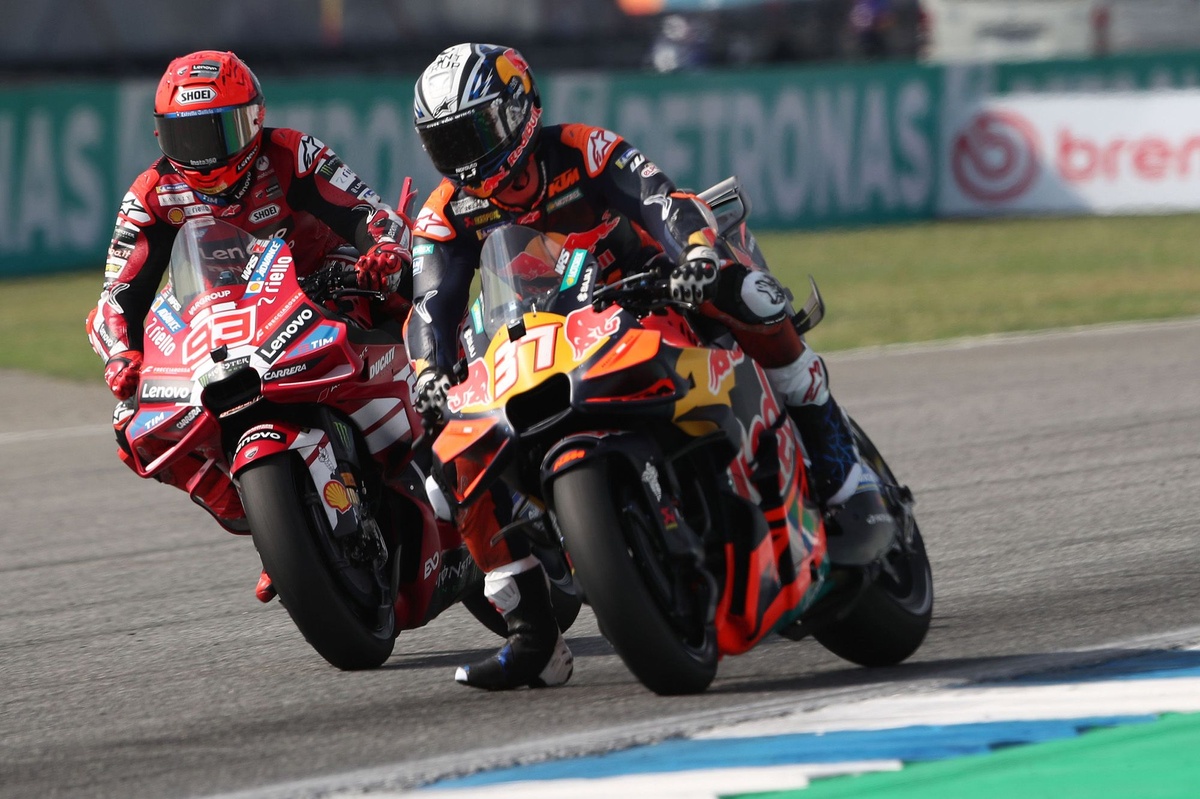

The Thailand Grand Prix sprint delivered raw, unadulterated MotoGP drama, but the post-race penalty handed to Marc Marquez for his audacious move on Pedro Acosta has ignited a firestorm across the paddock, leaving fans and riders alike questioning the very spirit of racing.
Key Points:
- Marc Marquez received a controversial late-race penalty for his aggressive overtake on rookie sensation Pedro Acosta.
- The "drop one position" sanction, delivered on the final lap, cost Marquez the win and handed Acosta his maiden MotoGP sprint victory.
- Top riders like Fabio Quartararo and Raul Fernandez offered starkly divided opinions on the stewards' decision, highlighting the fine line between aggressive racing and fair play.
- The incident has reignited calls for greater consistency and clarity from MotoGP race direction regarding on-track contact and penalties.
The Buriram Brawl: Marquez vs. Acosta
The thrilling Thailand GP sprint came down to a fierce battle between veteran Marc Marquez and rising star Pedro Acosta. On the penultimate lap, Marquez executed a daring divebomb into Turn 12, seizing the lead from the young KTM rider. However, race stewards swiftly intervened, imposing a "drop one position" penalty on Marquez during the final lap, securing Acosta his first-ever MotoGP class victory.
Acosta himself admitted he hadn't anticipated the penalty, while Marquez vociferously criticized its timing, which left him no opportunity to recover. The incident instantly became the epicenter of a passionate debate.
Riders Divided: The Fine Line of Aggression
The paddock erupted with opinions, revealing a deep split on whether the penalty was justified. Many riders emphasized the inherent contact and aggression in MotoGP, advocating for a more lenient approach to on-track skirmishes.
Quartararo's View: Borderline but Clean?
Factory Yamaha rider Fabio Quartararo, the 2021 World Champion, acknowledged the complexity. He noted that while Marquez undeniably missed the apex and forced Acosta wide, he remained within track limits. Quartararo described it as a "block pass, for sure," yet ultimately deemed it "really clean," highlighting the subjective nature of such decisions. For him, it was a "50-50" call depending on perspective.
Fernandez Champions Raw Racing
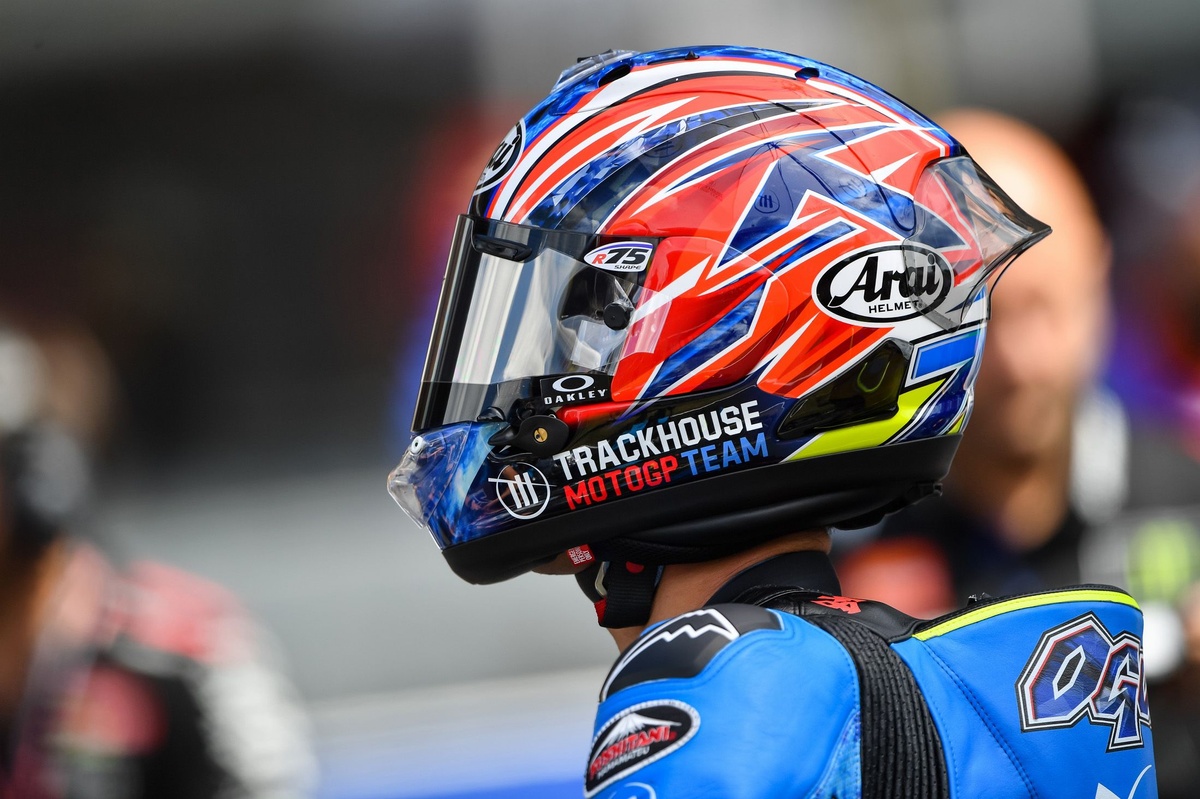
Trackhouse rider Raul Fernandez, who had a prime view of the duel directly behind them, fiercely defended Marquez. He stressed that such aggressive maneuvers are a fundamental part of MotoGP, explaining that a bike on a "wheelie moment" restricts a rider's ability to change direction, potentially leading to contact. Fernandez passionately argued against such penalties, believing they detract from the "beautiful thing of motorsport" and the "show" that makes MotoGP the best.
Echoes of Inconsistency: Calls for Clarity
Beyond the immediate incident, the Marquez-Acosta penalty reignited broader frustrations regarding the consistency of stewarding decisions. Riders have long voiced concerns over perceived arbitrary rulings.
Di Giannantonio: Let Them Race!
VR46's Fabio di Giannantonio, who was involved in his own early-race tangle, passionately declared that contact is integral to MotoGP. He argued riders "must punch each other, we must smash fairing one to the other," as long as it's within white lines and considers rider safety. His plea was for race direction to trust riders to push the limits.
Miller's Past Grievances and Mir's Plea
Veteran Pramac rider Jack Miller, no stranger to controversial penalties himself, implicitly referred to his own past clashes with stewards. Marquez's former Honda teammate, Joan Mir, succinctly captured the widespread sentiment: "If Marc's manoeuvre is always penalised from now on, fine. What I don't like is the inconsistency." The paddock's message is clear: drivers need predictable, unwavering standards to truly "race each other."