

F1's Electric Revolution: Navigating the 2026 Hybrid Power Challenge
The Formula 1 2026 regulations are not just a simple overhaul; they represent a fundamental shift in how teams and drivers must approach racing, particularly concerning hybrid power unit management.
Key Takeaways:
- F1 2026 rules heavily emphasize electrical power, with the MGU-K's output tripling.
- The removal of the MGU-H makes energy harvesting more intrusive for drivers.
- McLaren has developed a unique dual-display steering wheel to provide precise, real-time energy feedback.
- This innovation gives Lando Norris and Oscar Piastri a vital competitive edge in navigating complex energy demands.
The roar of Formula 1 cars is about to get a whole lot smarter. The incoming 2026 regulations are poised to redefine the sport, with a paramount focus on energy management. While lighter, more agile chassis designs have garnered positive feedback, the true battleground lies within the radically altered hybrid power units, making F1 2026 hybrid strategy a critical differentiator.
No longer a secondary consideration, the management of electrical energy has become the single most defining aspect of the new era. Early insights from the Bahrain pre-season test highlighted the diverse strategies manufacturers are deploying, even influencing cornering techniques by requiring lower gears for optimal energy harvesting.
Mastering the MGU-K: A Driver's New Challenge
The previous hybrid era (2014-2025) saw a less intrusive energy charging process. The now-removed MGU-H significantly aided harvesting, and the MGU-K had more limited deployment. Drivers relied on a basic steering wheel indicator for battery levels, which was sufficient for qualifying pushes or wheel-to-wheel duels.
However, the 2026 power units dramatically shift this paradigm. The MGU-K has seen its power output triple, making its charging phases far more noticeable and impactful. Drivers must now actively manage energy during lift-and-coast scenarios or even mid-corner, relying on the internal combustion engine in specific sections, like Bahrain's Turn 12, to conserve precious electrical charge for upcoming straights.
Inside the MCL40 Cockpit: McLaren's Steering Wheel Game Changer
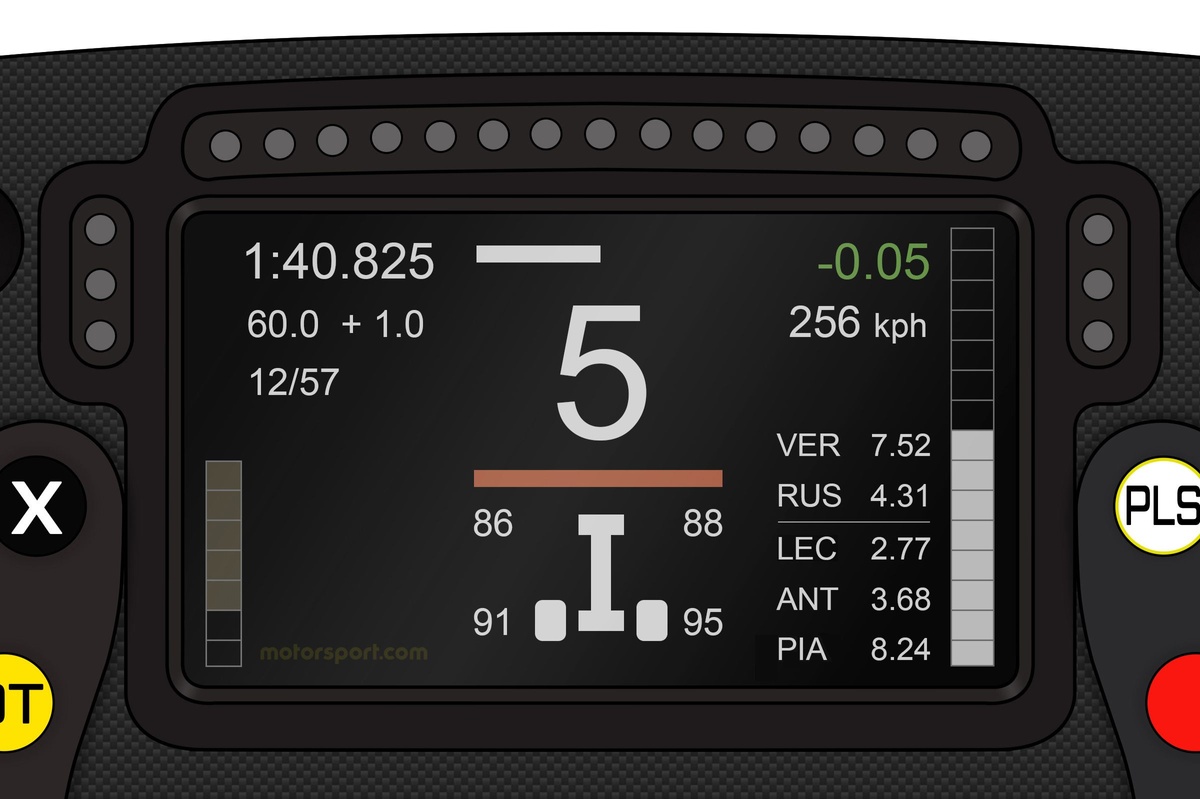
Recognizing this unprecedented challenge, McLaren has taken a bold step beyond the traditional. While most teams retain a simple colored bar on their steering wheels to show remaining battery energy, the MCL40 cockpit features a groundbreaking dual-display system. This innovative approach offers Lando Norris and Oscar Piastri unparalleled insight into their MGU-K's real-time operation.
Above the gear indicator, a secondary bar provides dynamic feedback. When the bar extends from the center to the right, it signals that the MGU-K is actively deploying energy – pushing power to the wheels. Conversely, if the bar moves from the center to the left, it indicates energy harvesting, typically occurring under braking or during corners where the car is 'lift and coasting'.
Crucially, this indicator isn't binary. It provides a gradual visual representation, even showing when the MGU-K enters a 'derating' phase, subtly reducing output before switching to harvesting. If the bar completely disappears, drivers instantly know they are relying solely on the internal combustion engine, giving them precise control over their energy strategy.
The Competitive Edge: Why Every Watt Counts
In the high-stakes world of Formula 1, every fraction of a second, and every watt of energy, can make the difference between victory and defeat. While simulator work prepares drivers extensively, real-time, intuitive feedback is invaluable under race conditions. McLaren's sophisticated steering wheel display empowers its drivers with an immediate, nuanced understanding of their power unit's status.
This level of detailed information can be a significant competitive advantage. It allows Norris and Piastri to optimize their energy deployment and harvesting strategies lap-by-lap, corner-by-corner, translating into better qualifying performance, more effective overtakes, and ultimately, stronger race results in the demanding F1 2026 hybrid era.


