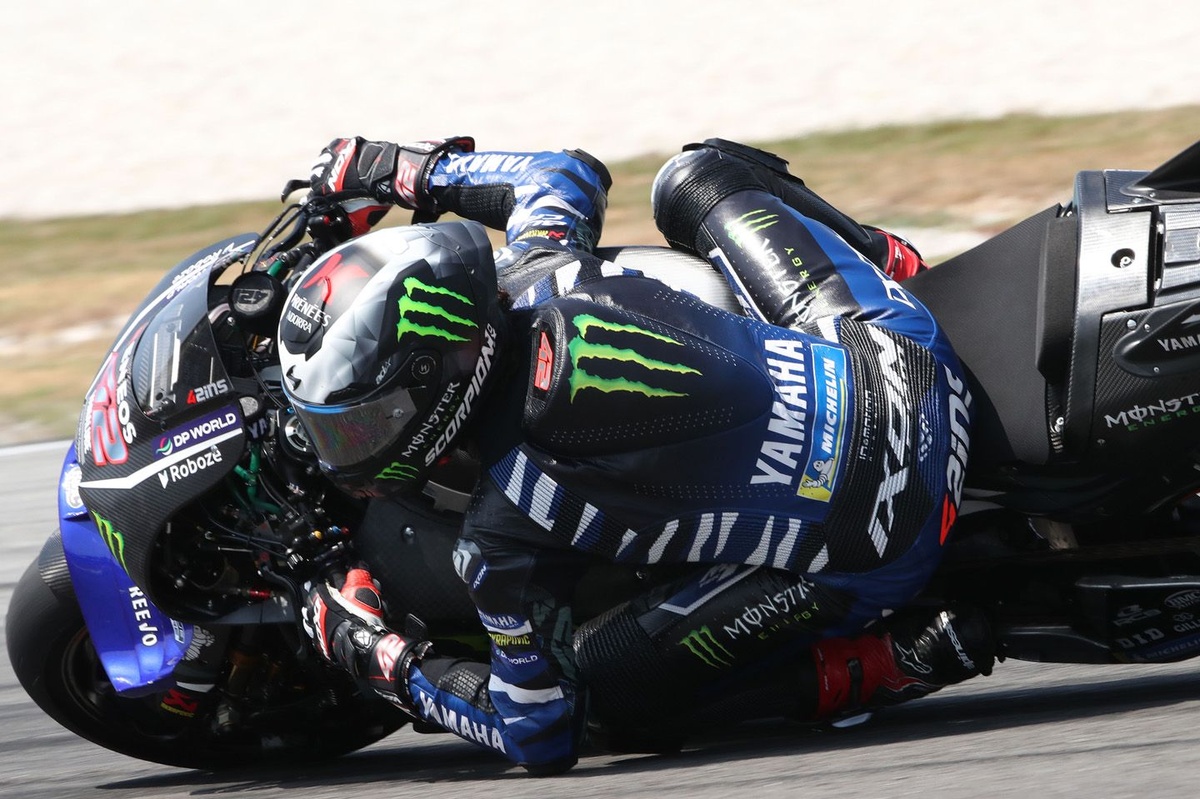

Yamaha has signalled a major change in direction with the unveiling of its 2026-spec M1 in Jakarta, revealing an aggressive aerodynamic redesign aimed at reversing its recent struggles in MotoGP.
The most striking update comes at the front of the bike. After several seasons experimenting with Aprilia-inspired gull-wing and triplane fairing concepts, Yamaha has abandoned the complex multi-wing approach. The new M1 adopts a cleaner and more conventional layout, with two main wing elements integrated directly into the fairing.
These wings sit lower and connect to the sides of the airbox, a solution closely aligned with designs that have delivered strong results for Ducati and KTM. The shift highlights Yamaha’s willingness to adopt proven ideas from its rivals rather than persist with concepts that have produced limited gains.

Source: Detik.com
This redesign reflects more than a visual refresh. Yamaha has been outpaced in the aerodynamic development race, and the new package is intended to improve front-end stability, downforce, and overall performance consistency. The goal is clear: restore competitiveness and give its riders a machine capable of fighting at the front.
Changes extend beyond the nose. The side fairing retains a stepped profile that feeds into a narrow slot, while a diffuser remains on the lower section, although it is noticeably smaller than the version used by Ducati’s latest Desmosedici.
At the rear, Yamaha appears to be blending ideas from multiple competitors. The forward section of the tail features near-vertical fins reminiscent of Ducati’s design, while the rear wing shows a twisted profile that echoes Aprilia’s recent aerodynamic innovations.
Some uncertainty remains over the final configuration. Official images released by Yamaha showed two vertical fins on each side of the tail, but photos taken during the Jakarta presentation appeared to show three. The discrepancy suggests Yamaha is still evaluating multiple versions as development continues.
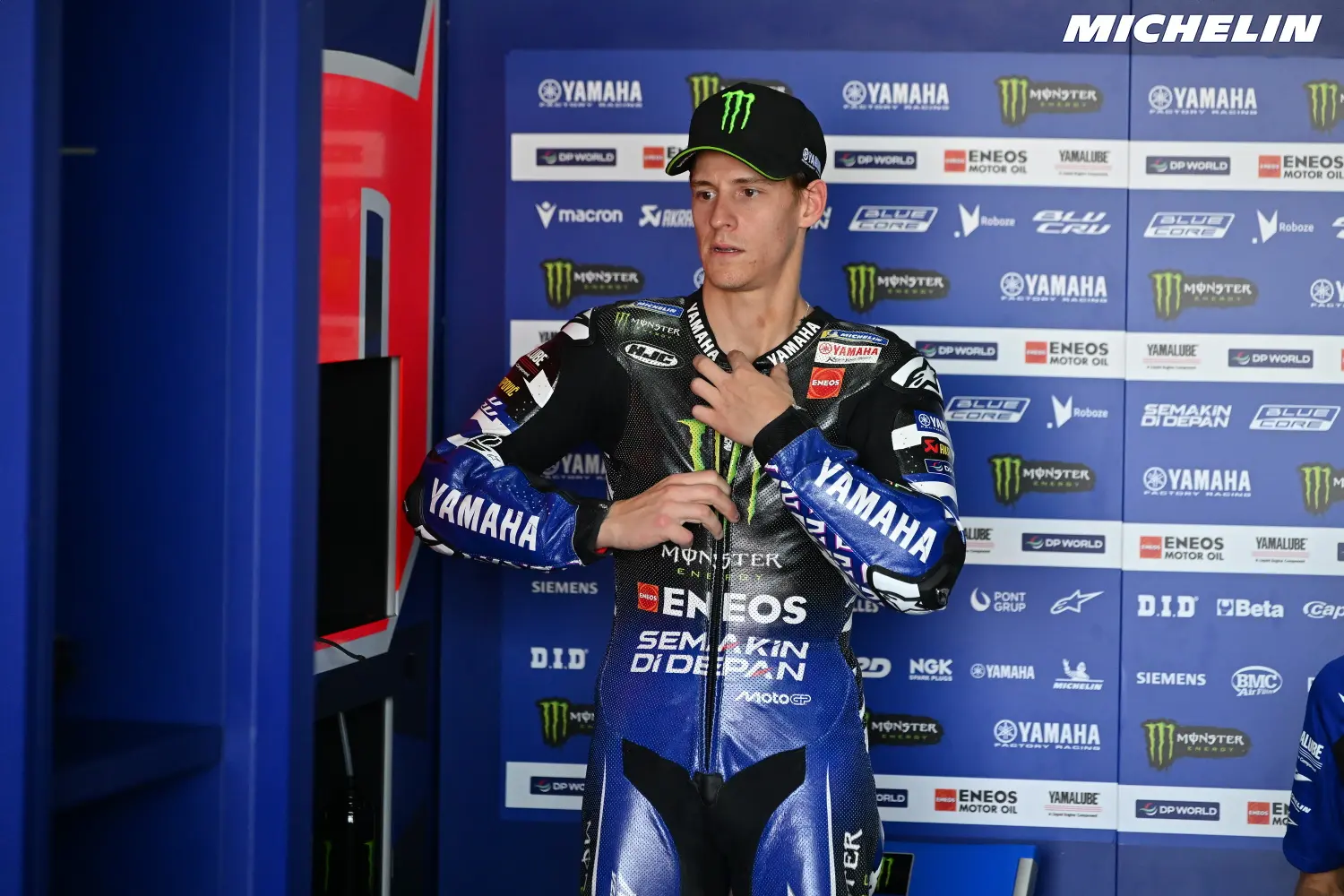
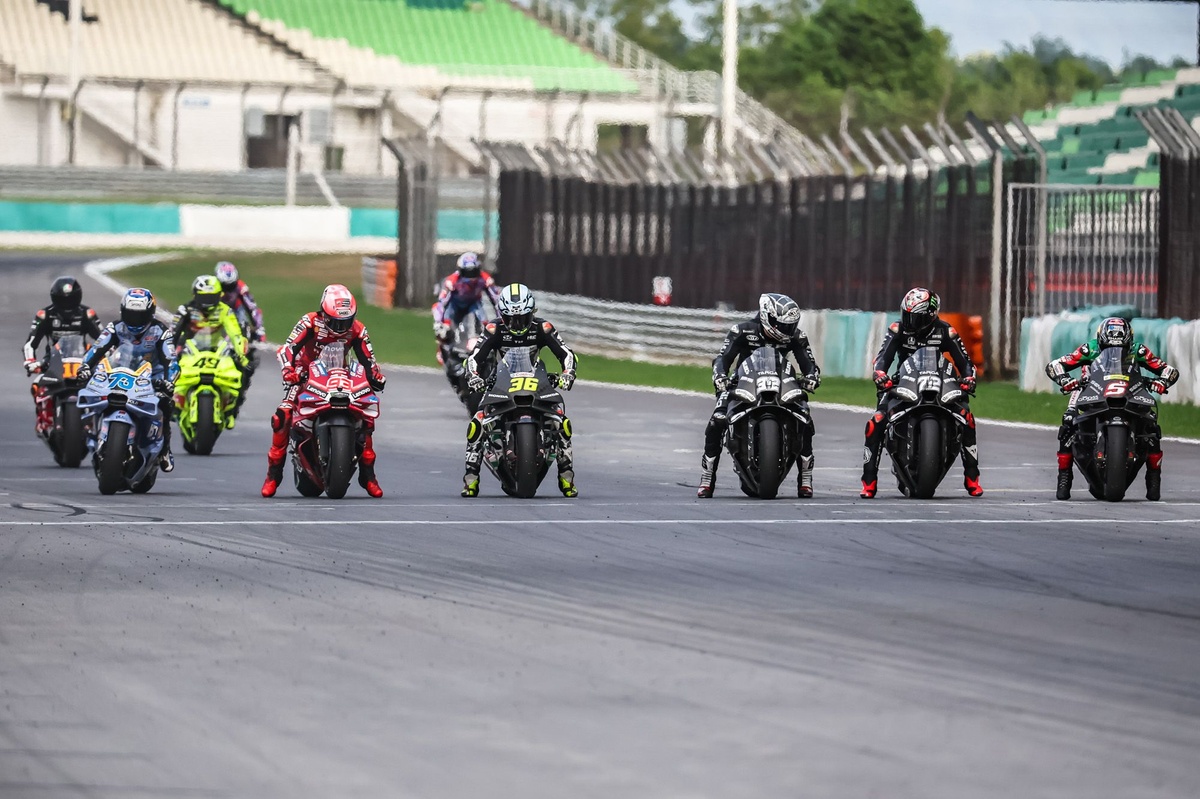
Attention now turns to the Sepang shakedown from January 29 to 31, where Yamaha will have full testing freedom under Group D concessions. Fabio Quartararo and Alex Rins are expected to play a key role in assessing which aerodynamic package offers the best balance before the season begins.
With time and testing still on its side, Yamaha is clearly betting that this bold aerodynamic reset can help close the gap to MotoGP’s leading manufacturers.