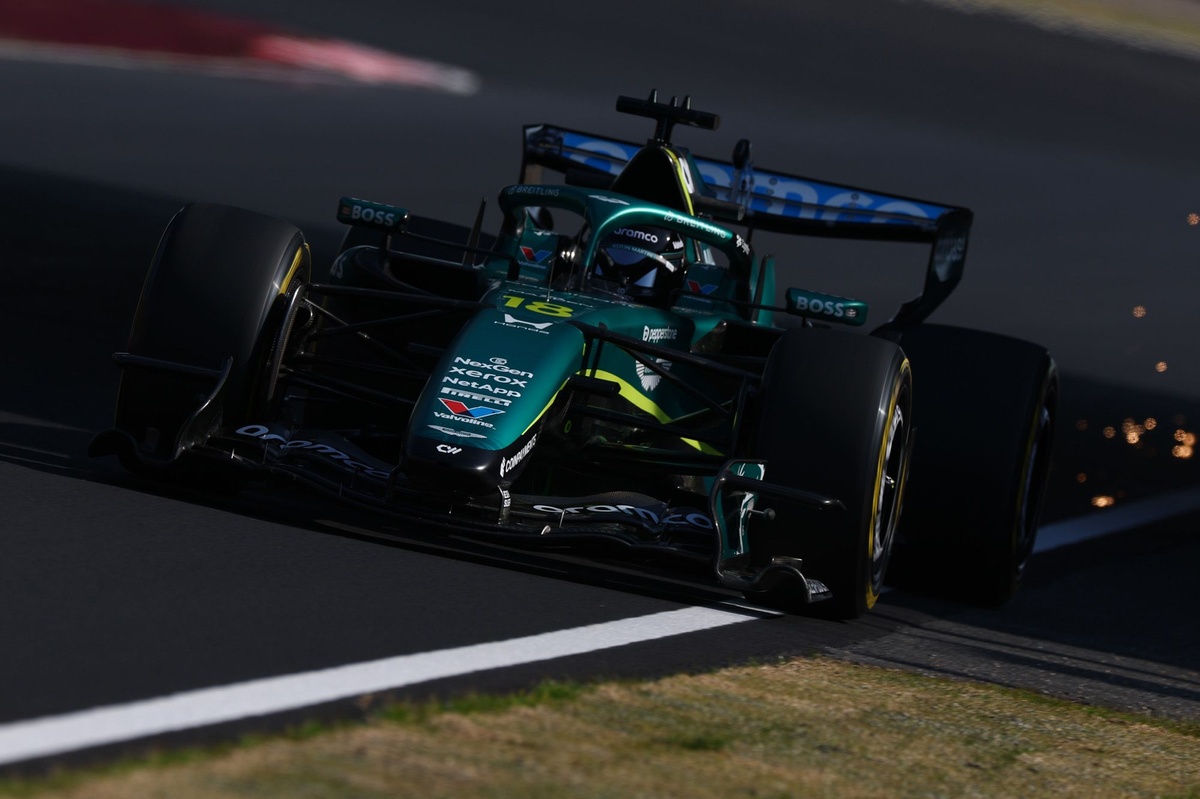

Just when Aston Martin and Fernando Alonso thought they had a handle on their notorious Honda engine vibration issues, the problem returned with a vengeance at the Japanese Grand Prix, leaving the team scrambling for answers. The perplexing inconsistency has cast a shadow over Aston Martin's performance in Suzuka, making a challenging weekend even tougher.
Key Points:
- Fernando Alonso reported "nearly no vibrations" in his Aston Martin AMR26 during Friday practice, suggesting a breakthrough.
- However, the severe vibrations inexplicably reappeared for Saturday's qualifying at Suzuka, despite no car changes overnight.
- Alonso explicitly stated the persistent vibration is the "biggest limiting factor" for the team's pace.
- Both Alonso and teammate Lance Stroll qualified at the very back of the grid (21st and 22nd), indicating broader struggles.
A Rollercoaster of Comfort: The Suzuka Mystery
Fernando Alonso arrived at the Japanese Grand Prix with renewed hope. After suffering from extreme Honda engine vibrations that left him losing "all feeling in my hands and feet" at the Chinese Grand Prix, Friday's practice sessions at Suzuka offered a remarkable improvement. The two-time world champion stated he had "nearly no vibrations" from his AMR26, fueling optimism for the weekend.
That optimism was short-lived. "This morning I jumped in the car and I had the same vibrations as ever," Alonso revealed after qualifying. The baffling part? "We didn't change anything," he emphasized. This inexplicable relapse has the Aston Martin technical team meticulously reviewing all overnight adjustments, searching for any elusive factor that might have influenced Friday's temporary respite.
The Ghost in the Machine: Driver Health & Performance Impact
For Alonso, these vibrations are more than just an annoyance; they're a significant performance impediment and a health concern. The previous experience in China highlighted the extreme physical toll. At Suzuka, the returning issue was immediately identified as a major hurdle. "I think it's still the biggest limiting factor," Alonso commented, underscoring how deeply it affects his ability to push the car to its limits.
Beyond driver comfort, persistent vibrations can also damage critical components like batteries, as Aston Martin and Honda have been working to mitigate. The unpredictable nature of the issue adds another layer of complexity to an already challenging Formula 1 season.
Beyond the Buzz: Aston Martin's Broader Performance Puzzle
The vibration saga isn't the only concern for Aston Martin at Suzuka. Despite Alonso's best efforts, the AMR26 proved to be the slowest car on the grid in qualifying. Alonso and teammate Lance Stroll will start the Japanese Grand Prix from 21st and 22nd respectively, over 1.7 seconds off the Q2 cut-off time.
Lance Stroll offered a stark assessment of the team's struggles, pointing to a dual problem. "It's a combination of power unit and car," he explained. "We're definitely losing huge amounts of time on the straights, but we're not the grippiest beast in the corners." This indicates a fundamental lack of pace, where the vibration issue is a symptom rather than the sole cause of their back-of-the-grid position.
Reliability Woes Linger for Stroll
While Alonso grapples with comfort, Stroll faces his own demons, having retired from the Chinese Grand Prix with a reported battery issue. Although Honda clarified that incident "was not related to vibration," it highlights a broader reliability fragility.
"I will discover more of that for myself tomorrow," Stroll remarked, anticipating the physical demands of the race while hoping "everything hangs on." The primary objective for Aston Martin in the Japanese Grand Prix remains simply completing a full race distance, a testament to the persistent challenges they're facing on multiple fronts.
.jpg)