
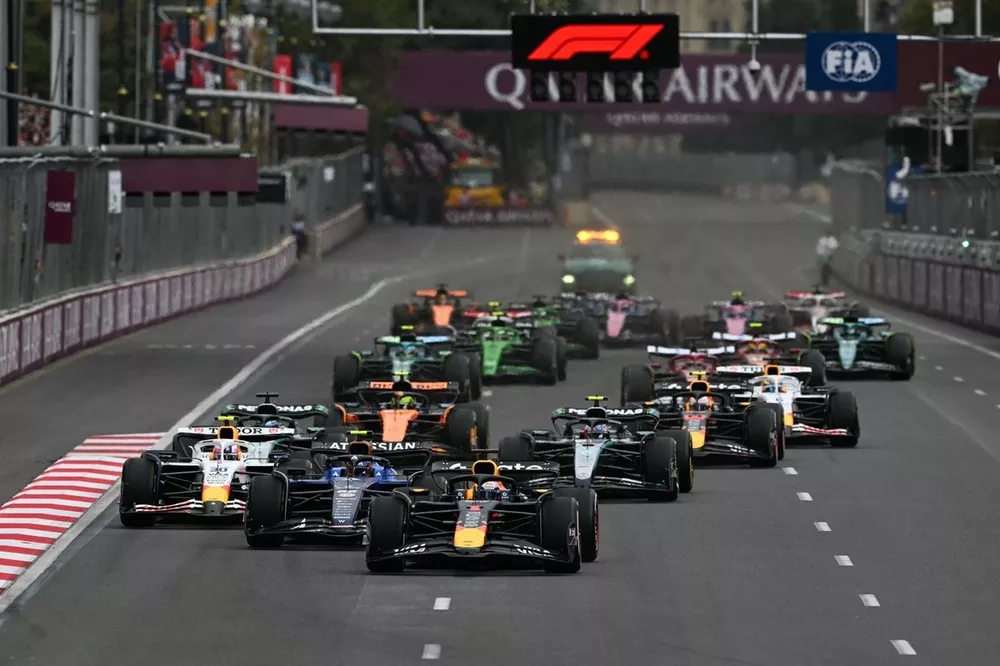

The Formula 1 cost cap has made the news again as the championship's governing body the FIA released its findings for the 2024 season.
It stated that all teams, plus power unit manufacturers, had met the cap but Aston Martin had committed a "procedural breach" regarding the paperwork.
But there has been a previous instance in which a team has breached it and received a punishment for doing so. So, here is all to know about the F1 cost cap.
What is the F1 cost cap?
But there has been a previous instance in which a team has breached it and received a punishment for doing so. So, here is all to know about the F1 cost cap.
What is the F1 cost cap?
The Formula 1 cost cap limits the amount a team can spend on its cars over the course of a given calendar year. It first came into force in 2021. The original plan - which was hammered out before the pandemic hit – was for the spending cap to be $175 million. But when COVID-19 wreaked havoc with the 2020 season and threw some teams into a desperate financial situation, it was cut down to $145m, with the plan to further reduce it by $5m per season for 2022 and 2023.
The 2024 and 2025 cost caps were pegged to a base figure of $135m, with an extra allowance of $1.8m for every race over the base number of 21 grands prix per season. The 24-race calendars in both years mean teams get an extra $5.4m million to spend. The $135m figure is also subject to indexation to account for inflation.
Why does F1 have a cost cap?
Some teams used to have enormous budgets, while others make do with relatively modest amounts of money. This used to correlate to performance on the circuit, and made it almost impossible for ‘poorer’ teams to catch up and compete.
The cost cap was primarily a long-overdue attempt to level the playing field, but also to ensure enough teams survive to make up a grid. From struggling to keep the lights on, a lot of teams have since started breaking even or even making money, while they have seen their values skyrocket as the have become valuable franchises. After a stake sale in September 2025, McLaren was valued at $4.1 billion, a huge increase over the pre-cost cap era.
The cost cap was primarily a long-overdue attempt to level the playing field, but also to ensure enough teams survive to make up a grid. From struggling to keep the lights on, a lot of teams have since started breaking even or even making money, while they have seen their values skyrocket as the have become valuable franchises. After a stake sale in September 2025, McLaren was valued at $4.1 billion, a huge increase over the pre-cost cap era.
What comes under the F1 cost cap?
Any expenditure related to car – but not engines – performance is relevant for the cost cap. This includes:
- All parts on the car (from the steering wheel to the wheel nuts)
- All the elements needed to run the car
- Most of the team personnel
- Garage equipment
- Spares
- Transport costs
- Everything in between
- The biggest area of focus is car development costs, with teams having to weigh up what is developed, how much is spent on each part which is manufactured and how many of the parts are needed and can be afforded without overspending.
What doesn’t come under the F1 cost cap?
There are several big-ticket things that aren’t covered by the cost cap, including:
- Driver salaries
- The wages of the three highest-paid staff members
- Travel costs
- Marketing spend
- Property and legal costs
- Entry and licence fees
- Any non-F1 or road car activities
- Parental and sick leave payments
- Employee bonuses and staff medical benefits
- For 2026 and beyond, the cost cap will be increased from $135m to $215m, but rather than presenting a net increase in what teams are able to spend, the move means a lot more items that were previously exempt will now be included.
- From next year onwards, Swiss-based Sauber will also receive a cost cap offset based on OECD salary data, to account for higher wages and cost of living in Switzerland compared to the United Kingdom and Italy, where the remaining teams are based.
- From 2023, F1's power unit manufacturers have also been subject to a cost cap to keep the cost of engine development under control.


