
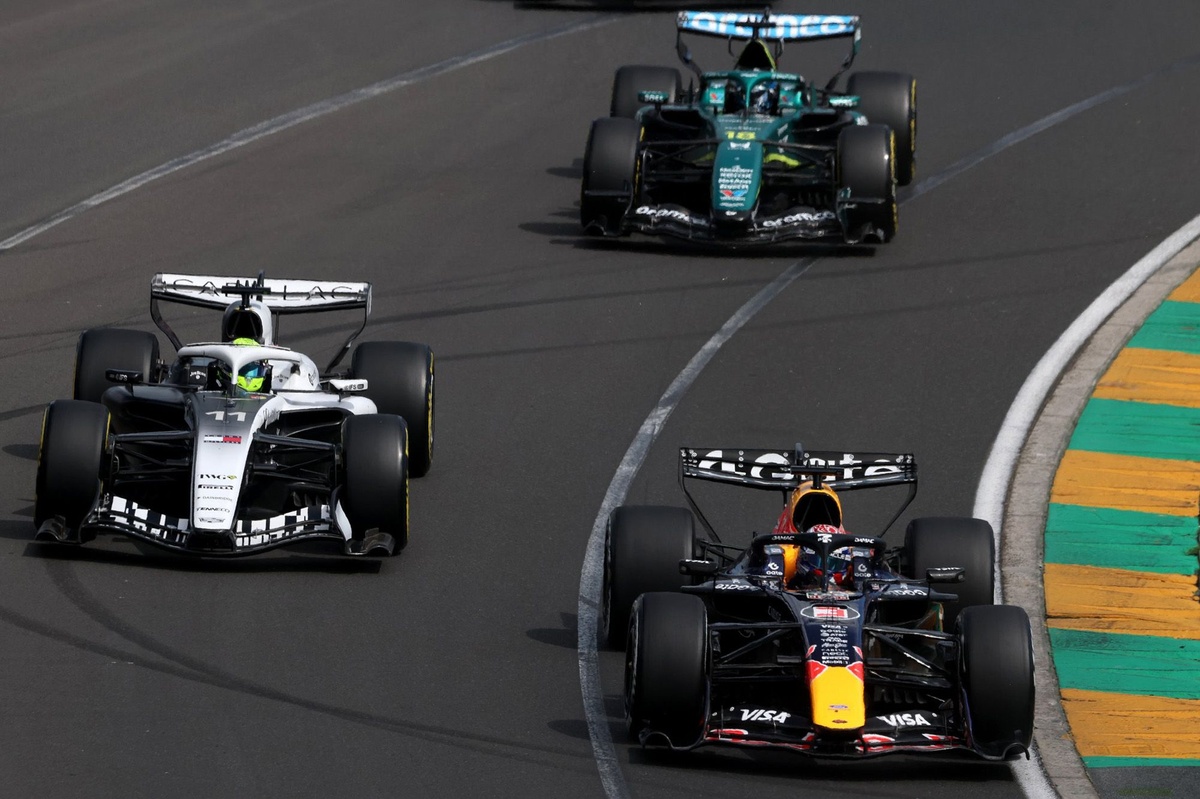

The 2026 F1 regulations have landed with a bang, but it's not the thrilling roar of engines fans were hoping for. Instead, the Australian Grand Prix left drivers and pundits alike questioning the very essence of "racing" under the new rules. Was it a spectacle, or an artificial shadow of what Formula 1 should be? The feedback from the paddock is clear: a radical rethink might be needed.
Key Takeaways from Melbourne:
- The 2026 F1 regulations are under heavy fire for creating "artificial" overtakes.
- Drivers, including Lando Norris and Max Verstappen, describe the racing as 'ridiculous' and 'Mario Kart-like'.
- The "yo-yo" effect from energy management means cars gain and lose positions due to battery delta, not pure driving skill.
- The FIA faces a critical balancing act: pleasing manufacturers while delivering authentic racing for fans.
The Melbourne Mirage: Overtakes, But at What Cost?
While statistics might boast of numerous overtakes during the opening phase of the Australian Grand Prix, the quality of these passes has sparked intense debate. Was the sheer volume truly entertaining, or did it mask a fundamental flaw in the racing spectacle? Social media buzz focused on the numbers, but the real question is: how were these overtakes achieved?
The Yo-Yo Effect and 'Mario Kart' Moments
Many passes were created by significant differences in energy management. As drivers like Gabriel Bortoleto observed, a car would deploy its electrical power on one straight, fly past a competitor, only to be left with an empty battery and vulnerable to a counter-attack on the very next straight. This "yo-yo" effect generated official "overtakes" but lacked genuine wheel-to-wheel excitement.
For purists, who already viewed DRS as artificial, this energy-delta overtaking takes the issue a step further. Haas driver Oliver Bearman amusingly recounted, "I was just flying past everyone on the straights... it was like I was in F1 and everyone else was in F2." Max Verstappen himself went as far as to call these "Mario Kart-like things" happening in the midfield.
The Purest Passes: What Fans Crave
Fans crave overtakes born from sheer skill, daring lines, and braking point mastery. Think of Max Verstappen's bold move around the outside of Oscar Piastri at Imola last year, or Piastri's own outside pass on Lewis Hamilton in the 2025 Australian Grand Prix. These involve cars running side-by-side into braking zones, a rarity under the new 2026 F1 regulations. The recent passes, by contrast, were often clinical, high-speed fly-bys that lacked the visceral thrill of a true battle.
Drivers Speak Out: A Chorus of Discontent
Immediately after the race, the drivers didn't hold back. While media personnel pondered, the competitors delivered blunt assessments of the new era of Formula 1.
Norris Leads the Charge
Lando Norris, outspoken even before Sunday, reiterated his view that F1 has devolved from the "best cars of all time to the worst." When pressed on the racing in 2026, his response was stark: "Even worse." This strong criticism from one of the sport's rising stars signals a deeper problem than mere initial teething issues.
Bearman's 'Ridiculous' Assessment
Oliver Bearman offered the most colourful critique. "It's a bit ridiculous, to be honest," he stated, describing the massive delta a "boost button" provides and the subsequent, disproportionate loss on the next straight. This non-linear power delivery, he argued, undermines genuine racing.
Verstappen's 'Formula E' Jab
Max Verstappen, a driver known for his candid opinions, echoed similar sentiments previously voiced in Bahrain: "That's not racing, that's Formula E." This comparison to the all-electric series, implying a focus on energy management over raw pace and skill, is a damning indictment from the reigning world champion. Interestingly, only Mercedes and Ferrari drivers, arguably the most competitive under the new rules, offered relatively positive feedback.
The Grand Compromise: Manufacturers vs. Racing Integrity
The core issue lies in the delicate balance the FIA and F1 must strike: keeping the series attractive to major car manufacturers while delivering a compelling, authentic racing product for fans and drivers.
Engine Rules First, Chassis Second
The genesis of these 2026 F1 regulations reveals a significant compromise. The power unit rules were finalized first, largely to entice new manufacturers like Audi (and the wider Volkswagen Group) and retain existing ones like Honda. The chassis regulations were then designed around this engine formula, a process Red Bull technical director Pierre Wache bluntly described as "patch on patch."
The Active Aero Conundrum
This "patchwork" approach led to the introduction of active aerodynamics to reduce drag, which, in turn, effectively rendered DRS obsolete as an overtaking tool. Its replacement? The controversial "overtake mode." The result is a highly complex package that, according to many drivers, has pushed pure, wheel-to-wheel racing firmly into the background. While manufacturer involvement is crucial for F1's stability, the current cost to the on-track spectacle is becoming undeniable.
What's Next? FIA's Urgent Review
The outcry from Melbourne means the FIA cannot ignore the mounting concerns. A review is already scheduled.
Melbourne's Unique Challenge
It's important to note that the Albert Park circuit in Melbourne presented one of the most challenging environments for energy management on the calendar. The issues observed might not be as extreme at every venue. However, the fundamental problems with the 2026 F1 regulations persist regardless of the track.
Can F1 Course-Correct?
The FIA has confirmed an evaluation will take place after the Chinese Grand Prix. While adjustments to harvesting and deployment might be considered, as urged by drivers like Max Verstappen and Carlos Sainz, a fundamental rewrite of the rules' "DNA" is too late. FIA President Mohammed Ben Sulayem has previously signaled a willingness to explore changes, potentially even before 2031. James Vowles from Williams indicated "four or five options" are on the table.
The challenge remains immense. These adjustments must navigate the core tension between technological relevance for manufacturers and the desire for raw, pure racing that captivated millions. The Australian Grand Prix has fired the starting gun on a critical debate that will shape the future of Formula 1.